
American Spotted Donkey Species Guide - Furry Critter Network

American Spotted Donkey

Quick Facts

🔬 Scientific Name
Equus asinus
🥚 Production Type
Companion
📊 Care Level
Beginner
😊 Temperament
Gentle
📏 Adult Size
200-950 lbs depending on size class
⏱️ Lifespan
25-35 years
🏠 Space Requirement
1/4 to 1 acre per animal depending on size
🌡️ Climate Hardiness
All Climates - very adaptable
🍽️ Diet Type
Grazer
🌍 Origin
United States
📐 Size
Medium

American Spotted Donkey - Names & Recognition

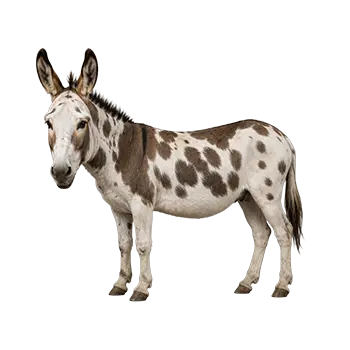
American Spotted Donkeys are distinguished by coat color patterns rather than representing a distinct genetic breed in the traditional sense. The American Spotted Donkey designation refers to any donkey displaying spotted coat patterns meeting specific registry requirements, regardless of the animal's size class, body type, or other physical characteristics. These spotted patterns occur relatively rarely in donkey populations, making spotted individuals prized by collectors and breeders who appreciate their unique appearance.

The spotted pattern in donkeys appears to result from genetic factors producing white spotting patterns similar to those seen in spotted horse breeds such as Appaloosas or Pintos. However, the genetics of donkey spotting are not as well understood as equine spotting patterns, and breeding two spotted donkeys does not guarantee spotted offspring. This unpredictability contributes to their rarity and value among donkey enthusiasts seeking unusual coloration.

Historically, spotted donkeys appeared occasionally in working donkey populations worldwide, though they were not specifically bred for their coloration until American donkey enthusiasts began selectively breeding for spotted patterns in the late 20th century. The American Spotted Donkey registry was established to document, preserve, and promote spotted donkeys regardless of size class, creating a color breed rather than a type breed. These donkeys may be miniature, small standard, or large standard size, with registration based solely on meeting spotting pattern requirements rather than conformational standards.

American Spotted Donkey Physical Description

American Spotted Donkeys vary dramatically in size depending on their size classification, ranging from miniature donkeys under 36 inches and 200-400 pounds to large standard donkeys over 54 inches and 600-950+ pounds. The defining characteristic uniting all American Spotted Donkeys is their coat pattern rather than size or conformation. Their body structure otherwise follows typical donkey conformation with sturdy builds, strong backs, characteristic long ears, and the general appearance associated with their size classification.

The spotted pattern itself shows considerable variation, from minimal white spotting with just a few small spots to dramatic patterns with extensive white coverage and scattered colored spots. Common pattern types include leopard spotting (white body with colored spots), blanket spotting (colored body with white blanket area over the hips containing spots), and various combinations. Some animals display roan-like patterns, while others show irregular patches of color and white creating unique individual patterns.

Acceptable base colors for spotted donkeys include gray, brown, black, sorrel, and various shades, with white spotting overlaying the base color creating the distinctive patterns. The extent and distribution of spotting varies significantly, with some animals showing subtle spotting requiring close examination while others display bold, dramatic patterns visible from a distance. Many spotted donkeys also exhibit characteristic features including mottled skin, striped hooves, and visible white sclera in the eyes, traits associated with spotted patterns in horses.

Beyond their distinctive coats, spotted donkeys retain typical donkey features including large, expressive ears providing excellent hearing, sturdy hooves adapted to rough terrain, and thick skin resistant to injury. Their tails carry the characteristic tuft rather than the full tail of horses. Body proportions, head structure, and overall conformation align with size-appropriate standards for miniature, small standard, or large standard donkeys, with the spotted coat being the distinctive registry requirement rather than specific conformational traits.

Handling Tolerance
Spotted donkeys typically display the gentle, intelligent nature characteristic of all donkeys, responding well to patient, consistent handling. They tolerate routine care procedures calmly when properly trained and rarely show aggression. Their thoughtful, sometimes stubborn nature requires understanding equine behavior, but they become cooperative, affectionate companions with appropriate handling.
Temperament
American Spotted Donkeys exhibit the calm, friendly temperament typical of well-bred donkeys, making them excellent companions for families, therapy programs, and small farms. They form strong bonds with caretakers, show patience with children, and demonstrate intelligence in learning routines. Their gentle nature and striking appearance combine to create appealing, personable animals.
Noise Level
Donkeys are vocal animals producing the characteristic loud bray that can carry for miles, particularly during feeding times, when greeting familiar people, or when separated from companions. While not constantly noisy, their periodic braying may concern neighbors in residential areas. This vocal nature is typical of all donkeys regardless of coat pattern.
Space Requirements
Space needs vary with size class from miniature to standard, with smaller spotted donkeys thriving on 1/4 acre while larger standards benefit from 1/2 to 1 acre per animal. Their efficient grazing and hardy nature make them suitable for smaller properties compared to horses. Adequate fencing and shelter remain essential regardless of property size.
Climate Hardiness
Spotted donkeys inherit the exceptional climate adaptability of all donkeys, thriving from hot, arid regions to cold northern climates. Their thick coats provide cold protection while their desert heritage gives heat tolerance. Simple shelter from harsh weather and precipitation allows them to thrive across diverse climates better than many equines.
Foraging Ability
Highly efficient foragers developed from desert-adapted ancestors, spotted donkeys thrive on sparse vegetation and require less feed than comparably sized horses. They efficiently browse rough forage and maintain good condition on minimal pasture. This thriftiness makes them economical to maintain and suitable for marginal land unsuitable for more demanding livestock.
Maintenance Level
Spotted donkeys are low-maintenance animals requiring routine hoof trimming every 6-10 weeks, basic parasite management, and annual veterinary checks. Their hardy constitution, disease resistance, and minimal dietary needs make them among the easiest equines to maintain. Even novice owners can successfully care for them with basic education and proper setup.
Productivity
While not typically kept for commercial production, spotted donkeys provide value through companionship, therapy work, light packing, livestock guardian duties, and breeding stock sales. Their rare coloration commands premium prices for breeding animals. They excel as companion animals and conversation starters, offering intangible value beyond traditional livestock productivity measures.

Temperament

American Spotted Donkeys display temperaments typical of well-bred donkeys regardless of their coat pattern, as coloration does not affect personality or behavioral characteristics. They are intelligent, thoughtful animals known for forming strong bonds with their caretakers and other animals. Donkeys possess excellent memories and learn quickly, though their intelligence sometimes manifests as stubbornness when they perceive danger or discomfort. This cautious nature reflects their survival instincts rather than obstinacy, requiring patient training that respects their decision-making process.

When properly socialized and handled, spotted donkeys become gentle, affectionate companions that enjoy human interaction and seek attention from familiar people. They often greet caretakers with their characteristic bray, approach for scratches and treats, and follow people around their enclosures. Many spotted donkeys excel in therapy animal programs due to their calm nature, manageable size (particularly miniatures and small standards), and striking appearance that attracts attention and initiates interactions.

Social dynamics among donkeys involve establishing clear hierarchies through largely peaceful means, though occasional aggressive encounters occur particularly when introducing new animals or during breeding season. Spotted donkeys integrate well with other equines including horses, ponies, and mules, often serving as calming influences in mixed herds. They also coexist peacefully with other livestock including cattle, sheep, and goats, with many operations using donkeys as livestock guardians to protect smaller animals from predators.

Males (jacks) can become aggressive during breeding season or if allowed to reach sexual maturity without proper handling, making gelding recommended for any male not specifically intended for breeding purposes. Gelded males (geldings) typically display calm, friendly temperaments suitable for companionship and work. Females (jennets) generally show consistent, gentle behavior though they may be protective during foaling season. Both sexes can live peacefully together when properly managed.

Donkeys are vocal animals, using their loud, distinctive bray to communicate various messages including greeting familiar people, signaling feeding time, calling to separated companions, or expressing distress. While individual variation exists, most donkeys bray several times daily, with intensity and frequency increasing during feeding times or when routines change. This vocal nature is important to consider in residential settings where neighbors might object to donkey vocalizations carrying across distances.

Enclosure & Husbandry

Housing for spotted donkeys varies by size class, with miniature donkeys requiring minimal shelter while large standards need more substantial structures. A three-sided run-in shed or simple shelter providing 50-100 square feet per donkey (depending on size) offers adequate protection from precipitation, wind, and intense sun. Donkeys tolerate cold weather remarkably well with their thick coats but need protection from rain and snow, as their coats are less water-resistant than horse coats and they can become chilled when wet.

Ventilation in any covered shelter is important for respiratory health, though donkeys are less susceptible to respiratory issues than horses. Natural airflow through open fronts and appropriate roof design maintains air quality while providing weather protection. The shelter floor should provide good drainage, as donkeys avoid lying in wet areas and standing water creates hoof problems. Bedding or sand flooring improves comfort and cleanliness.

Fencing must be secure and appropriate for donkey size, with miniatures requiring 4-foot fencing while standards need 4.5-5 feet to prevent escape attempts. Woven wire, board fencing, or pipe fencing all work well, though barbed wire should be avoided as it can injure donkeys and damage their coats. Electric fencing can supplement perimeter security but works less reliably on donkeys than horses due to their thick coats potentially insulating them from shock. Gates should be donkey-proof with secure latches, as donkeys are intelligent escape artists capable of opening simple closures.

Predator concerns vary by donkey size and regional predator populations. Large standard donkeys face minimal predation risk and often serve as livestock guardians protecting other animals from coyotes and dogs. Miniature and small standard donkeys, particularly foals, may be vulnerable to large predators including coyotes, mountain lions, or bears. Secure nighttime housing or well-fenced paddocks near buildings reduces predation risk for smaller animals.

Pasture requirements depend on size and pasture quality, with miniatures thriving on 1/4 acre of good pasture while large standards benefit from 1/2 to 1 acre per animal. Donkeys are exceptionally efficient grazers that easily become obese on lush pasture, often requiring grazing restriction through muzzles, limited turnout time, or sacrifice lots during spring and summer. Rotational grazing or restricted access prevents obesity-related health problems common in overfed donkeys.

Water should be continuously available in clean containers or automatic waterers, with donkeys consuming 5-15 gallons daily depending on size, temperature, and diet. Heated waterers in freezing climates prevent ice formation and maintain intake during winter. Donkeys prefer fresh water and may refuse stale or dirty water, potentially leading to dehydration or impaction colic if water quality is poor.

Feeding & Nutrition

Spotted donkeys have identical nutritional requirements to solid-colored donkeys, with dietary needs based on size, age, workload, and reproduction status rather than coat pattern. All donkeys evolved as desert-adapted animals capable of extracting nutrients from sparse, fibrous vegetation, making them exceptionally efficient metabolizers that thrive on minimal feed compared to horses. This efficiency means most pet donkeys are overweight, as owners overfeed thinking they need horse-equivalent rations.

The foundation of donkey nutrition should be grass hay or low-quality mixed hay, with adult maintenance donkeys consuming approximately 1.5-2% of body weight daily in forage. A 400-pound miniature donkey needs roughly 6-8 pounds of hay daily, while a 700-pound standard requires 10-14 pounds. Pasture access should be carefully managed, as lush grass easily leads to obesity and laminitis. Many donkeys require grazing muzzles or restricted turnout on good pasture to prevent overconsumption.

Grain feeding is rarely necessary for pet donkeys and often causes more problems than it solves. Adult donkeys at maintenance require no grain, with obesity being far more common than underfeeding. Working donkeys, pregnant jennets, nursing mothers, or growing foals may benefit from small amounts of low-NSC (non-structural carbohydrate) feed, but even these animals require far less concentrate than comparable horses. When grain is fed, commercial donkey or senior horse feeds formulated for easy keepers work best.

Alfalfa hay should be avoided for most donkeys except in specific circumstances (late pregnancy, nursing, growing foals) due to its high protein and calcium content that can contribute to metabolic issues and hyperlipemia. Grass hay varieties including timothy, orchard grass, or local grass hays provide appropriate nutrition without excessive calories or protein. Many donkeys thrive on lower quality hay that horses might refuse.

Mineral supplementation should provide balanced equine minerals formulated for the region, with free-choice access ensuring donkeys consume needed trace elements. Salt should be available free-choice, either as part of mineral mix or separately as plain salt blocks or loose salt. Avoid excessive mineral feeding, as donkeys' efficient metabolism means they require less supplementation than horses.

Fresh water at all times is essential for preventing impaction colic, with donkeys being somewhat more prone to this condition than horses. Ensure water is clean, fresh, and accessible, as donkeys may refuse dirty or frozen water. Monitor consumption particularly during winter when decreased intake can lead to impaction. Body condition scoring should be performed regularly, adjusting feed amounts to maintain appropriate weight rather than feeding by habit or appearance.

American Spotted Donkey Health & Lifespan

Spotted donkeys are generally hardy, long-lived animals when provided appropriate care, inheriting the robust constitution typical of all donkeys. They often live 25-35 years or more, outlasting many other livestock species. However, their unique physiology differs from horses in important ways, requiring specialized knowledge for optimal health management. Establishing relationships with veterinarians experienced in donkey medicine ensures appropriate care when health issues arise.

With appropriate preventive care, conservative feeding, and knowledgeable management, spotted donkeys typically enjoy remarkably long, healthy lives often exceeding 30 years. Their fundamental hardiness and resistance to many health problems affecting horses make them rewarding animals for owners who understand their unique requirements and avoid the common mistake of overfeeding these efficient desert-adapted equines.

Common Health Issues

  • Hyperlipemia is a serious metabolic condition particularly affecting miniature donkeys and overweight animals - Occurring when donkeys mobilize fat stores during stress, illness, or pregnancy, overwhelming the liver's processing capacity. Prevention through maintaining proper body condition, minimizing stress, and ensuring adequate food intake during illness or pregnancy is essential, as treatment after development is often unsuccessful.
  • Obesity and laminitis represent the most common health problems in pet donkeys - Resulting from overfeeding and excessive lush pasture access. Donkeys evolved for sparse desert vegetation and easily become overweight on typical horse feeding programs. Laminitis causes severe hoof pain and lameness, potentially causing permanent damage. Strict dietary management prevents these largely avoidable conditions.
  • Internal parasites including small strongyles - Roundworms, and lungworms can cause significant health problems if unmanaged. However, donkeys should not be dewormed on horse schedules, as they often maintain lower parasite burdens and develop resistance differently. Fecal egg count testing determines actual parasite loads, allowing strategic deworming preventing both parasite problems and drug resistance development.
  • Dental problems including sharp points, wave mouth, hooks, and tooth loss affect older donkeys and those not receiving routine dental care. Annual dental examinations with floating - Filing, of sharp edges prevent eating difficulties, weight loss, and related health problems. Donkey teeth differ slightly from horses, benefiting from equine dentists familiar with donkey dentistry.
  • Hoof problems including overgrowth - Thrush, white line disease, and laminitis occur in donkeys not receiving proper hoof care or those on inappropriate diets. Donkey hooves grow continuously and require trimming every 6-10 weeks by experienced farriers familiar with donkey hoof anatomy. Proper trimming maintains correct hoof angles and prevents lameness.
  • Colic, particularly impaction colic - Affects donkeys that don't consume adequate water or those fed coarse, stemmy hay. Ensuring clean, fresh water availability at all times and providing appropriate quality hay prevents most impaction colics. Donkeys in pain may not show typical horse colic signs, making observation of subtle behavior changes important for early detection.

Preventive Care & Health Monitoring

  • Establish vaccination protocols appropriate for your region - Consulting with equine veterinarians about vaccines for tetanus, rabies, West Nile virus, and other regionally important diseases. Donkeys require equine vaccines though sometimes at different schedules than horses, making veterinary guidance essential for appropriate protection.
  • Implement biosecurity practices including quarantining new animals for 30 days with health screening before introduction - Controlling visitor and equipment access, and maintaining sanitary practices. Disease prevention through biosecurity is more effective and less expensive than treating outbreaks after introduction to donkey populations.
  • Provide species-appropriate nutrition emphasizing grass hay - Restricted pasture access preventing obesity, minimal grain supplementation, and continuous fresh water availability. Equine minerals formulated for the region and free-choice salt support health. Conservative feeding preventing obesity is among the most important preventive health measures for donkeys.
  • Schedule regular veterinary visits for annual health examinations - Dental care, and consultation on preventive medicine programs. Establish veterinary relationships before emergencies, as not all equine vets are experienced with donkey medicine. Routine hoof trimming every 6-10 weeks by knowledgeable farriers, body condition scoring, and monitoring for subtle health changes maintain optimal wellness.

Handling & Care

Daily care for spotted donkeys involves checking animals for health or injury, ensuring adequate hay and water availability, and monitoring body condition to prevent obesity. Donkeys are stoic animals that often hide illness or pain, making careful observation of subtle behavior changes important for early problem detection. Most routine care requires minimal time, making donkeys suitable for owners with other responsibilities when properly set up.

Handling donkeys requires patience and understanding of their intelligent, cautious nature. They respond well to calm, consistent training using positive reinforcement but resist forceful methods or punishments. Building trust through gentle interaction and respecting their decision-making process produces cooperative animals. Halter training from an early age facilitates management, with most donkeys learning to lead, tie, and accept routine procedures when training begins young and proceeds patiently.

Grooming maintains coat condition, allows close health observation, and provides bonding time between donkeys and caretakers. Regular brushing removes dirt and loose hair, distributes coat oils, and enables detection of skin problems, injuries, or parasite infestations. Spotted donkeys' distinctive coats benefit from grooming that keeps patterns clearly visible and fleece healthy, though they don't require the intensive grooming demanded by show horses.

Hoof care is essential maintenance requiring professional farrier attention every 6-10 weeks depending on individual hoof growth rates and conditions. Donkey hooves differ from horse hooves in shape and structure, benefiting from farriers experienced with donkeys who understand proper trim angles and techniques. Between professional trims, picking out hooves regularly removes debris and allows inspection for thrush or other problems.

Seasonal care includes body condition monitoring particularly important in spring when lush grass creates obesity risks, summer fly control and heat stress prevention particularly for darker-coated animals, fall preparation for winter with shelter checks and hay storage, and winter monitoring of water intake and body condition maintenance. Their thick winter coats provide excellent cold protection, though they need shelter from precipitation as donkey hair is less water-resistant than horse coats.

Suitability & Considerations

American Spotted Donkeys are excellently suited for small farms, families seeking unique companion animals, therapy programs valuing distinctive appearance, and donkey enthusiasts appreciating rare coloration. Their manageable size (particularly miniatures and small standards), gentle temperament, and striking spotted coats make them appealing pets and conversation starters. However, their vocal nature, long lifespan, and specific care requirements demand careful consideration before acquisition.

Check local zoning ordinances before acquiring donkeys, as regulations vary dramatically by jurisdiction. Many areas classify donkeys as livestock requiring agricultural zoning, while some rural residential zones permit limited numbers with minimum acreage. Urban and suburban areas typically prohibit livestock including donkeys. Noise ordinances may specifically restrict donkeys due to their loud braying, even where other livestock are permitted. HOA rules frequently ban all livestock regardless of local laws.

Initial costs include purchasing animals (spotted donkeys command premium prices over solid colors, ranging from $500-$5,000+ depending on size, quality, and pattern), fencing, shelter construction, and basic equipment. Ongoing expenses include hay, hoof trimming, veterinary care, supplements, and parasite management. While economical compared to horses, donkey keeping still requires financial commitment for 25-35+ years of potential lifespan.

Spotted donkeys offer limited commercial productivity but provide substantial value as companions, therapy animals, livestock guardians (larger individuals), light packing animals, and breeding stock for those seeking to produce spotted offspring. Their rare coloration makes quality spotted breeding stock valuable, though the genetics of spotting mean breeding success is unpredictable. Many owners keep them purely for companionship and enjoyment rather than economic production.

Prospective buyers should acquire animals from reputable breeders who perform health screening, provide honest information about temperament and needs, and offer support for new owners. Understanding donkey behavior, appropriate feeding (preventing overfeeding), and basic care requirements prevents common mistakes. Joining donkey organizations, connecting with experienced owners, and continuing education optimizes success with these charming, long-lived animals that bring beauty and personality to farms and families fortunate enough to provide appropriate homes.