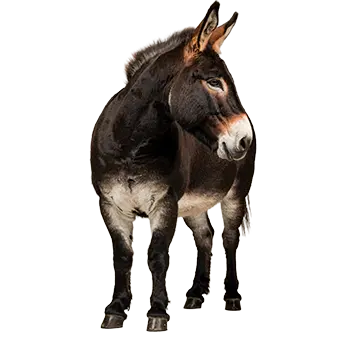

American Mammoth Jackstock Species Guide - Furry Critter Network

American Mammoth Jackstock

Quick Facts

🔬 Scientific Name
Equus asinus
🥚 Production Type
Draft/Guard/Companion
📊 Care Level
Intermediate
😊 Temperament
Calm/Intelligent
📏 Adult Size
900-1,200 lbs, 14-16 hands (56-64 inches)
⏱️ Lifespan
25-35 years
🏠 Space Requirement
1/2 to 1 acre per donkey with shelter
🌡️ Climate Hardiness
All Climates - very adaptable
🍽️ Diet Type
Herbivore/Grazer
🌍 Origin
United States (Kentucky and Tennessee)
📐 Size
Extra Large

American Mammoth Jackstock - Names & Recognition

The Mammoth Donkey's official breed name is American Mammoth Jackstock, though they're commonly called Mammoth Donkeys or simply Mammoths in casual conversation. The term 'jackstock' refers to breeding stock jacks (male donkeys) used to produce mules when bred to mares. This naming convention reflects the breed's original purpose in American agriculture.

Developed in the United States during the late 1700s and early 1800s, the breed originated when large European donkey breeds were imported to create superior mule production stock. George Washington and Henry Clay were instrumental in the breed's development, importing Catalan, Maltese, and other large European donkeys to cross with existing American stock. The result was a uniquely American breed exceeding its European ancestors in size.

Male Mammoth Donkeys are called jacks, females are jennets or jennies, and castrated males are geldings. The breed standard requires jacks to stand at least 14 hands (56 inches) at the withers, with jennets standing at least 13.2 hands. Many individuals exceed these minimums substantially, with some jacks reaching 16 hands or taller. This size distinction separates them from standard donkeys and places them among the world's largest equines.

American Mammoth Jackstock Physical Description

Mammoth Donkeys are striking animals whose size immediately commands attention. Breed standard jacks must stand at minimum 14 hands (56 inches) at the withers, with many exceeding 15 hands and some reaching 16 hands or taller. Jennets must measure at least 13.2 hands. Adults typically weigh 900 to 1,200 pounds, with exceptional individuals reaching 1,400 pounds. Their substantial bone structure and muscular build support this impressive mass.

The head is large and well-proportioned to the body, with characteristically long ears measuring 33 inches or longer from tip to tip. These impressive ears serve important thermoregulatory and sensory functions. The face is straight to slightly convex, with large, kind eyes that reflect their gentle nature. The neck is strong and slightly crested in jacks, flowing into well-defined withers and a straight, strong back.

Mammoth Donkeys come in various colors, though black and dark brown are most common. Gray, sorrel, and white also occur. Many display the distinctive cross pattern across their shoulders, a marking common in donkeys. Their coats are typically short and sleek in summer, growing longer and shaggier in winter. Unlike horses, donkeys don't develop the same waterproof coat oils, making them more vulnerable to rain exposure.

The legs are strong and well-muscled with excellent bone density. Hooves are characteristically upright and small relative to body size compared to horses, a donkey trait that can make them prone to founder if overfed. The tail is similar to a cow's, with short hair along the dock and a tuft at the end. Overall conformation emphasizes strength, endurance, and pulling power rather than speed, reflecting their draft heritage.

Handling Tolerance
Mammoth Donkeys are generally very tolerant of handling when properly trained from a young age. Their size requires confident handlers, but they're remarkably gentle and patient during grooming, hoof care, and veterinary procedures. Early socialization and consistent positive handling create willing, cooperative animals despite their impressive stature.
Temperament
These gentle giants possess calm, intelligent temperaments that belie their massive size. They exhibit patience with children and other animals, rarely displaying aggression. Mammoth Donkeys bond strongly with their caretakers and are known for their steady, reliable nature. Their intelligence can manifest as stubbornness if not properly motivated.
Noise Level
Mammoth Donkeys produce loud, carrying brays that can travel over a mile in open country. Jacks (males) tend to be more vocal than jennets (females), particularly during breeding season. Their alarm calls alert to predators or unusual situations. This vocal nature makes them excellent guardians but requires consideration in residential areas.
Space Requirements
Due to their large size, Mammoth Donkeys require substantial space. A minimum of half an acre per donkey is recommended, with more space ideal for exercise and grazing. They need sturdy shelters with high clearances, strong fencing, and adequate room to move comfortably. Their size makes them unsuitable for small properties.
Climate Hardiness
Mammoth Donkeys demonstrate exceptional climate adaptability, thriving from cold northern regions to hot southern climates. Their thick winter coats protect against cold, while they tolerate heat well with shade and water. They require shelter from extended rain as their coats don't shed water like horses, but adapt to virtually any climate zone.
Foraging Ability
Excellent foragers with efficient metabolisms, Mammoth Donkeys thrive on roughage and browse that would poorly sustain horses. They browse brush, eat weeds, and efficiently utilize poor-quality pasture. However, their efficiency means they easily become obese on rich pasture, requiring careful grazing management to prevent metabolic issues and founder.
Maintenance Level
Moderate maintenance requirements include regular hoof trimming every 8-12 weeks, which can be challenging due to their size. Their coats require seasonal grooming, and they need routine dental care and parasite management. While hardy, their size means all tasks require appropriate equipment and facilities. Fencing must be exceptionally strong and tall.
Productivity
Historically bred to produce large, high-quality mules when bred to draft mares, Mammoth jacks remain valuable for mule production. They also excel as livestock guardians, protecting sheep, goats, and cattle from predators. Their draft capabilities allow them to pull heavy loads. Long lifespans and minimal health issues provide decades of productive service.

Temperament

Mammoth Donkeys are renowned for their gentle, calm temperaments that contrast beautifully with their imposing size. They display remarkable patience and tolerance, particularly with children and smaller animals. This gentle nature makes them excellent family animals despite their size, though their mass requires handlers to be aware and confident rather than fearful. A well-socialized Mammoth Donkey is trustworthy, steady, and surprisingly affectionate.

Intelligence is a defining characteristic of the breed, and this intelligence manifests in both positive and challenging ways. Mammoth Donkeys are quick learners who remember both good and bad experiences. They respond well to consistent, patient training using positive reinforcement. However, their intelligence also means they can be stubborn when they perceive a request as unreasonable or when they've learned that resistance achieves their goals. This isn't true stubbornness but rather a thinking animal making decisions, which requires handlers to earn respect and cooperation rather than demanding blind obedience.

Social bonds are extremely important to Mammoth Donkeys. They're herd animals who become deeply attached to their companions, whether other donkeys, horses, goats, or even humans. A lone donkey often becomes depressed, anxious, or develops behavioral problems. They thrive in pairs or small groups, forming lasting friendships with preferred companions. When bonded, they'll call loudly if separated and show obvious distress until reunited.

As livestock guardians, Mammoth Donkeys demonstrate protective instincts toward animals in their care. They'll position themselves between their charges and perceived threats, using their size, loud brays, and defensive behaviors to deter predators. Jacks can be particularly protective and may become aggressive toward canids. This guardian instinct makes them valuable for protecting sheep, goats, and cattle, though individual temperament varies.

Daily behavior patterns include grazing, resting in preferred spots, dust bathing, mutual grooming with companions, and investigating their environment. They're curious animals who notice changes in their surroundings and will investigate new objects or situations cautiously. Play behavior, including running, bucking, and play-fighting, occurs primarily in younger animals but adults occasionally engage in playful behavior, particularly after being confined or during pleasant weather.

Enclosure & Husbandry

Housing Mammoth Donkeys requires substantial, sturdy facilities appropriate to their size and strength. A three-sided run-in shelter measuring at minimum 12x12 feet per donkey provides essential protection from weather, with higher roof clearances (10-12 feet) necessary to accommodate their height. Unlike horses, donkeys don't have waterproof coats and become miserable when wet for extended periods. The shelter should have good drainage, dry flooring, and adequate ventilation to prevent respiratory issues.

Fencing must be exceptionally strong and tall to contain these powerful animals. Five-foot-tall fencing is minimum, with five to six feet preferred. Post-and-rail, pipe fencing, or non-climb horse fence work well. Barbed wire should be avoided as it can cause serious injuries. Gates must be extra-strong with secure latches, as donkeys are intelligent escape artists who will manipulate weak latches. All fencing should be regularly inspected and maintained, as these large animals can damage compromised fencing.

Pasture requirements are substantial due to their size, with a minimum of half an acre per donkey recommended, though more is better. However, Mammoth Donkeys are extremely efficient metabolizers who easily become obese on rich pasture. Rotational grazing, dry lot management with controlled hay feeding, or grazing muzzles may be necessary to prevent obesity and associated health issues like founder. They browse brush effectively and help control unwanted vegetation.

Predator protection is less critical for adult Mammoth Donkeys than smaller livestock, as their size deters most predators. However, foals are vulnerable and require secure fencing and supervision. The greater concern is often containing the donkeys themselves, as they can jump, lean over, or break through inadequate fencing. Electric fencing alone is insufficient for primary containment, though a hot wire can reinforce other fencing.

Water access must accommodate their size and drinking habits. Large, sturdy water troughs holding at least 50 gallons ensure adequate supply. Automatic waterers should be checked regularly as donkeys may play with or damage them. Winter water heating prevents freezing in cold climates. Clean, fresh water available at all times is essential, particularly in hot weather when large animals need substantial hydration.

Equipment needs include extra-large or draft-sized grooming tools, sturdy halters and lead ropes rated for their size, and appropriate handling facilities. A covered area for hoof trimming protects farriers from weather. Feeders should be designed to prevent obesity while allowing comfortable access. All equipment must be scaled to their size and strength to ensure safety and effectiveness.

Feeding & Nutrition

Mammoth Donkeys require careful nutritional management due to their extremely efficient metabolisms and susceptibility to obesity. Despite their large size, they need significantly less feed than a horse of comparable weight. The foundation of their diet should be grass hay or mixed grass hay, fed at approximately 1.5-2% of body weight daily. A 1,000-pound Mammoth Donkey needs roughly 15-20 pounds of hay daily, less than a similar-sized horse.

Hay quality matters tremendously. Moderate-quality grass hay is actually preferable to rich alfalfa or clover hay, which can lead to obesity and metabolic problems. First-cut grass hay with some stem material provides appropriate nutrition without excess calories. Alfalfa should be avoided or used only sparingly as a supplement for pregnant or nursing jennets, growing youngsters, or underweight individuals. Most mature, idle Mammoth Donkeys maintain excellent condition on grass hay alone.

Pasture access requires careful management. While donkeys are excellent foragers who thrive on browse and weeds, lush spring pasture or rich grass pastures pose serious obesity risks. Many owners use dry lot management, providing controlled hay portions and limiting grazing time. Rotational grazing, strip grazing, or grazing muzzles allow some pasture access while preventing overconsumption. Poor or overgrazed pasture that wouldn't support horses may be ideal for maintaining healthy weight in Mammoth Donkeys.

Concentrates (grain or pelleted feed) are rarely necessary for adult Mammoth Donkeys and often contribute to obesity and founder. When needed for pregnant jennets, nursing mothers, growing youngsters, or working animals, equine-appropriate feeds designed for donkeys or low-NSC (non-structural carbohydrate) feeds should be fed in small quantities. Most mature, idle adults need no grain whatsoever and thrive on hay alone.

Mineral supplementation is essential. A free-choice mineral block or loose minerals formulated for equines ensures adequate mineral intake, particularly important in areas with mineral-deficient soil. Salt should always be available, either as loose salt or salt blocks. Some owners provide both to ensure adequate sodium intake. In selenium-deficient regions, selenium supplementation may be necessary.

Water consumption varies with weather, activity, and diet but typically ranges from 5-10 gallons daily. During hot weather or if working, consumption increases substantially. Clean, fresh water must always be available. Donkeys sometimes refuse water they perceive as dirty or contaminated, so regular cleaning of water sources is essential.

American Mammoth Jackstock Health & Lifespan

Mammoth Donkeys are generally hardy animals with fewer health issues than many livestock species. Their robust constitutions and efficient metabolisms contribute to their longevity, with many living well into their 30s with proper care. However, their unique physiology and size create specific health considerations. Their efficient metabolism makes them prone to obesity-related conditions, while their size can complicate certain health issues and treatments. Establishing a relationship with a veterinarian experienced with equines, particularly donkeys, is essential. Regular preventive care, careful nutritional management, and prompt attention to problems keep these gentle giants healthy throughout their long lives.

With proper preventive care, appropriate nutrition, and attentive management, Mammoth Donkeys live long, healthy lives with minimal serious health issues. Their hardy constitutions and generally sound temperaments make them rewarding animals whose health needs, while specific to their species, are manageable with education and commitment.

Common Health Issues

  • Obesity and metabolic syndrome are the most common health issues - Resulting from overfeeding and rich pasture access. Excess weight leads to founder, joint stress, and insulin resistance. Careful dietary management and weight monitoring prevent these serious conditions.
  • Hyperlipemia, a life-threatening metabolic disorder - Occurs when stressed donkeys stop eating and mobilize fat stores, overwhelming the liver. Pregnant jennets, nursing mothers, and obese animals face highest risk. Maintaining healthy weight and ensuring eating during stress prevents this dangerous condition.
  • Hoof problems including founder - Laminitis, , abscesses, and thrush occur more frequently in donkeys than horses due to their naturally upright hooves. Proper nutrition, weight management, dry footing, and regular trimming every 8-12 weeks maintain healthy hooves.
  • Dental issues develop as molars wear unevenly - Creating sharp points that interfere with chewing. Annual dental examinations and floating when needed ensure proper nutrition absorption and prevent mouth pain. Their size can make dental work challenging.
  • Internal parasites including strongyles - Roundworms, and tapeworms cause weight loss, poor coat condition, and colic. Regular fecal testing determines parasite loads, and targeted deworming based on test results prevents resistance while managing parasites effectively.
  • Respiratory infections can be serious in donkeys - Who may not show obvious symptoms until conditions are advanced. Good ventilation, dust control, and prompt attention to coughing, nasal discharge, or respiratory effort prevent complications from infections.

Preventive Care & Health Monitoring

  • Establish a vaccination schedule appropriate for your area - Typically including tetanus, Eastern and Western encephalomyelitis, West Nile virus, and rabies. Work with a veterinarian familiar with equines to develop protocols. Some vaccines require booster doses and annual updates.
  • Implement biosecurity practices including quarantining new animals for 30 days before introducing them to existing donkeys - Limit visitor access to areas housing animals and maintain clean footwear protocols to prevent disease introduction to healthy animals.
  • Schedule regular hoof trimming every 8-12 weeks with a farrier experienced with donkeys - Their upright hooves and size require specific techniques. Regular trimming prevents crippling hoof problems and maintains mobility throughout their long lives.
  • Annual veterinary examinations including dental checks - Body condition scoring, and health assessments catch developing problems early. Establish this relationship before emergencies occur. Semi-annual fecal testing determines parasite loads and guides deworming protocols.

Handling & Care

Handling Mammoth Donkeys safely requires confidence, knowledge of equine behavior, and appropriate techniques scaled to their size. While generally gentle, their mass means any resistance or accident can have serious consequences. Approach calmly and announce your presence, as sudden movements or surprises may cause startled reactions. Most Mammoth Donkeys enjoy human interaction when socialized from young age and respond well to gentle, consistent handling.

Halter training should begin as early as possible, ideally when donkeys are foals. A well-fitted halter and strong lead rope appropriate to their size are essential. Leading requires firmness without harshness, as pulling a resistant 1,000-pound donkey is impossible. Instead, patience and positive reinforcement encourage cooperation. Many donkeys lead better with a companion nearby, as their herd instincts make separation stressful.

Grooming provides health monitoring opportunities and strengthens bonds. Use sturdy curry combs, stiff brushes, and hoof picks designed for large equines. Pay particular attention to hooves during grooming, checking for stones, thrush, or abnormalities. Many Mammoth Donkeys enjoy being groomed and will stand patiently, though some are sensitive about ears or legs. Regular grooming removes dirt, distributes skin oils, and allows early detection of injuries, parasites, or skin conditions.

Hoof care is critical and requires experienced farriers comfortable working with large donkeys. Hooves need trimming every 8-12 weeks to maintain proper angles and prevent problems. The naturally upright donkey hoof requires specific trimming techniques different from horse hooves. Between farrier visits, regular hoof picking prevents thrush and allows monitoring for issues. Teaching donkeys to lift feet on command makes farrier work safer and easier.

Suitability & Considerations

Mammoth Donkeys suit experienced livestock owners with adequate space, facilities, and commitment to their long-term care. Their 25-35 year lifespan represents a substantial commitment requiring stable housing, consistent care, and ongoing expenses. First-time donkey owners can succeed with education and guidance, but these animals deserve knowledgeable, committed caretakers who understand their specific needs.

Property requirements include minimum half-acre per animal, sturdy fencing, and appropriate shelter. Smaller properties lack adequate space for these large animals. Strong fencing capable of containing powerful, intelligent animals is essential. Shelter protecting from extended rain and extreme weather is necessary. Properties in areas prone to muddy conditions need additional management to protect vulnerable hooves.

Zoning and legal considerations are critical before acquiring Mammoth Donkeys. Many urban and suburban areas prohibit livestock entirely or restrict numbers and types. Agricultural zoning may be required, which limits suitable locations. HOA rules frequently ban all livestock including donkeys. Noise ordinances may be violated by their loud brays, particularly by vocal jacks. Check all local regulations, obtain necessary permits, and ensure compliance before bringing donkeys home.

Their guardian capabilities make them valuable for protecting livestock from predators, but individual temperament varies. Some become excellent guardians while others show little protective instinct. Jacks may be too aggressive for some situations, while jennets and geldings typically provide gentler protection. Never rely solely on guardian animals for predator protection; proper fencing and husbandry remain essential.

The commitment extends beyond space and legalities to time, knowledge, and financial resources. These animals require daily care, regular farrier and veterinary services, and emergency funds for unexpected health issues. Their intelligence and social needs demand interaction and mental stimulation. Owners must be prepared for the physical demands of caring for animals this large, particularly as they age and may require additional support.