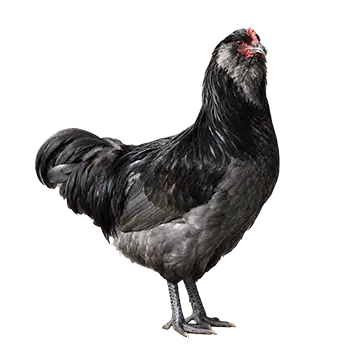
The Ameraucana presents a medium-sized, well-balanced body with an upright, alert carriage that conveys an impression of vigor and attentiveness. The breed standard calls for a moderately broad body with a long, sloping back carried at a slight upward angle toward the tail. The breast is well-rounded and carried forward, and the wings are large and held tight against the body. Hens weigh approximately five and a half pounds at maturity while roosters reach six and a half pounds, placing the breed in the medium-weight category. The overall build is athletic and functional rather than the exaggerated roundness seen in heavy dual-purpose breeds or the extreme leanness of production Leghorn types.
The breed's most immediately distinctive features are the muffs and beard, dense clusters of feathers projecting outward and downward from the sides of the face and chin. These facial furnishings give the Ameraucana a characteristically puffy-cheeked, owl-like appearance that distinguishes it at a glance from clean-faced breeds. The muffs extend from the ear region while the beard fills the area beneath the beak, and together they provide functional insulation for the face in cold weather as well as defining the breed's visual identity. Judges evaluate muffs and beard for fullness, symmetry, and proper positioning, penalizing birds with sparse, uneven, or absent facial feathering.
The pea comb is another defining physical characteristic, consisting of three low, parallel ridges running lengthwise across the top of the head, with the center ridge slightly higher than the two outer ridges. This compact comb sits close to the skull with minimal exposed surface area, providing excellent resistance to frostbite in cold climates. Wattles are small to medium and red, while earlobes are small, smooth, and red. The eyes are reddish bay in most varieties, contributing to an alert, expressive facial appearance framed by the surrounding muff feathering.
Plumage color varies across the eight recognized varieties, each with specific standard requirements for hackle, body, wing, and tail coloration. The Blue variety features an even medium slate-blue across the body without lacing, while the Wheaten variety shows dramatic sexual dimorphism with golden-wheaten hens and dark red-shouldered roosters. Shanks and toes are slate blue to black in most varieties, with some showing willow-green tones depending on the color pattern. Skin color is white, distinguishing Ameraucanas from yellow-skinned American breeds. The tail is moderately spread and carried at a forty-five-degree angle, a notable departure from the rumpless Araucana from which the breed descends.
Handling Tolerance
★★★☆☆
Ameraucanas vary considerably in their tolerance for handling depending on socialization history and individual temperament. Birds raised with frequent gentle contact from the brooder stage often become comfortable being held and examined, though they tend to be less affectionate than breeds known as lap chickens. Unsocialized or minimally handled Ameraucanas can be skittish and evasive, requiring patience and consistent positive interaction to build trust. Their alert, somewhat independent nature means they prefer to approach on their own terms rather than being chased and caught.
Temperament
★★☆☆☆
Ameraucanas generally display a mild, curious disposition that sits comfortably in the middle range of chicken temperaments. They are not aggressive toward flock mates or humans under normal circumstances, though they maintain an alert awareness of their surroundings that keeps them watchful and occasionally cautious. Roosters are typically less confrontational than many heritage breed males, making them more manageable in mixed flocks. Their gentle nature makes them suitable companions for other docile breeds, though they can be pushed aside by more dominant varieties if not given adequate space and resources.
Noise Level
★★☆☆☆
Ameraucanas are a relatively quiet breed, producing standard vocalizations at moderate volumes. Hens perform the typical egg song after laying and will sound alarm calls when they detect potential threats, but they are not prone to the prolonged, loud cackling that characterizes some Mediterranean breeds. Roosters crow at normal intervals without the excessive frequency associated with more vocal breeds. Their moderate noise output makes Ameraucanas a reasonable choice for settings where excessive poultry noise could create tension with nearby neighbors.
Cold Hardiness
★★★★☆
Ameraucanas handle cold weather well thanks to their pea comb, which sits low and tight against the head with minimal exposed tissue vulnerable to frostbite. This compact comb design is one of the breed's most practical advantages in northern climates where large single combs routinely suffer cold damage. Their full muffs and beard provide additional insulation around the face, and their moderately dense plumage offers solid protection against low temperatures. While not quite as heavily feathered as breeds like Cochins or Wyandottes, Ameraucanas maintain activity and production through cold winters with appropriate housing.
Egg Production
★★★☆☆
Ameraucanas are moderate layers producing approximately 150 to 200 blue eggs per year under good management conditions. Their eggs are medium to large in size with shells ranging from pale sky blue to a deeper robin's egg blue, though shell color intensity can vary between individual hens and across laying cycles. Production begins at approximately 20 to 24 weeks of age and remains reasonably consistent for the first two to three years before gradually declining. They are not competitive with high-production commercial breeds but offer dependable output combined with the novelty of genuinely blue-shelled eggs.
Foraging Ability
★★★★☆
Ameraucanas are active, capable foragers that make efficient use of free-range opportunities. Their alert temperament and moderate build allow them to cover ground effectively while remaining aware of predator threats. They scratch through leaf litter, hunt insects, sample greenery, and explore their environment with genuine curiosity throughout the day. Good foraging ability supplements commercial feed intake and provides dietary diversity that can enhance egg yolk color and nutritional content. Their tendency to stay moderately close to the coop makes them manageable free-range birds that do not typically wander excessively far.
Broodiness
★★☆☆☆
Ameraucanas show relatively low broodiness compared to many heritage breeds, with most hens continuing to lay consistently without interrupting production to sit on eggs. Occasional individuals will go broody, particularly in spring and early summer, but it is not a dominant breed trait. This low broody tendency is advantageous for keepers focused primarily on egg production, as broody periods halt laying for extended stretches. Keepers who want a self-sustaining flock through natural incubation may need to rely on a different breed for mothering duties or use an incubator for hatching Ameraucana eggs.
Show Quality
★★★★☆
Ameraucanas are well-established exhibition birds with eight recognized large fowl color varieties in the APA Standard of Perfection. Competitive showing requires strict adherence to breed type including proper pea comb, full muffs and beard, slate or black shanks depending on variety, and correct body conformation. The breed's distinctive facial furnishings and blue egg requirement make it one of the more challenging breeds to perfect for exhibition, as judges evaluate the total package of type, color, and production characteristics. Dedicated breeders invest years refining their lines to achieve the precise balance the standard demands.