
African Black Ostrich Species Guide - Furry Critter Network

African Black Ostrich

Quick Facts

🔬 Scientific Name
Struthio camelus var. domesticus
🥚 Production Type
Meat
📊 Care Level
Expert
😊 Temperament
Curious
📏 Adult Size
220-350 lbs
⏱️ Lifespan
30-40 years
🏠 Space Requirement
5000+ sq ft per breeding pair minimum
🌡️ Climate Hardiness
All Climates - very hardy
🍽️ Diet Type
Omnivore
🌍 Origin
Africa (domesticated variety)
📐 Size
Extra Large

African Black Ostrich - Names & Recognition

The Black African Ostrich represents a domesticated variety of the common ostrich, scientifically classified as Struthio camelus var. domesticus, distinguishing it from wild ostrich subspecies remaining in Africa. The "Black" designation refers to the dramatic black plumage of adult males contrasting with white wing and tail feathers, creating the striking appearance making ostriches instantly recognizable. This coloring distinguishes domesticated birds selected for agricultural production from the several wild subspecies showing variations in skin color, size, and plumage characteristics across different African regions.

Historically, ostriches were hunted nearly to extinction in the 19th century for their decorative plumes used in fashion, spurring the development of ostrich farming in South Africa's Cape Colony around 1860. Domestication selected for docility, productivity, and the striking black and white coloration now standard in farming operations. The common name "ostrich" derives from Greek and Latin words for large birds, reflecting their prominence in European awareness since ancient times. Regional names in various African languages describe these birds, though English terminology dominates international agriculture and trade.

Several wild ostrich subspecies exist in Africa including the North African Ostrich (Struthio camelus camelus), Somali Ostrich (Struthio molybdophanes), and others, though some taxonomists debate their exact classification and species status. Domesticated Black African Ostriches primarily descend from southern African populations, with breeding programs establishing consistent characteristics across generations of captive selection. Modern farming ostriches show little genetic diversity compared to wild populations, reflecting concentrated breeding programs focused on production traits rather than maintaining the genetic variability seen across wild subspecies' ranges.

In commercial contexts, terms like African Black, Black Ostrich, or simply ostrich refer to the domesticated variety, with wild subspecies rarely entering agricultural discussion. Blue Neck and Red Neck refer to wild subspecies based on exposed skin coloration, but these are not typically farmed. The standardized Black African variety dominates worldwide ostrich agriculture from South Africa to North America, Europe, and Australia, with consistent characteristics enabling predictable production outcomes.

African Black Ostrich Physical Description

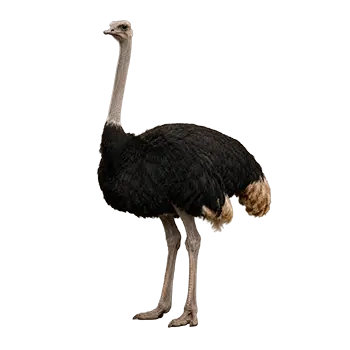
Black African Ostriches are the world's largest living birds, with adult males standing 7-9 feet tall at the head and weighing 220-350 pounds. Females are slightly smaller, typically weighing 200-280 pounds and standing somewhat shorter than males. Their impressive size combines with striking sexual dimorphism in plumage, with adult males displaying glossy black feathers covering the body and wings, contrasted by pure white tail plumes and white primary wing feathers creating dramatic visual impact. This black and white coloration serves social and possibly thermoregulatory functions in their native African habitats.

Females and immature birds display drab brown-gray plumage lacking the dramatic contrast of adult males, providing camouflage when incubating eggs or protecting chicks in open grassland habitats. The brown coloration shows individual variation from light gray-brown to darker tones, with some regional variation in exact shading. Juveniles transition gradually from brown to adult plumage, with males developing black feathers and distinctive coloring around 2-3 years of age as they reach sexual maturity.

The ostrich head appears small relative to body size, positioned atop a long, flexible neck allowing birds to reach ground for feeding and raising high for scanning surroundings for predators. Large, prominent eyes provide excellent vision including exceptional long-distance sight crucial for detecting threats in open habitats. Thick eyelashes protect eyes from sun, dust, and vegetation while feeding. The flat, broad bill is adapted for grazing vegetation and picking up varied food items including stones serving as gastroliths for grinding food in the gizzard.

Exposed skin on the head, neck, and legs shows species and individual variation, with domesticated Black Africans typically displaying blue-gray neck skin and pink-gray leg skin. During breeding season, male neck and leg skin intensifies in color, becoming brighter red or pink advertising breeding condition to females. This color change provides visual indication of breeding readiness, allowing farmers to identify optimal breeding timing without handling birds unnecessarily.

The most distinctive physical features are the powerful legs ending in two-toed feet, unique among birds. Each foot has two toes, with the larger inner toe bearing a dangerous claw up to 4 inches long capable of inflicting fatal injuries to predators or careless handlers. These legs enable ostriches to run at speeds exceeding 40 mph, making them the fastest bipedal animal on Earth. The muscular thighs contain much of the commercially valuable meat when birds are processed. Wing structure is reduced compared to flying birds, with wings used for balance during running, courtship displays, and shading chicks rather than flight, which ostriches lost evolutionarily millions of years ago.

Handling Tolerance
African Ostriches tolerate handling poorly despite hand-raising, remaining large, powerful, and potentially dangerous birds throughout their lives. Even calm, well-socialized individuals can inflict serious injury with their powerful legs and sharp claws if startled or defensive. Professional handling techniques and specialized equipment are essential for any interaction beyond feeding and observation. Their size and strength make casual handling impossible and dangerous.
Temperament
Ostriches display curious but unpredictable temperament, with individual personalities ranging from relatively calm to highly reactive and aggressive. Breeding males become particularly territorial and dangerous during nesting season. Their intelligence allows learning but also means they remember negative experiences. Even experienced handlers maintain constant awareness of ostrich capabilities, never becoming complacent regardless of individual bird's history of calm behavior.
Noise Level
Ostriches produce various vocalizations including booming calls from males during breeding season, hissing when threatened, and snorting sounds during social interactions. While not constantly vocal like some poultry, their calls are loud and distinctive, carrying considerable distances. Breeding season increases vocalization frequency as males advertise territories and attract females through deep, resonant booming audible over long distances.
Space Requirements
Ostriches require extensive space exceeding any common domestic poultry, with breeding pairs needing minimum 5,000 square feet and significantly more for optimal welfare. Their large size, running requirements, and territorial breeding behavior make small enclosures completely inappropriate. Successful ostrich operations require multiple acres with specialized fencing and facilities, representing major land and infrastructure investments unsuitable for typical suburban or small farm settings.
Climate Hardiness
Exceptionally hardy across extreme temperature ranges, African Ostriches thrive from desert heat exceeding 100°F to freezing winter conditions well below 0°F. Their dense feather coverage and behavioral adaptations enable survival across diverse climates worldwide. They successfully farm from hot southern regions to cold northern areas with minimal climate accommodation beyond basic shelter from extreme weather and wind protection.
Foraging Ability
Ostriches are excellent foragers, grazing grasses and consuming varied vegetation, insects, and small animals when available. They can obtain substantial nutrition from quality pasture during growing seasons, significantly reducing commercial feed costs for operations with adequate grazing land. However, optimal growth and production still require supplemental high-quality rations, particularly for rapidly growing juveniles and breeding females.
Maintenance Level
Ostriches demand intensive, expert-level maintenance including daily feeding and monitoring, specialized facility upkeep, careful breeding season management, and professional handling skills. Their size, strength, and potential danger create complex management challenges requiring substantial knowledge, physical capability, and constant vigilance. Long lifespans of 30-40 years mean decades-long commitment. Only experienced, dedicated operators should attempt ostrich farming.
Productivity
Ostrich productivity focuses on valuable leather (highest quality available), lean red meat, and eggs rather than rapid reproduction. Hens lay 40-100 eggs per season with 42-day incubation periods. Birds reach slaughter weight at 10-14 months. One bird yields 70-80 pounds of meat, 14 square feet of premium leather, and valuable feathers. Economic returns require scale, patience, and developed markets unlike conventional livestock.

Temperament

Black African Ostriches exhibit complex behavioral patterns combining curiosity with unpredictability, creating management challenges requiring expert knowledge and constant vigilance. Well-raised birds develop some tolerance of familiar handlers but never lose their capacity for sudden defensive reactions potentially causing serious injury. Their intelligence enables learning routines and recognizing individual people, but also means they remember negative experiences and may develop permanent wariness or aggression following frightening or painful encounters. Successful ostrich farming requires understanding these behavioral nuances and maintaining professional respect for birds' capabilities.

Social behavior in ostriches centers on breeding season dynamics when males become highly territorial, defending areas against rival males while courting females through elaborate displays. Males perform "kantling" displays involving wing spreading, neck undulating, and deep booming calls audible over long distances. Females evaluate multiple males before selecting mates, with dominant females (major hens) establishing primary breeding relationships while other females (minor hens) may also breed with the same male and contribute eggs to communal nests.

Breeding season transformation in male behavior is dramatic, with previously manageable birds becoming dangerous as territorial aggression intensifies. Males actively defend nest territories against all perceived threats including familiar handlers, using powerful forward kicks capable of killing large predators or seriously injuring humans. This seasonal aggression necessitates modified management during breeding periods, with experienced operators avoiding unnecessary nest area intrusions and using specialized equipment or techniques for essential interventions. The breeding season risk makes ostrich farming unsuitable for casual or inexperienced operators.

Once eggs are laid in ground nests, the dominant female assumes primary incubation during daylight hours while the male incubates at night, providing the dark plumage camouflage for nighttime predator avoidance. This role reversal in parental care is unusual among birds. Incubation lasts approximately 42 days, with both sexes vigorously defending nests against threats. In commercial operations, eggs are typically collected for artificial incubation rather than allowing natural hatching, preventing the extreme aggression associated with chick protection while improving hatching success and chick management.

Foraging behavior occupies much of ostriches' active time outside breeding season, with birds grazing grasses and browsing varied vegetation across their territories. They walk constantly while feeding, covering significant distances daily explaining their large space requirements in captivity. Feeding technique involves pecking and grasping food with the bill tip, occasionally consuming stones serving as gastroliths aiding mechanical digestion in the gizzard. Social feeding occurs in groups, with multiple birds often grazing together outside breeding season when territorial aggression decreases. Their remarkable eyesight allows them to spot potential threats at great distances, with the entire group benefiting from collective vigilance against predators.

Enclosure & Husbandry

Housing and fencing infrastructure for Black African Ostriches represents major investment requiring specialized design accounting for their size, strength, and behavioral needs. Minimum enclosure size for breeding pairs is 5,000 square feet, though larger areas significantly improve welfare and reduce breeding season aggression problems. Commercial operations typically provide 1-3 acres per breeding group, allowing natural movement patterns and behavior expression while facilitating management. The substantial space requirement makes ostrich farming impossible on typical suburban properties, requiring rural acreage and zoning permitting exotic livestock.

Fencing for ostriches demands robust construction withstanding significant force from large, powerful birds. Minimum fence height of 6 feet prevents escape, with most operations using 8-foot fencing for security. Materials include heavy-duty woven wire, specialized ostrich fencing, or board fencing, all requiring substantial posts deeply set and adequately braced. Standard livestock fencing often proves inadequate, as ostriches can damage lighter construction through leaning, kicking, or attempting escape when startled. Corners and gates require extra reinforcement, representing particular weak points in perimeter security.

Shelter requirements are minimal given ostriches' extreme climate hardiness, though basic protection from severe weather benefits birds and simplifies management. Simple three-sided sheds providing wind breaks and shade suffice in most climates, with some operations maintaining minimal or no shelter in temperate regions. Flooring in sheltered areas should provide good drainage preventing muddy conditions that could contribute to foot problems. Breeding season may require nest shelters or covered areas where birds establish nesting territories protected from excessive rain or snow.

Pasture management significantly impacts operation economics when adequate grazing land is available, with ostriches obtaining substantial nutrition from quality grassland during growing seasons. Rotational grazing prevents overgrazing while maintaining productive pastures supporting natural foraging behavior. However, even on excellent pasture, supplemental grain-based rations are typically necessary for optimal growth rates in juveniles and egg production in breeding females. Winter feeding relies heavily on stored forages and grain when pastures are dormant in cold climates.

Watering systems must provide constant access to clean, fresh water at heights suitable for ostrich drinking position while being robust enough to withstand interaction from curious, powerful birds. Large automatic waterers designed for horses or cattle work well, with heating elements essential in freezing climates. Water consumption varies with temperature, diet moisture content, and reproductive status, but can exceed 10 liters daily per bird during hot weather. Reliable water supply is critical for preventing dehydration and heat stress, particularly during summer months in hot regions.

Breeding pen design requires careful attention to male territorial behavior, with many operations maintaining separate large pens for each breeding male and his harem during nesting season. Some farms use breeding trios (one male, two females) in separate breeding paddocks, while others maintain larger groups outside breeding season and separate pairs or trios only during active breeding periods. Management strategies vary, but all must account for male aggression and the need for females to have adequate space avoiding excessive male attention causing stress or injury.

Handling facilities including chutes, squeeze pens, and specialized equipment are essential for any operation planning to manage birds beyond basic feeding and observation. These facilities allow safe catching, restraint, and transport of birds for health procedures, sales, or processing. Professional handling facility design prevents injury to both birds and handlers while enabling necessary management activities. Without proper facilities, many essential husbandry tasks become dangerous or impossible, severely limiting operation viability.

Feeding & Nutrition

Black African Ostriches are opportunistic omnivores with dietary requirements carefully studied due to their commercial importance. In nature, they consume diverse diet including grasses, forbs, leaves, seeds, flowers, insects, and small vertebrates, demonstrating remarkable dietary flexibility allowing survival across varied African ecosystems. Captive ostriches require precisely formulated rations providing appropriate protein, energy, fiber, vitamins, and minerals supporting rapid growth, reproduction, and health throughout potentially 40-year lifespans.

Commercially formulated ratite feeds specifically designed for ostriches provide optimal nutrition, with different formulations for various life stages. Chick starter containing 20-22% protein and higher energy density supports rapid early growth from hatching through 3 months. Grower rations with 16-18% protein feed from 3 months through 12-14 months when birds typically reach slaughter weight. Breeder rations formulated for reproductive females contain appropriate calcium, phosphorus, and vitamins supporting egg production without causing obesity. Maintenance rations for non-breeding adults provide nutrition without excess protein or calories.

Feed presentation typically uses large trough feeders at heights allowing comfortable access for birds' ground-feeding posture. Ostriches are messy feeders that scatter feed, making feeder design important for minimizing waste of expensive rations. Most operations feed once or twice daily using measured amounts preventing obesity while ensuring adequate nutrition. Free-choice feeding can work but risks obesity in breeding stock, particularly females who must maintain appropriate body condition for sustained egg production. Feed consumption varies dramatically by age, with mature birds consuming 3-4 pounds of grain daily plus significant pasture intake when available.

Pasture grazing supplements formulated rations when adequate quality grazing land is available, with ostriches readily consuming grasses, clovers, alfalfa, and various forbs. Quality pasture can reduce commercial feed requirements by 30-50% during peak growing seasons, providing both nutritional and significant economic benefits to operations with adequate grazing land. However, pasture alone rarely supports optimal growth or production, making supplemental feeding necessary even on excellent forage. Winter months in cold climates require increased grain feeding when pastures are dormant and birds need additional calories maintaining body temperature.

Mineral and vitamin supplementation is critical for ostrich health and productivity, with specific requirements differing from cattle or horses. Calcium and phosphorus balance is crucial, affecting skeletal development in growing birds and eggshell formation in laying females. Vitamin E and selenium support reproduction and immune function. Many operations provide free-choice mineral mixes formulated specifically for ratites, ensuring birds can self-regulate intake meeting individual needs. Deficiencies in key nutrients cause leg problems in juveniles, poor hatchability in breeding operations, and decreased immune function increasing disease susceptibility.

Grit consumption is important for ostriches, who deliberately consume stones serving as gastroliths in the gizzard mechanically grinding feed for digestion. Unlike birds with teeth, ostriches rely on gizzard action for breaking down fibrous plant materials. Providing appropriate-sized stones or commercial grit ensures birds can maintain effective digestion. However, ostriches will consume inappropriate objects if available, making it essential to keep pens free of dangerous materials including nails, wire, and other debris that could cause impaction or injury if ingested.

Water requirements are substantial, particularly during hot weather and for laying females. Adult ostriches may consume 8-15 liters of water daily under normal conditions, with consumption increasing dramatically during heat stress or when consuming dry feeds with limited moisture content. Clean, fresh water must be constantly available, as ostriches will not drink stagnant or fouled water. Automatic watering systems ensure reliability while reducing labor, though any system requires daily checks preventing malfunction that could cause rapid dehydration in large birds with high metabolic water demands.

African Black Ostrich Health & Lifespan

Black African Ostriches are generally hardy birds capable of thriving in diverse climates when properly managed, though their large size and commercial value create significant stakes when health problems occur. Their ratite physiology differs substantially from typical poultry, requiring veterinary professionals with specialized ratite or exotic bird experience for optimal health care. Many veterinarians lack ostrich experience, making preventive health programs and knowledgeable management essential for avoiding problems requiring professional intervention that may not be readily available in all regions.

While Black African Ostriches are hardy birds, their exotic status, large size, and high individual value require owners willing to invest substantially in proper education, veterinary relationships, and preventive care. The limited veterinary resources for ratites in many areas emphasizes the critical importance of prevention and knowledgeable management preventing health problems before they require professional intervention that may cost thousands of dollars or may not be available regardless of willingness to pay.

Common Health Issues

  • Leg and skeletal problems including arthritis - Leg deformities, and developmental bone diseases affect growing ostriches, particularly when rapid growth on high-protein feeds outpaces skeletal development. Nutritional imbalances, particularly calcium-phosphorus-vitamin D relationships, contribute to developmental issues. Proper nutrition, controlled growth rates, appropriate exercise, and quality flooring prevent most skeletal problems in valuable growing stock.
  • Internal parasites including strongyles - Ascarids, and tapeworms can affect ostriches, though proper management maintains low parasite burdens without excessive intervention. Heavy parasite loads cause weight loss, poor feather quality, decreased growth rates, and reduced production. Regular fecal testing and targeted deworming based on actual parasite presence rather than routine calendar schedules maintains health without excessive chemical use.
  • Respiratory infections occur in ostriches housed in damp - Dusty, or poorly ventilated conditions, presenting as nasal discharge, coughing, and labored breathing. Aspergillosis from moldy bedding, feed, or environmental sources is particularly concerning given treatment difficulty in large birds. Good ventilation, dry conditions, quality feed and bedding, and avoiding dusty conditions prevent most respiratory issues.
  • Impaction and foreign body ingestion occur in ostriches that consume inappropriate materials including string - Wire, nails, or other dangerous debris in their environment. Their curious nature and tendency to peck and swallow varied objects increase ingestion risks. Maintaining clean pens absolutely free of dangerous materials and providing appropriate diet with adequate fiber prevents most impaction cases that may require expensive surgical intervention or cause death.
  • Injuries from kicking - Fence collisions, handling accidents, or intraspecific aggression cause wounds, fractures, or chronic lameness affecting bird value and welfare. Their powerful legs and dangerous claws mean injuries to other ostriches, handlers, or visitors are possible during aggressive encounters or defensive responses. Proper facilities, calm handling, and understanding ostrich behavior prevent most injury situations.
  • Egg production problems including peritonitis - Egg binding, and prolapsed oviducts affect breeding females, potentially causing production loss or death. Young hens forced into early production, nutritional imbalances, or obesity increase risk. Proper lighting programs preventing premature laying, appropriate nutrition supporting reproduction, and good body condition management help prevent these potentially fatal reproductive disorders.

Preventive Care & Health Monitoring

  • Establish relationships with large animal or exotic veterinarians experienced with ratites before acquiring ostriches - Ensuring access to knowledgeable care when health issues arise. Given limited ostrich-specific veterinary expertise in many areas, identifying qualified professionals beforehand is essential for operations maintaining valuable breeding stock.
  • Implement strict biosecurity including extended quarantine for new stock - Limiting farm access to essential personnel, and maintaining dedicated footwear and equipment for ostrich areas. Large financial investments in breeding birds warrant strong biosecurity preventing disease introduction that could devastate operations worth hundreds of thousands of dollars.
  • Provide species-appropriate nutrition through quality ratite feeds precisely formulated for ostriches' specific requirements at each life stage. Nutritional management prevents many developmental - Reproductive, and metabolic problems, with proper feeding being absolutely foundational to long-term health, productivity, and operation profitability.
  • Monitor birds daily for behavioral changes - Appetite variations, abnormal droppings, or movement problems indicating health issues. Early detection allows intervention before minor problems become serious, particularly important given limited veterinary resources and the high value of individual birds making losses economically devastating to small operations.

Handling & Care

Handling Black African Ostriches is extremely dangerous and should only be attempted by experienced professionals using proper techniques and specialized equipment. These powerful birds can kill humans with a single well-placed kick, making casual handling absolutely impossible and careless approaches potentially fatal. Even experienced ostrich farmers maintain constant awareness of birds' capabilities, never becoming complacent regardless of individual birds' history or apparent calm temperament. Proper ostrich handling requires professional instruction and should never be learned through trial and error given the serious injury risks.

When catching ostriches for essential procedures, experienced handlers use specialized equipment including capture bags placed over birds' heads reducing vision and panic, along with techniques for controlling the powerful legs while minimizing injury risk to both bird and handler. Purpose-built handling facilities with chutes and squeeze areas allow safe restraint for health procedures, transport preparation, or other necessary interventions. Many operations hire professional ostrich handlers for procedures requiring bird capture rather than risking injury to farm personnel or birds.

Daily management emphasizes observation and non-contact care, with experienced keepers monitoring birds during feeding for health changes while maintaining safe distances. Feed and water provision, fence inspection, pasture management, and pen maintenance constitute primary daily activities accomplished without direct bird contact. This distance-based management suits both ostrich behavior and human safety, reducing stress for birds while preventing the injury risks inherent in close-quarters interaction with powerful, unpredictable large birds.

Chick and juvenile handling, while less dangerous than working with adults, still requires proper technique and caution as young birds grow rapidly and develop defensive capabilities quickly. Hand-raised chicks receiving regular gentle handling may develop better tolerance of human contact than wild-raised birds, becoming somewhat more manageable as adults. However, even extensively socialized ostriches retain their size, strength, and defensive capabilities as they mature, never becoming truly domesticated or safe for casual interaction regardless of early experiences.

Suitability & Considerations

Black African Ostrich farming suits only specialized operators with substantial land, significant capital for infrastructure investment, expert-level animal husbandry knowledge, and commitment to mastering complex ratite management differing dramatically from traditional livestock. These birds are absolutely unsuitable for casual hobbyists, those with limited acreage, or operators lacking physical capability and courage necessary for managing large, potentially dangerous animals. Successful ostrich operations function as serious agricultural businesses rather than hobby farms, requiring business planning, market development, and professional approaches to production.

Prospective ostrich farmers must thoroughly research local zoning, permits, and regulations, as many jurisdictions restrict exotic or non-traditional livestock even where conventional farm animals are permitted. Some states require specific permits or licenses for ratite ownership, while others have no regulations creating legal uncertainty. Liability insurance is essential given injury risks, with standard farm policies often excluding exotic species requiring special coverage. Neighbor relations warrant serious consideration, as ostriches' size, appearance, and occasional vocalizations may concern people unfamiliar with these unusual birds.

Market development represents perhaps the most critical consideration, often underestimated by new ostrich farmers attracted to the birds without understanding commercial realities. Unlike cattle or chickens where markets are well-established, ostrich products require identifying specialized buyers for premium leather, lean meat, large eggs, and feathers. Many failed ostrich operations had healthy, productive birds but lacked viable markets for their products. Successful farms develop customer bases and marketing plans before major production, understanding that ostrich farming is fundamentally a business requiring marketing sophistication alongside animal husbandry expertise.

The long production timeline from breeding through slaughter at 12-14 months means ostrich farming requires extraordinary patience and substantial capital compared to quick-turnover poultry or even cattle operations. Initial investments in breeding stock often exceeding $10,000 per pair, combined with extensive fencing, facilities, and feed costs create significant capital requirements. Returns are delayed until the first birds reach market size, requiring operations to sustain themselves financially for at least 18-24 months before meaningful revenue generation begins. This cash flow reality makes ostrich farming completely unsuitable for those needing quick returns or lacking substantial capital sustaining operations during extended ramp-up periods.

The physical danger inherent in ostrich farming cannot be overstated. These birds have killed numerous people worldwide, with deaths occurring even among experienced handlers. Anyone considering ostrich farming must honestly assess their physical capability, courage, and willingness to work with genuinely dangerous animals potentially causing serious injury or death. Those uncomfortable with significant risk should pursue safer livestock alternatives rather than ostriches, whose farming demands not just knowledge and capital but genuine bravery and constant vigilance.