Wire Poxer
The Wire Poxer is a cross between the Pug and the Wire Fox Terrier. Because each hybrid inherits a unique combination of traits from both parents, we recommend thoroughly researching both breeds before choosing a Wire Poxer. Pay special attention to temperament, health issues, and care requirements, as your dog may express characteristics from either parent breed.
Pug
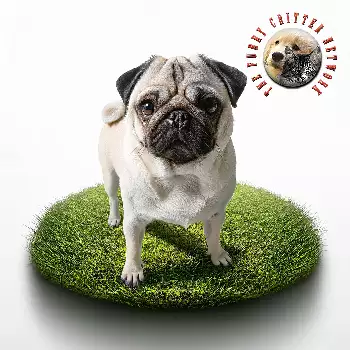
The Pug is a compact, squarely built toy breed that perfectly embodies the Latin phrase multum in parvo, meaning a lot in a little. This muscular, cobby dog stands between ten and eleven inches at the withers and weighs between fourteen and eighteen pounds, presenting a substantial yet portable package. Despite their small stature, Pugs possess a sturdy, thickset body with well-developed muscles that give them surprising heft when picked up. The overall impression is of a square, symmetrical dog with balanced proportions and a distinctly compact silhouette. Their short, thick neck leads into a wide chest and level back, creating the breed's characteristic solid appearance. The Pug's most distinctive feature is undoubtedly its large, round head with a dramatically flat face and deeply wrinkled brow. The muzzle is short, square, and blunt, with the signature pushed-in appearance characteristic of brachycephalic breeds. Large, globular, dark eyes project from the face with a soft, concerned expression that many owners find irresistible. These prominent eyes, combined with the characteristic forehead wrinkles, give the Pug its remarkably human-like, expressive face that seems capable of conveying a wide range of emotions. Small, thin ears are set high on the skull, folding either in a button or rose formation. The Pug carries its tightly curled tail high over the hip, with a double curl considered perfection according to breed standards. This characteristic corkscrew tail adds to the breed's distinctive profile and is often in constant motion when the dog is happy. The coat is fine, smooth, and short, lying close to the body with a soft, glossy texture. Despite its short length, the Pug possesses a double coat that sheds considerably more than many people expect. Acceptable colors include fawn with various shades from silver to apricot, as well as solid black. Fawn-colored Pugs display distinct black markings including a dark mask covering the muzzle and ears, a trace line running down the spine, and dark thumbprints on the forehead.
Key Characteristics
Temperament Temperament Temperament Temperament Temperament Temperament Pugs are remarkably adaptable dogs that can thrive in various living situations, from apartments to large homes, making them excellent choices for urban dwellers. They have moderate exercise needs and are content with short walks and indoor play sessions, which suits their brachycephalic anatomy that makes strenuous exercise inadvisable. While Pugs are not typically aggressive watchdogs, they will alert their families to unusual activity and can be protective of their loved ones when necessary. The breed is known for developing separation anxiety if left alone for extended periods, as their strong need for companionship means they genuinely suffer when isolated from their people. Pugs are generally excellent with children of all ages, displaying patience and gentleness that make them wonderful family pets.
Health Considerations Health Considerations Health Considerations Health Considerations Health Considerations Health Considerations Skin fold infections can develop in the deep wrinkles around the Pug's face and nose if not cleaned regularly, leading to dermatitis and bacterial or yeast overgrowth. Daily cleaning of facial folds is essential for preventing these uncomfortable infections. Patellar luxation, where the kneecap slips out of position, and hip dysplasia are orthopedic concerns that can affect mobility and cause pain. Pugs have a strong tendency toward obesity due to their love of food and relatively low exercise requirements, making weight management crucial for preventing joint problems and respiratory issues. Dental disease is common due to the crowded teeth in their small jaws. With proper care, Pugs typically live between thirteen and fifteen years, though their quality of life depends heavily on managing their numerous health concerns.
Wire Fox Terrier

The Wire Fox Terrier is a sturdy, balanced, and elegantly built small-to-medium hunting terrier that embodies the perfect combination of strength and agility. Males typically stand no more than fifteen and a half inches at the withers and weigh between seventeen and nineteen pounds, while females are slightly smaller at fifteen to seventeen pounds. The breed presents a square, compact silhouette with sufficient leg length to run alongside foxhounds during hunts while maintaining the ability to go to ground after quarry. The body is muscular yet agile, modeled on the symmetry and power of the Foxhound, with a short back that gives the dog a well-balanced appearance from every angle. The head is long and moderately narrow, with a flat skull that tapers slightly toward the muzzle. The skull and muzzle are equal in length, joined by a barely perceptible stop, creating a distinctive profile. The jaws are strong and muscular, housing large teeth that are bigger than one might expect for a dog of this size. Small, V-shaped ears are set high on the head, folding forward and dropping close to the cheeks. Dark, moderately small eyes express keen intelligence and alertness, contributing to the breed's characteristic expression of eager anticipation. The tail is traditionally docked and carried erect, though never curled over the back. The defining characteristic of this breed is its distinctive wire coat, which is dense, hard, and wiry in texture with a broken appearance. The coat is ideally crinkly or slightly wavy but never curly. Beneath the harsh outer coat lies a soft, dense undercoat that provides protection from the elements. White is the predominant color, with patches of black, tan, or combinations of black and tan marking the face, ears, and body. A black saddle or large colored splotches are common. The coat requires regular maintenance, including professional grooming or hand-stripping several times yearly to maintain its correct texture, though pet owners often opt for clipping despite the softening effect on the coat.
Key Characteristics
Temperament Temperament Temperament Temperament Temperament Temperament Training a Wire Fox Terrier requires patience, consistency, and positive reinforcement methods. These intelligent dogs learn quickly but can be stubborn and willful, becoming easily bored with repetitive exercises. They respond best to short, engaging training sessions with plenty of rewards. Early socialization is essential to help them develop appropriate behavior around other dogs, as males in particular can be aggressive toward other males. While they can learn to coexist with other pets, caution should be exercised around smaller animals due to their hunting instincts. They make excellent companions for children, matching their energy and enthusiasm for play, though all interactions should be supervised. The Wire Fox Terrier is never a couch potato and is far too busy exploring life to sit quietly in a lap.
Health Considerations Health Considerations Health Considerations Health Considerations Health Considerations Health Considerations Patellar luxation is common among small-breed dogs including the Wire Fox Terrier, occurring when the kneecap slides out of its normal position during movement. Mild cases may only be detected during veterinary examination, while more severe instances can cause a hopping, three-legged gait. Treatment options range from conservative management with joint supplements and weight control to surgical correction. Wobbler syndrome, though more typically seen in larger breeds, can occur in Wire Fox Terriers, causing a drunken or uneven gait due to narrowed vertebrae pinching the spinal cord. Dental issues can also develop due to the breed's active nature and chewing habits, making regular dental care essential. A 2024 UK study found a life expectancy of 13.5 years for the breed, slightly above the average for purebred dogs.
Important to Remember
Each hybrid dog is unique and may inherit any combination of traits from either parent breed. The information above represents the characteristics of the purebred parent breeds. Your Wire Poxer may favor one parent over the other or display a blend of both. We strongly encourage you to read the complete breed profiles for both the Pug and Wire Fox Terrier to fully understand the range of possible temperaments, health concerns, and care requirements.