Wire Foxker
The Wire Foxker is a cross between the Cocker Spaniel and the Wire Fox Terrier. Because each hybrid inherits a unique combination of traits from both parents, we recommend thoroughly researching both breeds before choosing a Wire Foxker. Pay special attention to temperament, health issues, and care requirements, as your dog may express characteristics from either parent breed.
Cocker Spaniel
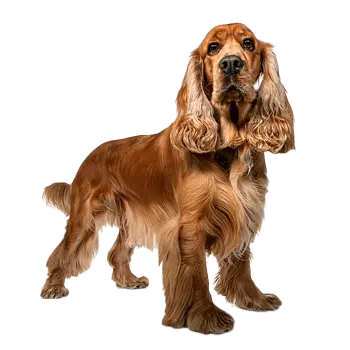
The Cocker Spaniel, also known as the American Cocker Spaniel, is the smallest member of the Sporting Group and presents a compact, sturdy, and well-balanced appearance. Males typically stand between 14.5 and 15.5 inches at the shoulder and weigh between 25 and 30 pounds, while females are slightly smaller at 13.5 to 14.5 inches and 20 to 25 pounds. The breed possesses a refined, cleanly chiseled head with a rounded skull, pronounced stop, and broad, deep muzzle. Their large, round eyes are dark and lustrous, giving them an intelligent, gentle, and appealing expression that has helped make the breed one of America's most beloved companions. The Cocker Spaniel's silky coat is perhaps its most striking feature, flowing elegantly and displaying profuse feathering on the ears, chest, abdomen, and legs. The coat is medium length on the body but short and fine on the head. The long, lobular ears hang close to the head, covered with long, silky hair that adds to the breed's glamorous appearance. Cockers come in an impressive array of colors divided into three varieties for show purposes: black variety, ASCOB (Any Solid Color Other than Black), and parti-color. Colors include solid black, buff, cream, red, brown, and various combinations including black and tan, black and white, and tricolor patterns. The body is compact and well-muscled, designed for both beauty and function as a hunting companion. The topline slopes slightly from shoulders to hindquarters, with strong, moderately bent rear legs that provide power and drive. The chest is deep and the ribs well-sprung, allowing ample lung capacity for the stamina needed in the field. The feet are compact and round with thick pads. The tail is typically docked and carried in line with or slightly above the topline, wagging merrily when the dog is in motion. The Cocker's movement is free and effortless, with good reach in front and strong drive from behind, presenting a picture of balanced, ground-covering efficiency.
Key Characteristics
Temperament Temperament Temperament Temperament Temperament Temperament Socialization from an early age is important to help Cockers develop into well-rounded adults. While typically friendly with strangers, some individuals may be reserved initially. They generally get along well with other dogs and can coexist peacefully with cats and other pets when properly introduced. Cockers can be sensitive dogs who pick up on their owners' emotions and may become anxious in tense environments. They are moderately vocal, using their bark to alert to visitors or express excitement. Their need for companionship and activity means they are best suited for families who can provide plenty of interaction, exercise, and the grooming attention their beautiful coats require.
Health Considerations Health Considerations Health Considerations Health Considerations Health Considerations Health Considerations Autoimmune conditions appear in the breed with concerning frequency, including Autoimmune Hemolytic Anemia, where the immune system attacks red blood cells, and immune-mediated thrombocytopenia. Skin allergies and seborrhea are common, potentially causing itchy, irritated skin or a greasy, odorous coat. Cancer is a leading cause of death in older Cockers, with lymphoma and melanoma occurring at higher rates than in some other breeds. The breed may also be susceptible to liver disease, hypothyroidism, and phosphofructokinase deficiency. Dental disease affects many Cockers due to their crowded teeth. Regular veterinary checkups, appropriate health screening of breeding dogs, maintaining a healthy weight, consistent grooming, and attention to ear and dental hygiene are essential for supporting the long-term health of this beloved breed.
Wire Fox Terrier

The Wire Fox Terrier is a small to medium-sized dog that presents a sturdy, balanced, and athletic appearance. Males typically stand around 15 inches at the shoulder and weigh between 17 and 19 pounds, while females are slightly smaller at 14 inches and 15 to 17 pounds. The breed possesses a square-looking head that is flat on top with a moderately narrow skull that tapers slightly toward the eyes. Their dark, round eyes are set deep and express an alert, intelligent, and sometimes fiery demeanor. The small V-shaped ears fold forward close to the cheeks, adding to their keen expression. The most distinctive feature of the Wire Fox Terrier is its dense, wiry double coat. The outer coat is harsh and crinkly in texture, standing off the body and providing protection from rough terrain and harsh weather. Beneath this is a softer, shorter undercoat. The coat is predominantly white with black or tan markings, often featuring a black saddle pattern on the back. The facial furnishings include a distinctive beard and bushy eyebrows that give the breed its characteristically scruffy appearance. Coat length averages three-quarters to one inch on the shoulders and neck, lengthening to about one and a half inches on the withers, back, ribs, and hindquarters. The body structure reflects the breed's working heritage as a fox hunting companion. The chest is deep but not overly broad, with moderately arched front ribs that taper toward the loin. The back is short and level, with strong, muscular hindquarters that provide power and agility. The legs are straight and well-boned, with compact, round feet featuring well-arched toes. The tail is traditionally docked and carried high, though never curled over the back. Their movement is characterized by good reach and drive, with a confident, ground-covering stride that demonstrates their athletic capabilities.
Key Characteristics
Temperament Temperament Temperament Temperament Temperament Temperament Training a Wire Fox Terrier requires patience, consistency, and a sense of humor. While highly intelligent and capable of learning quickly, they can also be willful and may test boundaries. They respond best to positive reinforcement methods with varied training sessions that keep their active minds engaged. Early socialization is essential to help channel their natural boldness appropriately. Wire Fox Terriers are also notably vocal dogs, using their loud, sharp bark to communicate, a trait that served them well in their hunting days but requires management in modern living situations. They are natural diggers and may pursue underground vermin with great enthusiasm if given the opportunity.
Health Considerations Health Considerations Health Considerations Health Considerations Health Considerations Health Considerations Other health concerns include patellar luxation, where the kneecap slips out of its normal position, and various eye conditions such as cataracts and glaucoma. The breed may also be prone to certain cardiac conditions, dental abnormalities including malocclusions, and some individuals may experience deafness or epilepsy. Cancer is a leading cause of death in older dogs of this breed. Regular veterinary checkups, maintaining a healthy weight, providing appropriate exercise, and staying current on preventive care are essential for supporting the long-term health of Wire Fox Terriers. When considering anesthesia for any procedure, it is worth noting that this breed generally tolerates it well, though standard precautions should always be observed.
Important to Remember
Each hybrid dog is unique and may inherit any combination of traits from either parent breed. The information above represents the characteristics of the purebred parent breeds. Your Wire Foxker may favor one parent over the other or display a blend of both. We strongly encourage you to read the complete breed profiles for both the Cocker Spaniel and Wire Fox Terrier to fully understand the range of possible temperaments, health concerns, and care requirements.