Wheaten Eskimo
The Wheaten Eskimo is a cross between the American Eskimo and the Soft Coated Wheaten Terrier. Because each hybrid inherits a unique combination of traits from both parents, we recommend thoroughly researching both breeds before choosing a Wheaten Eskimo. Pay special attention to temperament, health issues, and care requirements, as your dog may express characteristics from either parent breed.
American Eskimo
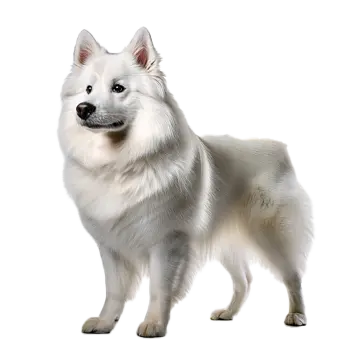
The American Eskimo is a beautiful Nordic-type dog that closely resembles a miniature Samoyed in appearance, presenting an elegant and balanced silhouette. This breed comes in three distinct size varieties to accommodate different living situations and preferences. The Toy variety stands between nine and twelve inches at the shoulder and weighs six to ten pounds, the Miniature measures twelve to fifteen inches and weighs ten to twenty pounds, while the Standard variety reaches fifteen to nineteen inches and weighs eighteen to thirty-five pounds. Regardless of size, all American Eskimos share the same proportional, slightly longer than tall body structure with a well-balanced, compact build that suggests both agility and strength. The breed's most striking feature is its profuse double coat, which consists of a dense, plush undercoat topped by longer guard hairs that stand off from the body. The coat is always white or white with biscuit or cream markings, creating the breed's characteristic fluffy, snow-white appearance that has captivated dog enthusiasts for generations. A distinctive lion-like ruff or mane encircles the neck and chest, which is more pronounced in males and adds to their majestic appearance. The coat should never curl or wave, maintaining a straight, standoff quality that contributes to the breed's elegant silhouette. The natural oils in the coat help repel dirt, making the breed surprisingly easy to keep clean despite the white coloring. The American Eskimo possesses a distinctive wedge-shaped head with a muzzle and skull of approximately equal length, creating a refined and intelligent appearance. Triangular ears stand erect and are set high on the head, contributing to the breed's alert, attentive expression. The eyes are slightly oval-shaped, dark in color, and convey a keen, bright, and inquisitive demeanor that reflects the breed's intelligence. Black is the preferred color for the nose, lips, eye rims, and pads, creating a striking contrast against the white coat that accentuates the facial features. The breed features a heavily plumed tail that curls gracefully over the back, and pink or gray skin underlies the lustrous white coat.
Key Characteristics
Temperament Temperament Temperament Temperament Temperament Temperament American Eskimos require substantial attention and do not tolerate long periods of isolation well. When left alone for extended periods, they may develop separation anxiety, manifesting as excessive barking or inappropriate chewing behaviors. They generally get along well with children when properly socialized and can coexist peacefully with other pets in the household. However, some individuals may be reserved or conservative around strangers, requiring early and ongoing socialization to develop confidence in various situations and environments. Their high energy level demands daily exercise and interactive play to maintain both physical and mental well-being, making them best suited for active families who can provide adequate engagement.
Health Considerations Health Considerations Health Considerations Health Considerations Health Considerations Health Considerations Some American Eskimos suffer from allergies, including flea allergies that can cause severe skin irritation. Obesity is a notable concern as this breed can easily gain weight if overfed or under-exercised, which can exacerbate joint problems and lead to other health complications. Epilepsy has been documented in the breed, causing seizure disorders that typically require lifelong management. Recommended health screenings include hip evaluation, ophthalmologist examination, and DNA testing for progressive retinal atrophy. Regular veterinary checkups and maintaining a healthy weight are essential for maximizing this breed's longevity.
Soft Coated Wheaten Terrier

The Soft Coated Wheaten Terrier is a medium-sized, well-balanced dog that presents a square, compact silhouette when viewed from the side, embodying both strength and elegance. Males typically stand eighteen to nineteen inches at the shoulder and weigh thirty-five to forty pounds, while females are slightly smaller at seventeen to eighteen inches and thirty to thirty-five pounds. The breed possesses a sturdy, athletic build that reflects its working heritage as an Irish farm dog, with sufficient bone and muscle to perform demanding tasks while maintaining a graceful appearance that belies its hardworking origins. The breed's namesake coat is its most distinctive characteristic, setting it apart from all other terrier breeds and making it instantly recognizable. The single-layered coat is remarkably soft and silky with a gentle wave, falling in loose curls that cover the entire body including the face and legs. Unlike most terriers with harsh, wiry coats designed to repel water and debris, the Wheaten's coat has the luxurious texture of silk and requires daily grooming to prevent matting and tangles. Two coat types exist within the breed: the Irish coat, which is silkier and wavier with a flowing quality, and the American coat, which is thicker and more abundant with fuller coverage. The coat color ranges from pale beige to shimmering reddish gold, with any shade of wheaten acceptable in the show ring. Puppies are born with dark coloring, often appearing brown or reddish, that gradually lightens as they mature, typically reaching their full wheaten color by two to three years of age. The head is moderately long with a flat skull and a well-defined stop that gives the face character. The muzzle is strong and should be no longer than the skull, with a large black nose and dark reddish-brown or brown eyes that convey warmth and intelligence. V-shaped ears fold forward at skull level, framing the face attractively, and a distinctive beard adorns the muzzle. The tail is docked in countries where permitted and is carried upright with confidence. The overall expression should be alert and happy, reflecting the breed's characteristically cheerful temperament.
Key Characteristics
Temperament Temperament Temperament Temperament Temperament Temperament The breed retains strong prey drive instincts from their vermin-hunting heritage and may chase small animals if given the opportunity. Early socialization and training are essential to channel their energy appropriately. Wheatens are energetic dogs that require daily exercise and mental stimulation to prevent destructive behaviors. They do not do well when left alone for extended periods and may develop separation anxiety. While generally good with children, their exuberant jumping and enthusiastic greetings should be managed around small children. They can coexist with other dogs and pets when raised together, though same-sex aggression may occur in some individuals.
Health Considerations Health Considerations Health Considerations Health Considerations Health Considerations Health Considerations Inflammatory bowel disease and food allergies are common in the breed, causing digestive upset and requiring careful dietary management. Atopic dermatitis and environmental allergies frequently affect Wheatens, leading to skin irritation, itching, and secondary infections. Regular monitoring of blood and urine protein levels is recommended for all Soft Coated Wheaten Terriers, as early detection of protein loss can allow for dietary and medical intervention. Prospective owners should seek breeders who perform comprehensive health testing, including PLN genetic testing, hip and eye clearances, and provide health histories of their breeding dogs.
Important to Remember
Each hybrid dog is unique and may inherit any combination of traits from either parent breed. The information above represents the characteristics of the purebred parent breeds. Your Wheaten Eskimo may favor one parent over the other or display a blend of both. We strongly encourage you to read the complete breed profiles for both the American Eskimo and Soft Coated Wheaten Terrier to fully understand the range of possible temperaments, health concerns, and care requirements.