West Highland Husky
The West Highland Husky is a cross between the Siberian Husky and the West Highland White Terrier. Because each hybrid inherits a unique combination of traits from both parents, we recommend thoroughly researching both breeds before choosing a West Highland Husky. Pay special attention to temperament, health issues, and care requirements, as your dog may express characteristics from either parent breed.
Siberian Husky
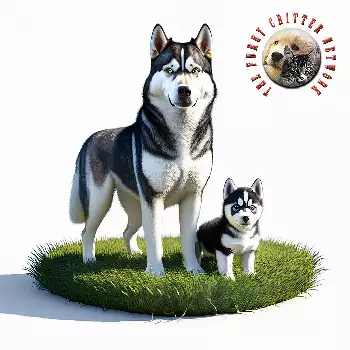
The Siberian Husky is a medium-sized working dog that combines power, speed, and endurance in a graceful, well-balanced frame. Males typically stand twenty-one to twenty-three and a half inches at the shoulder and weigh forty-five to sixty pounds, while females are slightly smaller at twenty to twenty-two inches and thirty-five to fifty pounds. The breed possesses a moderately compact body that is slightly longer than it is tall, with well-developed musculature that never appears heavy or coarse. The Siberian Husky moves with a smooth, seemingly effortless gait that reflects its heritage as a long-distance sled dog capable of covering vast frozen expanses while pulling light loads at moderate speeds. The Siberian Husky's most distinguishing features include its striking facial markings and captivating eyes. The almond-shaped eyes may be brown, blue, or one of each color, a condition called heterochromia that is perfectly acceptable in the breed. The expression is typically keen but friendly, often appearing mischievous or interested. The medium-sized, triangular ears are set high on the head, thick and well-furred, with slightly rounded tips that point straight up. The breed displays a variety of facial markings including cap-like patterns, masks, and spectacles that add to its wolf-like appearance and make each individual distinctively recognizable. The Siberian Husky has a thick double coat that provides excellent protection against extreme cold, capable of withstanding temperatures as low as minus fifty to minus sixty degrees Fahrenheit. The soft, dense undercoat supports the straight, somewhat smooth-lying outer guard hairs, creating a well-furred appearance without obscuring the clean-cut outline of the dog. The coat comes in all colors from black to pure white, with a variety of markings including black and white, copper-red and white, gray and white, and the rare agouti pattern. The bushy, fox-brush tail is carried over the back in a graceful sickle curve when the dog is alert and trails behind when at rest.
Key Characteristics
Temperament Temperament Temperament Temperament Temperament Temperament Siberian Huskies have an extremely high energy level and require substantial daily exercise to remain happy and well-behaved. At least one to two hours of vigorous activity per day is recommended, and they excel at activities that tap into their sled-pulling heritage such as mushing, skijoring, and bikejoring. Without adequate physical and mental stimulation, Huskies can become destructive, engaging in excessive digging, chewing, and escape attempts. The breed is notorious for its ability to escape from yards, capable of climbing fences, digging under barriers, or finding any weakness in containment. Their strong prey drive means they should not be trusted off-leash in unfenced areas.
Health Considerations Health Considerations Health Considerations Health Considerations Health Considerations Health Considerations Siberian Huskies may also be affected by several skin and coat conditions. Follicular dysplasia causes abnormal hair growth and patchy hair loss, typically appearing between three and four months of age. Zinc-responsive dermatosis results from inadequate zinc absorption and causes crusty, scaly skin lesions particularly around the face and footpads. Uveodermatologic syndrome is an autoimmune condition that affects both the eyes and skin, causing pigment loss and potentially severe eye inflammation that can lead to blindness. Epilepsy, causing recurring seizures, may also occur in the breed. Regular veterinary examinations and health screening of breeding stock help minimize the incidence of these inherited conditions.
West Highland White Terrier

The West Highland White Terrier, affectionately known as the Westie, is a small but sturdy terrier that originated in Scotland as a capable hunter of small game. This compact breed stands ten to eleven inches tall at the shoulder and typically weighs between thirteen and twenty-two pounds, with males generally being slightly larger than females. The Westie has a distinctively balanced and well-proportioned body that is slightly longer than it is tall, giving it an athletic appearance despite its small size. The breed possesses a broad chest, strong muscular limbs, and a level topline that contributes to its surprisingly powerful build for a dog of its stature. The most striking feature of the West Highland White Terrier is its brilliant pure white double coat, which consists of a harsh, straight outer coat approximately two inches in length and a soft, dense undercoat. This distinctive white coloring was specifically developed so hunters could easily distinguish their dogs from the prey they were pursuing. The coat requires regular grooming and either hand-stripping or clipping to maintain its proper texture and appearance. The fur grows thicker around the neck, forming a characteristic ruff, while the hair on the face fills out to give the head a rounded appearance that is a hallmark of the breed. The Westie's head is proportionate to its body with a slightly domed skull that is broader than it is long. The breed features deep-set, almond-shaped eyes that are dark brown in color and convey an intelligent, alert expression. The small, erect, triangular ears are set wide apart on top of the head and are covered with short, velvety hair. The muzzle is slightly shorter than the skull with a defined stop, and the nose is always black. The tail is relatively short, carried upright, and is thicker at the base, tapering to a point. The paws turn slightly outward, an adaptation that aided the breed when climbing rocky Scottish terrain.
Key Characteristics
Temperament Temperament Temperament Temperament Temperament Temperament The West Highland White Terrier retains strong prey drive instincts from its hunting heritage and may chase small animals including cats, squirrels, and birds. They have a natural tendency to dig, a behavior rooted in their original purpose of pursuing vermin into burrows. Westies are energetic dogs that require regular daily exercise of at least one hour to stay physically and mentally satisfied. They are adaptable to various living situations including apartments, provided they receive adequate exercise and mental stimulation. Without proper outlets for their energy, they may develop behavioral issues such as excessive barking, digging, or destructive chewing.
Health Considerations Health Considerations Health Considerations Health Considerations Health Considerations Health Considerations Respiratory issues pose significant concerns for West Highland White Terriers, particularly idiopathic pulmonary fibrosis, sometimes called Westie lung disease. This progressive condition causes scarring of lung tissue, leading to breathing difficulties and reduced exercise tolerance, and unfortunately has no cure. The breed is also predisposed to chronic hepatitis and copper-associated liver disease, with Westies being over three times more likely than other breeds to develop these liver conditions. Eye problems including juvenile cataracts, keratoconjunctivitis sicca or dry eye, and glaucoma may occur. Responsible breeders screen for these hereditary conditions and can provide health clearances for breeding stock.
Important to Remember
Each hybrid dog is unique and may inherit any combination of traits from either parent breed. The information above represents the characteristics of the purebred parent breeds. Your West Highland Husky may favor one parent over the other or display a blend of both. We strongly encourage you to read the complete breed profiles for both the Siberian Husky and West Highland White Terrier to fully understand the range of possible temperaments, health concerns, and care requirements.