Walker Greyhound
The Walker Greyhound is a cross between the Treeing Walker Coonhound and the Greyhound. Because each hybrid inherits a unique combination of traits from both parents, we recommend thoroughly researching both breeds before choosing a Walker Greyhound. Pay special attention to temperament, health issues, and care requirements, as your dog may express characteristics from either parent breed.
Treeing Walker Coonhound

The Treeing Walker Coonhound is a medium to large American hunting breed known for its athletic build, elegant appearance, and distinctive tricolor coat pattern that makes identification easy in the field. Males typically stand 22 to 27 inches at the shoulder and weigh 50 to 70 pounds, while females measure 20 to 25 inches with similar weight ranges. The breed possesses a muscular yet streamlined body built for speed and endurance during long hunts, with a deep chest providing ample lung capacity and strong, straight legs designed for covering rough and challenging terrain. The overall impression is of a balanced, athletic hound capable of sustained physical effort over many hours. The coat is short, smooth, glossy, and dense, providing effective protection from brush and weather while requiring minimal grooming effort. The preferred color pattern is tricolor, consisting of white, black, and tan markings arranged in a distinctive pattern, though bicolor combinations of white with black or white with tan are also accepted by breed standards. The white base typically predominates, with black saddle markings and tan points appearing on the head, ears, and legs in characteristic hound fashion. The coat lies close to the body and highlights the breed's well-defined musculature and athletic build. The head is refined and proportional to the body, with a moderately broad skull that is flat on top and a muzzle of medium length that is squared off at the end, giving a balanced appearance. The ears are a distinctive and charming feature, being large, thin, and set low, hanging in graceful folds that reach nearly to the tip of the nose when drawn forward. The eyes are large, set wide apart, and typically dark brown, giving the breed a soft, pleading expression characteristic of hound breeds that endears them to many admirers. The tail is set moderately high and carried up with a slight curve, resembling a saber when the dog is alert or in motion during the hunt. The breed moves with an effortless, reaching stride that demonstrates its hunting heritage and remarkable athletic capabilities developed over generations of selective breeding.
Key Characteristics
Temperament Temperament Temperament Temperament Temperament Temperament The breed is intelligent and capable of learning quickly but can display an independent, somewhat stubborn streak inherited from generations of working independently in the field. Positive reinforcement training works best with this breed, and patience is required as Treeing Walkers can be slow to mature mentally, often not reaching full behavioral maturity until two years of age or later. They require substantial daily exercise, ideally including opportunities to run in safely enclosed areas, and benefit greatly from activities that engage their exceptional sense of smell. Without adequate physical and mental stimulation, Treeing Walker Coonhounds may become bored and develop unwanted behaviors such as excessive barking or escape attempts.
Health Considerations Health Considerations Health Considerations Health Considerations Health Considerations Health Considerations Hypothyroidism affects some Treeing Walker Coonhounds, causing the thyroid gland to produce insufficient hormones. Symptoms include weight gain, lethargy, and coat problems, and the condition is managed through daily medication once diagnosed. Environmental allergies are relatively common in the breed, manifesting as itchy skin, ear problems, and recurrent skin infections. Obesity can become an issue if the breed's exercise needs are not met, as Treeing Walkers can be food-motivated and may overeat if given the opportunity. Other conditions reported in the breed include progressive retinal atrophy, gastric dilatation-volvulus in deep-chested individuals, and polyradiculoneuritis. Regular veterinary checkups and maintaining an appropriate weight help ensure a long, healthy life for this athletic breed.
Greyhound
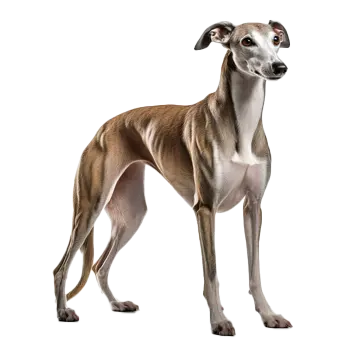
The Greyhound is an ancient sighthound breed instantly recognizable for its elegant, aerodynamic build designed for extraordinary speed, capable of reaching 40 to 45 miles per hour in full sprint. Males typically stand 28 to 30 inches at the shoulder and weigh 65 to 70 pounds, while females measure 27 to 28 inches and weigh 60 to 65 pounds. The breed possesses a uniquely streamlined physique with a deep, capacious chest that houses exceptionally large lungs and heart, a dramatically tucked-up abdomen, and long, powerful legs built for explosive acceleration. The Greyhound's body has virtually no body fat, allowing the muscular definition to be visible beneath the thin skin. The coat is short, smooth, and fine in texture, lying close to the body and offering minimal protection from cold weather due to the breed's lack of undercoat and low body fat. Greyhounds come in a remarkable variety of colors and patterns including black, white, fawn, red, blue, brindle, and various combinations of these colors with white markings. The thin coat and skin make the breed vulnerable to cuts and abrasions, and Greyhounds typically require soft bedding to prevent pressure sores on their bony prominences. The head is long and narrow, with a skull of adequate width and a muzzle of good length that contributes to the breed's refined, noble appearance. The ears are small, fine in texture, and folded back against the neck when relaxed, though they may prick slightly when the dog is alert. The eyes are dark and bright, set obliquely, giving the Greyhound an intelligent and inquisitive expression. The neck is long and muscular, flowing smoothly into well-laid shoulders. The tail is long, fine, and tapering, carried low with a slight upward curve at the end. The breed's movement is characterized by a smooth, far-reaching stride that appears effortless despite covering tremendous ground with each step.
Key Characteristics
Temperament Temperament Temperament Temperament Temperament Temperament Greyhounds are independent but not dominant, making them relatively easy to live with for owners who respect their sensitive nature. The breed does not respond well to harsh training methods and may shut down emotionally if treated roughly. They are generally friendly with other dogs, especially other sighthounds, and their non-confrontational nature makes them unsuitable as protection dogs. Greyhounds can experience sleep startle, reacting defensively if awakened suddenly, a trait that is important to communicate to all family members. They tend to be quiet dogs that rarely bark excessively, making them suitable for apartment living provided their exercise needs are met through regular outdoor activities.
Health Considerations Health Considerations Health Considerations Health Considerations Health Considerations Health Considerations The breed is sensitive to certain medications, particularly barbiturate anesthetics, due to their low body fat and unique metabolism. Veterinarians should be informed of this sensitivity before any procedures requiring sedation. Hip dysplasia can affect Greyhounds, though generally at lower rates than in many other large breeds. The breed's thin skin and lack of body fat make them prone to lacerations and pressure sores, requiring soft bedding and careful handling. Greyhounds are extremely sensitive to temperature extremes and require coats in cold weather and protection from heat and sun exposure. Approximately 85 percent of Greyhounds are universal blood donors, making them valuable for canine blood banks. Other conditions seen in the breed include hypothyroidism, progressive retinal atrophy, and dental problems. Regular veterinary care with a practitioner familiar with sighthound-specific needs helps ensure optimal health for this noble breed.
Important to Remember
Each hybrid dog is unique and may inherit any combination of traits from either parent breed. The information above represents the characteristics of the purebred parent breeds. Your Walker Greyhound may favor one parent over the other or display a blend of both. We strongly encourage you to read the complete breed profiles for both the Treeing Walker Coonhound and Greyhound to fully understand the range of possible temperaments, health concerns, and care requirements.