Toy Scottish Fox Terrier
The Toy Scottish Fox Terrier is a cross between the Scottish Terrier and the Toy Fox Terrier. Because each hybrid inherits a unique combination of traits from both parents, we recommend thoroughly researching both breeds before choosing a Toy Scottish Fox Terrier. Pay special attention to temperament, health issues, and care requirements, as your dog may express characteristics from either parent breed.
Scottish Terrier
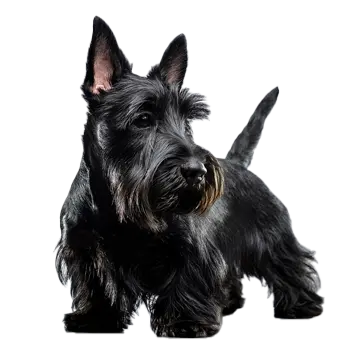
The Scottish Terrier is a compact, short-legged terrier with a sturdy and substantial build that conveys remarkable power in a small package. Standing approximately 10 inches tall at the shoulder, adult males typically weigh between 19 and 22 pounds, while females range from 18 to 21 pounds. The breed possesses a thick body with heavy bone structure, creating a well-balanced silhouette that appears longer than it is tall when measured from the withers to the set-on of the tail. The overall proportions emphasize symmetry and balance without exaggeration, with equal consideration given to height, weight, length of back, and length of head. The Scottish Terrier's coat is one of its most distinctive features, consisting of a hard, wiry, weather-resistant outer coat that provides excellent protection during outdoor activities. The longer coat on the beard, legs, and lower body may be slightly softer than the body coat but should never appear fluffy. Acceptable coat colors include black, wheaten, and brindle of any shade, with many black and brindle dogs displaying natural sprinklings of white or silver hairs throughout their coats. A small amount of white is permissible only on the chest and chin. The coat requires regular grooming, including brushing several times weekly and professional hand-stripping or clipping every few months to maintain its characteristic texture and appearance. The breed's head is characteristically long in proportion to the overall size of the dog, with a moderately rounded skull covered with short, hard hair. The distinctive stop between the skull and muzzle allows the eyes to be set under the brow, contributing to the breed's signature keen, piercing expression often described as varminty. The muzzle should be approximately equal to the length of the skull, well-filled under the eye without any snippiness, and large enough to fill an average person's hand. Dark eyes convey intelligence and alertness. Erect ears and a high-set tail complete the Scottish Terrier's dignified and alert appearance, creating a silhouette instantly recognizable to dog enthusiasts worldwide.
Key Characteristics
Temperament Temperament Temperament Temperament Temperament Temperament Scottish Terriers require consistent mental stimulation and moderate daily exercise to remain content. They are not overly demanding in terms of physical activity, with daily walks typically sufficient to meet their exercise needs. However, their strong prey drive means they should be kept on leash or in securely fenced areas when outdoors. While they can make wonderful family companions, their sometimes impatient nature means they may not be the ideal choice for households with very young children who might handle them roughly. Early socialization is crucial to help them develop into well-adjusted adults who can coexist peacefully with other household pets.
Health Considerations Health Considerations Health Considerations Health Considerations Health Considerations Health Considerations Perhaps the most significant health concern for Scottish Terriers is their elevated risk of bladder cancer, specifically transitional cell carcinoma. Studies have shown that Scotties face an 18 to 20 times higher risk of developing this cancer compared to other breeds, making awareness and early detection crucial. Regular veterinary check-ups and attention to any changes in urination habits are important for identifying potential issues early. Other conditions seen in the breed include cerebellar abiotrophy, hypothyroidism, liver shunts, and Cushing's disease. Some Scotties may also experience skin allergies that require management. Working with a reputable breeder who performs comprehensive health screenings and maintaining regular veterinary care throughout the dog's life can help identify and manage potential health issues before they become serious problems.
Toy Fox Terrier

The Toy Fox Terrier is a diminutive yet athletic dog that perfectly embodies the phrase truly a toy and a terrier. Standing between 8.5 and 11.5 inches at the shoulder, with a preferred height of 9 to 11 inches, this breed typically weighs between 4 and 9 pounds, with most dogs falling in the 4.5 to 7.5 pound range. Despite their small size, Toy Fox Terriers display a well-balanced, muscular physique that conveys both elegance and athletic capability, allowing them to perform with agility and endurance far beyond what their size might suggest. The breed exhibits a square proportion, with height being approximately equal to length when measured from the withers to the ground and from the point of shoulder to the buttocks. Their lithe, muscular body presents a smooth, elegant outline that conveys an impression of effortless movement and endless stamina. The Toy Fox Terrier is naturally well-groomed in appearance, presenting a proud, animated, and alert demeanor that immediately captures attention. The forelegs are straight and parallel when viewed from the front, while the hindquarters provide strong drive for the breed's characteristically light, springy gait. The coat is one of the breed's most distinctive features, being short, fine, glossy, and predominantly white, providing a sleek appearance that requires minimal grooming to maintain. The head is typically solid colored, with acceptable color patterns including black and tan with white markings, chocolate and tan with white, or tricolor combinations featuring all three colors in specific distributions. The body must be more than fifty percent white to meet breed standards. Characteristic V-shaped ears stand erect on the head once the dog reaches maturity, framing large, dark, expressive eyes that contribute to an intelligent and alert expression. The skull is moderately rounded, and the muzzle is strong and in proportion to the head. The short, high-set tail and elegant head carriage complete the picture of this graceful and well-proportioned toy terrier that combines the refined appearance of a toy breed with the substance of a true working terrier.
Key Characteristics
Temperament Temperament Temperament Temperament Temperament Temperament While Toy Fox Terriers generally get along well with older children who understand how to handle small dogs gently, their diminutive size makes them vulnerable to injury from rough handling by young children. They can be excellent watchdogs, alerting their owners to approaching strangers, though with proper training they can learn to minimize excessive barking. The breed typically does well with other dogs when properly socialized, though they may display typical terrier assertiveness with unfamiliar dogs. Their high energy level requires daily exercise and mental stimulation, but their small size means their activity needs can be met with indoor play sessions and short walks, making them suitable for apartment living provided they receive adequate attention and engagement.
Health Considerations Health Considerations Health Considerations Health Considerations Health Considerations Health Considerations Von Willebrand's disease, a blood clotting disorder, has been identified in Toy Fox Terriers and can cause prolonged bleeding during injuries or surgical procedures. Congenital hypothyroidism with goiter, while less common, is a condition that can affect puppies in the breed and requires early detection for proper management. Some dogs may also experience demodectic mange, a skin condition caused by mites that can cause hair loss and skin irritation. Regular veterinary check-ups, genetic screening from responsible breeders, and maintaining awareness of these potential health issues can help ensure early detection and appropriate management throughout the dog's life.
Important to Remember
Each hybrid dog is unique and may inherit any combination of traits from either parent breed. The information above represents the characteristics of the purebred parent breeds. Your Toy Scottish Fox Terrier may favor one parent over the other or display a blend of both. We strongly encourage you to read the complete breed profiles for both the Scottish Terrier and Toy Fox Terrier to fully understand the range of possible temperaments, health concerns, and care requirements.