Toy Foxton
The Toy Foxton is a cross between the Boston Terrier and the Toy Fox Terrier. Because each hybrid inherits a unique combination of traits from both parents, we recommend thoroughly researching both breeds before choosing a Toy Foxton. Pay special attention to temperament, health issues, and care requirements, as your dog may express characteristics from either parent breed.
Boston Terrier
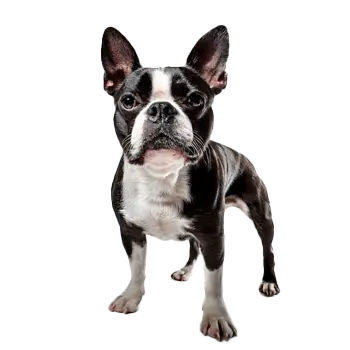
The Boston Terrier is a compact, well-balanced dog that presents a square appearance with a sturdy, muscular build that conveys strength without coarseness. This American breed stands between 15 and 17 inches at the shoulder and is divided into three weight classes: under 15 pounds, 15 to under 20 pounds, and 20 to 25 pounds. The body is short with a slightly arched neck leading to a deep chest that reaches to the elbows and well-sprung ribs. The topline is level, and the back is short enough to create a square outline. The limbs are straight and well-muscled, with the forelegs set moderately wide apart and positioned directly under the shoulder blades. The hindquarters are strong with well-defined stifles, providing the power for the breed's smooth, sure-footed, straight-line gait that indicates grace and power with every step. The breed's most distinctive feature is its striking tuxedo-like markings, which have earned it the nickname "The American Gentleman." The coat is short, smooth, bright, and fine in texture, appearing in brindle, seal, or black with required white markings including a white muzzle band, white blaze between the eyes, and white forechest. Desired markings extend to a white collar and white on the forelegs. Seal coloring appears black but shows a red cast when viewed in sunlight. The head is square and flat on top, free from wrinkles, with flat cheeks, an abrupt brow, and a well-defined stop. The short, wide muzzle is proportionate to the skull and free from wrinkles. The large, round, dark eyes are set wide apart and convey an alert, kind expression that is essential to the breed's character. The Boston Terrier's ears are small and carried erect, either natural or cropped to conform to the head shape, set at the corners of the skull. The tail is set low and is characteristically short, fine, and tapering, carried either straight or screwed but never above the horizontal, with the preferred length not exceeding one-quarter the distance from set-on to hock. The breed is brachycephalic, meaning it has a shortened skull that results in its distinctive pushed-in face. This structural feature gives the Boston Terrier its recognizable profile but also contributes to certain health considerations that potential owners should understand.
Key Characteristics
Temperament Temperament Temperament Temperament Temperament Temperament While Boston Terriers are intelligent and quick learners, they can display a stubborn streak that requires patience and consistency during training sessions. They respond best to positive reinforcement techniques and may become resistant if harsh corrections are used. These dogs have moderate energy levels and enjoy playtime and walks, though they should not be over-exercised due to their brachycephalic structure. Their affectionate demeanor and desire for companionship mean they may experience separation anxiety if left alone for extended periods, so they thrive best in homes where family members are frequently present.
Health Considerations Health Considerations Health Considerations Health Considerations Health Considerations Health Considerations Reproductive challenges are significant in this breed, with over 80 percent of Boston Terrier litters requiring delivery by cesarean section due to the puppies' large heads relative to the mother's narrow pelvis. Studies indicate that Boston Terrier females are nearly 13 times more likely to experience difficult births compared to other breeds. The average lifespan for Boston Terriers is approximately 11 to 13 years. Prospective owners should seek breeders who perform health screenings for common conditions and maintain awareness of symptoms that may indicate developing health problems throughout their dog's life.
Toy Fox Terrier

The Toy Fox Terrier is a well-balanced, athletic toy breed that combines the grace of its toy heritage with the strength and stamina of true terrier lineage. Standing between 8.5 and 11.5 inches at the shoulder, with 9 to 11 inches being preferred, this diminutive breed typically weighs between 3.5 and 7 pounds. The body presents a square proportion, being approximately equal in length from shoulder to buttocks as it is in height from withers to ground. Despite its small stature, the Toy Fox Terrier displays a muscular, agile build that speaks to its working terrier ancestry, with clean lines and elegant appearance that belie its remarkable athletic ability. The breed's coat is short, satiny, and fine in texture with a lustrous sheen that requires minimal grooming to maintain. The predominant body color is white, covering more than fifty percent of the body, with markings of black, chocolate, or tan appearing in specific patterns. The head must be more than fifty percent colored, featuring a distinctive blaze that extends from the skull down toward the muzzle without reaching into the eyes or ears. Accepted color combinations include tricolor (black head with tan markings and white body), white with black markings, white with tan markings, and white with chocolate markings. The Toy Fox Terrier's head is elegant yet masculine, with a rounded skull that is moderately wide and slightly domed. The ears are characteristic of the breed, standing erect and pointed, set high on the head in an inverted V shape. Dark, round eyes convey an intelligent, alert expression, while the small black nose complements the breed's refined appearance. The tail may be docked to approximately three-fifths of the original length or left natural, and is carried erect when the dog is alert. The overall impression is of a toy dog with unmistakable terrier character, capable of great speed and endurance despite its small size.
Key Characteristics
Temperament Temperament Temperament Temperament Temperament Temperament The Toy Fox Terrier requires consistent, positive training methods as they can display the stubborn independence common to terrier breeds. While they are not hyperactive, they possess high energy levels that need appropriate outlets through play, walks, and interactive activities. These dogs thrive on human companionship and may develop separation anxiety if left alone for extended periods. Socialization from a young age is important to ensure they develop into well-adjusted adults that interact appropriately with children, other dogs, and household pets. Their intelligence and trainability historically made them popular performers in circus acts, demonstrating their remarkable ability to learn complex behaviors.
Health Considerations Health Considerations Health Considerations Health Considerations Health Considerations Health Considerations Von Willebrand's disease, a blood clotting disorder, and degenerative myelopathy, a progressive spinal cord condition, are also found in Toy Fox Terriers, though DNA tests exist for both conditions. The breed may be prone to dental issues common in small dogs, making regular dental care essential. Allergies, including food sensitivities and environmental reactions, can affect some individuals. With proper care, regular veterinary checkups, and attention to breed-specific health screenings, Toy Fox Terriers typically enjoy a long lifespan of 13 to 15 years, with some individuals living into their late teens.
Important to Remember
Each hybrid dog is unique and may inherit any combination of traits from either parent breed. The information above represents the characteristics of the purebred parent breeds. Your Toy Foxton may favor one parent over the other or display a blend of both. We strongly encourage you to read the complete breed profiles for both the Boston Terrier and Toy Fox Terrier to fully understand the range of possible temperaments, health concerns, and care requirements.