Tibalier
The Tibalier is a cross between the Cavalier King Charles Spaniel and the Tibetan Spaniel. Because each hybrid inherits a unique combination of traits from both parents, we recommend thoroughly researching both breeds before choosing a Tibalier. Pay special attention to temperament, health issues, and care requirements, as your dog may express characteristics from either parent breed.
Cavalier King Charles Spaniel
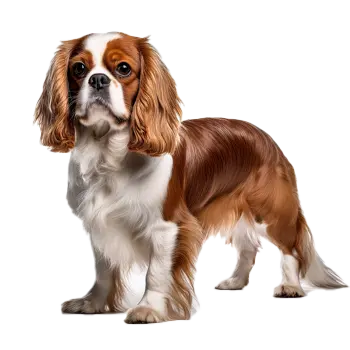
The Cavalier King Charles Spaniel is a small yet elegantly built toy breed that stands between 12 and 13 inches at the shoulder and typically weighs between 13 and 18 pounds. Despite being classified among toy breeds, the Cavalier is considered one of the largest in this category, possessing a sturdy and well-proportioned frame that distinguishes it from more delicate toy breeds. The breed exhibits a graceful, athletic build that reflects its spaniel heritage, with a body that is slightly longer than it is tall and well-balanced proportions throughout. The head features a flat skull with a gentle stop, a full muzzle of moderate length, and large, round, dark eyes that convey the warm and sweet expression characteristic of the breed. The coat of the Cavalier King Charles Spaniel is medium to long in length, silky in texture, and may have a slight wave but should never be curly. This breed lacks an undercoat, which contributes to its flowing, elegant appearance and makes grooming relatively straightforward. Feathering appears abundantly on the ears, chest, legs, feet, and tail, adding to the breed's refined aesthetic and requiring regular attention to prevent tangles. The breed is recognized in four distinct color patterns: Blenheim features chestnut markings on a pearly white background with a characteristic spot on top of the skull, tricolor combines black and white with tan markings above the eyes and on cheeks, black and tan displays rich tan markings on a solid black coat, and ruby is a solid rich mahogany red throughout. Additional physical characteristics include long, pendant ears set high on the head and covered with abundant feathering that frames the face beautifully. The tail is well-feathered and carried happily but never much above the level of the back, wagging freely when the dog is in motion. The breed's movement is elegant and free-flowing, demonstrating good reach in front and strong drive from behind. The overall impression is one of a well-balanced, graceful toy spaniel that combines the gentle, attentive qualities of a companion dog with a hint of the sporting nature found in its spaniel ancestors.
Key Characteristics
Temperament Temperament Temperament Temperament Temperament Temperament Cavaliers excel as family pets and are particularly patient and gentle with children. They integrate well into multi-pet households and rarely display territorial or aggressive behaviors. However, their strong need for companionship means they can develop separation anxiety if left alone for extended periods. Early socialization is important to prevent timidity, though properly raised Cavaliers are confident and outgoing. Their combination of affection, adaptability, and gentle nature has made them one of the most beloved companion breeds worldwide.
Health Considerations Health Considerations Health Considerations Health Considerations Health Considerations Health Considerations Additional health concerns include hip dysplasia, luxating patella where the kneecap slips out of position, various eye conditions including cataracts and dry eye, and idiopathic thrombocytopenia affecting blood platelets. The breed's average lifespan ranges from 8 to 15 years, with a study showing an average of approximately 11.8 years. Prospective owners should work with breeders who perform recommended health screenings and should budget for regular veterinary care and potential cardiac monitoring throughout the dog's life.
Tibetan Spaniel

The Tibetan Spaniel is a small, well-balanced breed that stands approximately 10 inches at the shoulder and weighs between 9 and 15 pounds. Despite the name, this breed is not a true spaniel but rather an ancient Asian breed that has been a cherished companion to Tibetan monks for over two thousand years in the monasteries of the Himalayan mountains. The body is slightly longer than it is tall, presenting a rectangular silhouette that contributes to the breed's distinctive and balanced appearance. The head is small in proportion to the body, featuring a moderately domed skull and a medium-length muzzle with a slight but definite stop that gives the face character without being exaggerated. The Tibetan Spaniel possesses a beautiful double coat consisting of a smooth, flat, silky outer coat of moderate length and a fine, dense undercoat that provides essential insulation against harsh weather conditions. The coat lies rather flat on the body but features abundant feathering on the ears, back of the forelegs, tail, and buttocks, creating an elegant silhouette. Males typically develop a more pronounced mane around the neck and shoulders, often referred to as a lion's mane or shawl, which is characteristically less evident in females. All colors and combinations are permitted in the breed standard, allowing for tremendous variety in appearance from rich gold to deep red to jet black to pure white and all patterns in between. Distinctive physical features include dark brown, oval-shaped eyes that are set fairly wide apart and convey an expression of alert intelligence and keen awareness. The ears are medium-sized, pendant, and set fairly high on the skull, covered with a good fringe of flowing hair. The tail is set high and carried in a gay curl over the back when the dog is moving or alert, with abundant feathering creating a plumed, fountain-like appearance. The feet are small and neat, often described as hare-like in shape. The overall impression is of an alert, active little dog with an intelligent and self-possessed demeanor.
Key Characteristics
Temperament Temperament Temperament Temperament Temperament Temperament Tibetan Spaniels possess moderate energy levels and are adaptable to various living situations, thriving equally in apartments or larger homes as long as they receive adequate attention and exercise. They generally get along well with other dogs and can coexist peacefully with cats, especially when raised together. The breed is playful and retains a puppyish quality throughout life, enjoying interactive games with their owners. Their combination of affection, intelligence, and independence makes them ideal companions for owners who appreciate a dog with personality and spirit rather than one that simply follows commands without question.
Health Considerations Health Considerations Health Considerations Health Considerations Health Considerations Health Considerations Other health considerations include renal dysplasia, a developmental kidney condition for which DNA testing is available, and neuronal ceroid lipofuscinosis, a rare neurological disorder. Dental issues are common due to the breed's small mouth, making regular dental care and professional cleanings important throughout life. Eye problems including weeping eyes and various ocular conditions may occur and should be monitored. Responsible breeders conduct appropriate health screenings including eye examinations and genetic testing to reduce the incidence of hereditary conditions in their puppies.
Important to Remember
Each hybrid dog is unique and may inherit any combination of traits from either parent breed. The information above represents the characteristics of the purebred parent breeds. Your Tibalier may favor one parent over the other or display a blend of both. We strongly encourage you to read the complete breed profiles for both the Cavalier King Charles Spaniel and Tibetan Spaniel to fully understand the range of possible temperaments, health concerns, and care requirements.