Standard Chesa-Poo
The Standard Chesa-Poo is a cross between the Chesapeake Bay Retriever and the Standard Poodle. Because each hybrid inherits a unique combination of traits from both parents, we recommend thoroughly researching both breeds before choosing a Standard Chesa-Poo. Pay special attention to temperament, health issues, and care requirements, as your dog may express characteristics from either parent breed.
Chesapeake Bay Retriever

The Chesapeake Bay Retriever is a powerful, muscular sporting dog built for demanding retrieving work in the harsh conditions of the Chesapeake Bay region. Males typically stand between 23 and 26 inches at the shoulder and weigh between 65 and 80 pounds, while females are slightly smaller, measuring 21 to 24 inches and weighing 55 to 70 pounds. The breed possesses a distinctive body structure with hindquarters that are as high as or slightly higher than the shoulders, creating a silhouette unique among retrievers. This build, combined with strong, well-developed musculature throughout the body, enables the Chesapeake to power through rough, icy waters with remarkable endurance. The breed's most distinguishing physical characteristic is its unique double coat, which provides exceptional protection against cold water and harsh weather conditions. The outer coat is thick, short, and wavy with a distinct oily texture that makes it nearly waterproof, causing water to roll off much like it does from a duck's feathers. The undercoat is dense and woolly, providing crucial insulation during extended water work in frigid temperatures. This remarkable coat requires minimal grooming despite its protective qualities, though regular brushing helps remove dead hair and distribute the natural oils. The accepted coat colors are solid shades of brown, sedge, and deadgrass, ranging from light tan to deep chocolate, with these earth tones providing natural camouflage in the marshland environments where the breed traditionally worked. The Chesapeake's head is broad and round with a medium stop and strong, moderately short muzzle capable of carrying large game birds with a gentle grip. One of the breed's most striking features is its eyes, which range in color from yellowish to amber, giving the dog a distinctive, alert expression unlike any other retriever breed. The ears are small, set high on the head, and hang loosely. The chest is deep, strong, and wide, providing ample room for lung capacity needed during strenuous swimming. The legs are medium length with well-webbed feet that act as natural paddles in the water. The tail is medium length, heavy at the base, and may be straight or slightly curved, serving as a rudder during swimming.
Key Characteristics
Temperament Temperament Temperament Temperament Temperament Temperament While devoted to their families, Chesapeake Bay Retrievers typically display a more reserved demeanor with strangers compared to Labrador or Golden Retrievers. They possess natural protective instincts and make excellent watchdogs, alerting their families to unusual activity around the home. Early socialization is crucial for helping Chesapeakes develop appropriate responses to new people, animals, and situations. With their own families, including children, they are affectionate and often playful, though their size and energy level mean supervision is recommended around young children. This breed thrives when given a job to do and excels in hunting, field trials, obedience, and other activities that engage their minds and bodies. Owners who appreciate an intelligent, loyal companion with a distinctive personality find the Chesapeake Bay Retriever to be an exceptionally rewarding breed.
Health Considerations Health Considerations Health Considerations Health Considerations Health Considerations Health Considerations Gastric dilatation-volvulus, commonly known as bloat, is a life-threatening emergency that can affect deep-chested breeds like the Chesapeake. This condition occurs when the stomach fills with gas and potentially rotates, cutting off blood supply to vital organs. Owners should learn to recognize the symptoms and understand that immediate veterinary attention is critical. Hypothyroidism, involving insufficient thyroid hormone production, can affect the breed and cause symptoms such as weight gain, lethargy, and coat problems. Von Willebrand's Disease, a bleeding disorder caused by a deficiency in clotting factors, has been identified in the breed. Degenerative myelopathy, a progressive spinal cord disease that affects older dogs, also occurs in Chesapeakes. Regular health screenings, maintaining appropriate weight, and providing adequate exercise help support the overall health and longevity of these athletic retrievers.
Standard Poodle
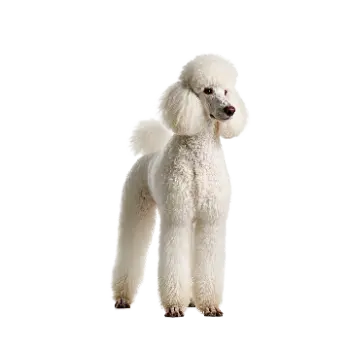
The Standard Poodle is an elegant, athletic dog that stands over 15 inches at the shoulder, with most individuals measuring between 18 and 24 inches tall and weighing between 40 and 70 pounds. Despite the elaborate show clips that have become synonymous with the breed's image, the Standard Poodle is fundamentally a well-proportioned sporting dog with a proud, dignified bearing. The body is squarely built, with the length from breastbone to point of buttocks approximately equal to the height at the shoulders. The overall impression is one of an active, intelligent dog with an air of distinction and elegance. The Standard Poodle's coat is perhaps its most distinctive feature, consisting of dense, curly hair that grows continuously rather than shedding seasonally like most breeds. This unique coat texture ranges from soft waves to tight curls and can also be corded into long, rope-like strands for show purposes. The coat is considered hypoallergenic by many, as the minimal shedding reduces the spread of dander, though no dog is truly allergen-free. Standard Poodles come in a remarkable variety of solid colors, including black, white, brown, gray, silver, blue, cream, apricot, red, and café-au-lait. Parti-colored Poodles, featuring two or more colors, also exist though they are not accepted in all show rings. The head is refined and moderately rounded, with a long, straight muzzle and a slight but definite stop. The eyes are very dark, oval-shaped, and set far enough apart to create an alert, intelligent expression that is characteristic of the breed. The ears are set at or slightly below eye level, long, wide, and heavily feathered, hanging close to the head. The neck is long and strong, rising from well-laid-back shoulders and allowing for proud head carriage. The topline is level from the highest point of the shoulder blades to the base of the tail. The tail is set high, carried up, and traditionally docked in countries where the practice is permitted, though natural tails are increasingly common. The legs are straight and parallel with well-angulated joints, and the feet are rather small, oval-shaped, with arched toes and thick cushioned pads.
Key Characteristics
Temperament Temperament Temperament Temperament Temperament Temperament Standard Poodles are generally friendly with people and other animals, though they may display reserve toward strangers until properly introduced. They are devoted to their families and often form particularly close bonds with one person, though they remain affectionate with all household members. Early socialization helps them develop confidence and appropriate responses to new situations and people. With children, well-socialized Standard Poodles are typically patient and playful, though their size and enthusiasm mean supervision is advisable with young children. They can coexist peacefully with other pets, especially when raised together from puppyhood. This breed is adaptable to various living situations and can thrive in apartments if given sufficient exercise, though they benefit from access to outdoor space where they can run and play.
Health Considerations Health Considerations Health Considerations Health Considerations Health Considerations Health Considerations Sebaceous adenitis is an inflammatory skin condition that particularly affects Standard Poodles, causing hair loss and scaling due to destruction of the sebaceous glands. This condition can often be managed with appropriate treatment but requires ongoing attention. Progressive Retinal Atrophy is an inherited eye disease that causes gradual vision loss and eventual blindness, though genetic testing can identify carriers. Hypothyroidism, epilepsy, and Von Willebrand's Disease, a bleeding disorder, also occur in the breed. Standard Poodles may be prone to certain eye conditions including cataracts and glaucoma. Regular health screenings, including hip evaluations, eye examinations, and thyroid testing, help detect potential problems early when treatment options may be more effective. Working with a reputable breeder who performs comprehensive health testing significantly reduces the risk of acquiring a puppy affected by hereditary conditions.
Important to Remember
Each hybrid dog is unique and may inherit any combination of traits from either parent breed. The information above represents the characteristics of the purebred parent breeds. Your Standard Chesa-Poo may favor one parent over the other or display a blend of both. We strongly encourage you to read the complete breed profiles for both the Chesapeake Bay Retriever and Standard Poodle to fully understand the range of possible temperaments, health concerns, and care requirements.