Standard Auss-Tzu
The Standard Auss-Tzu is a cross between the Australian Shepherd and the Shih Tzu. Because each hybrid inherits a unique combination of traits from both parents, we recommend thoroughly researching both breeds before choosing a Standard Auss-Tzu. Pay special attention to temperament, health issues, and care requirements, as your dog may express characteristics from either parent breed.
Australian Shepherd

The Australian Shepherd is a well-balanced, medium-sized herding dog that combines athletic ability with striking beauty. Males typically stand 20 to 23 inches at the shoulder and weigh between 50 to 65 pounds, while females are slightly smaller at 18 to 21 inches and 40 to 55 pounds. The body is slightly longer than tall, measured from the point of the shoulder to the rear of the thigh, creating a rectangular silhouette that suggests agility and endurance rather than bulk. The topline is level with a moderate tuck-up at the flank, and the croup slopes slightly downward. The head is clean-cut and in proportion to the body, with a moderate but defined stop. The muzzle tapers slightly from base to nose and is approximately equal in length to the back skull. Eyes are particularly notable in the breed, appearing in brown, blue, amber, or any combination including marbling or flecking. The almond-shaped eyes express intelligence, alertness, and eagerness. Ears are triangular, set high on the head, and break forward or to the side when alert. The breed may have a natural bobtail or a docked tail not exceeding four inches. The medium-length double coat features a weather-resistant outer coat of moderate texture with a soft, dense undercoat that varies in thickness with climate. The coat is short and smooth on the head, ears, front of forelegs, and below the hocks, with moderate feathering on the back of the forelegs and fuller furnishings on the britches. Four recognized coat colors are blue merle, red merle, solid black, and solid red, all with or without white markings and copper points. The merle patterns create beautiful mottled effects that are uniquely distinctive. Movement is smooth, free, and easy, demonstrating agility and the ability to change direction instantly, essential qualities for a working herding dog.
Key Characteristics
Temperament Temperament Temperament Temperament Temperament Temperament The breed's exceptional intelligence makes them highly trainable, though their quick minds can also lead to stubbornness if training becomes repetitive or boring. They excel in obedience, agility, flyball, rally, and other canine sports where their athletic abilities and eagerness to please can shine. Australian Shepherds require substantial daily exercise, typically a minimum of 30 to 60 minutes of vigorous activity, plus mental challenges through training, puzzle toys, or interactive games. Without adequate stimulation, they may develop destructive behaviors or anxiety. This is not a breed suited to sedentary households or owners who cannot commit to meeting their considerable exercise and engagement needs.
Health Considerations Health Considerations Health Considerations Health Considerations Health Considerations Health Considerations Autoimmune thyroiditis occurs at higher rates in Australian Shepherds than many other breeds, causing hypothyroidism with symptoms including weight gain, lethargy, hair loss, and skin problems. Idiopathic epilepsy, featuring seizures without identifiable cause, affects some individuals and typically appears between one and three years of age. Double merle dogs, produced when two merle-patterned dogs are bred together, frequently suffer from deafness and severe eye defects. Certain cancers including lymphoma and hemangiosarcoma occur in the breed. Regular veterinary care, appropriate health testing, and purchasing puppies from breeders who screen for genetic conditions all contribute to maximizing the health of these beloved working dogs.
Shih Tzu
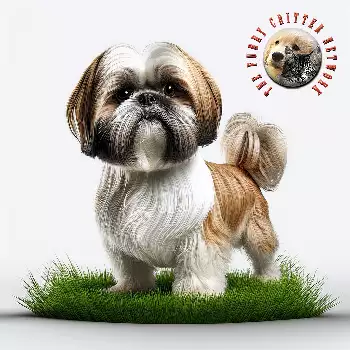
The Shih Tzu is a sturdy, compact toy breed that carries itself with a proud, arrogant bearing befitting its origins as a cherished companion of Chinese royalty. Standing ideally between 9 to 10.5 inches at the withers, though acceptable heights range from 8 to 11 inches, and weighing 9 to 16 pounds, the breed presents a solid, well-boned appearance that belies its small stature. The body is slightly longer than tall, with good depth of ribcage extending to just below the elbow and a level topline. Despite being a toy dog, the Shih Tzu should demonstrate sound structure and movement comparable to larger breeds. The head is broad and round, wide between the eyes, with an expression that is warm, sweet, and trusting. The brachycephalic face features a square, short, unwrinkled muzzle set no lower than the bottom eye rim, ideally no longer than one inch from tip of nose to stop. An undershot bite is required, and the muzzle should be well-padded with the lower lip and chin neither protruding nor receding. Large, round, dark eyes are set wide apart and convey the breed's gentle, friendly nature. Ears are large and heavily coated, set slightly below the crown of the skull. The hallmark of the breed is its luxurious double coat, which flows long and dense with a woolly undercoat. The coat may be slightly wavy but never curly, and requires considerable grooming commitment to maintain properly. All colors are acceptable and equally valued, including various shades of gold, white, black, silver, brindle, and combinations thereof. Many Shih Tzu display a white blaze on the forehead and a white tip on the tail, considered highly prized. The heavily plumed tail is set high and carried in a curve over the back. Movement is smooth, flowing, and effortless with good front reach and rear drive, the head carried proudly.
Key Characteristics
Temperament Temperament Temperament Temperament Temperament Temperament Shih Tzu are intelligent dogs who respond well to patient, consistent training using positive reinforcement methods. However, they can exhibit a stubborn streak inherited from their independent nature, sometimes requiring extra creativity and persistence during training sessions. The breed craves human companionship and may develop separation anxiety if left alone for extended periods. Early socialization helps ensure that Shih Tzu puppies develop into confident, well-adjusted adults who interact appropriately with children, other dogs, and various pets. The breed's gentle disposition and patience make them wonderful companions for families with children, though interactions should always be supervised to protect the small dog from inadvertent rough handling.
Health Considerations Health Considerations Health Considerations Health Considerations Health Considerations Health Considerations Patellar luxation, where the kneecap slips out of proper alignment, affects many small breeds including Shih Tzu and can range from mild intermittent lameness to requiring surgical correction. Hip dysplasia occurs less commonly but is recognized in the breed. Intervertebral disc disease can cause back problems ranging from pain to paralysis. Renal dysplasia, a developmental kidney disorder, occurs in some Shih Tzu lines and can cause kidney failure in severe cases. Allergies, both environmental and food-related, frequently cause skin and ear problems. The breed's long coat requires regular grooming to prevent painful matting and skin infections. With proper care, Shih Tzu typically enjoy a lifespan of 10 to 18 years, with an average around 13 years.
Important to Remember
Each hybrid dog is unique and may inherit any combination of traits from either parent breed. The information above represents the characteristics of the purebred parent breeds. Your Standard Auss-Tzu may favor one parent over the other or display a blend of both. We strongly encourage you to read the complete breed profiles for both the Australian Shepherd and Shih Tzu to fully understand the range of possible temperaments, health concerns, and care requirements.