Staffy Bull Pit
The Staffy Bull Pit is a cross between the Staffordshire Bull Terrier and the Pit Bull Terrier. Because each hybrid inherits a unique combination of traits from both parents, we recommend thoroughly researching both breeds before choosing a Staffy Bull Pit. Pay special attention to temperament, health issues, and care requirements, as your dog may express characteristics from either parent breed.
Staffordshire Bull Terrier
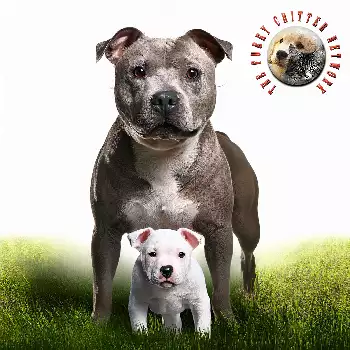
The Staffordshire Bull Terrier is a medium-sized, muscular dog that presents a powerful appearance while remaining agile and athletic. Males typically stand between 14 to 16 inches at the shoulder and weigh between 28 to 38 pounds, while females are slightly smaller at 24 to 34 pounds. Despite their compact size, these dogs give the impression of being much larger due to their solid, well-muscled build. The breed has a low center of gravity with a body that is slightly longer than it is tall, contributing to their remarkable stability and strength. Their broad chest, strong shoulders, and well-defined musculature make them appear exceptionally robust for their stature. The Staffordshire Bull Terrier possesses a distinctive head that is short and broad with pronounced cheek muscles and a wide, powerful jaw. Their skull features a distinct stop, and the muzzle is relatively short but strong. The eyes are round, medium-sized, and typically dark, though the color may vary somewhat with coat color. Their ears are small and can be either rose-shaped or half-pricked, adding to their alert expression. The breed sports a short, smooth coat that lies close to the body and has a glossy appearance. Coat colors include red, fawn, white, black, blue, brindle, and any of these colors combined with white markings. The tail is medium length, set low, and tapers to a point, carried without much curl. Their legs are straight and well-boned when viewed from the front, with feet that are medium-sized and well-padded. The overall impression is of a compact, muscular dog built for both strength and agility, capable of quick movements despite their powerful frame. Their skin fits tightly over their muscular body, and they lack the loose skin or wrinkles seen in some other bull breeds. The breed's smooth coat requires minimal grooming but provides little protection from extreme temperatures, making them best suited to moderate climates or indoor living environments.
Key Characteristics
Temperament Temperament Temperament Temperament Temperament Temperament While Staffordshire Bull Terriers are typically friendly toward people, including strangers, they may show less tolerance toward other dogs, particularly those of the same sex. This trait stems from their historical background and requires early socialization and ongoing management. They possess a strong prey drive inherited from their terrier ancestry, which may cause them to chase smaller animals. With proper training using positive reinforcement methods, these dogs become well-mannered, loyal companions who are sensitive to their owners' moods and eager to please.
Health Considerations Health Considerations Health Considerations Health Considerations Health Considerations Health Considerations Skin conditions and allergies are relatively common in Staffordshire Bull Terriers, manifesting as itching, hair loss, and skin infections. Environmental and food allergies may require dietary management and treatment. Due to their short muzzle, some individuals may experience mild brachycephalic airway syndrome, which can cause breathing difficulties especially in hot weather or during intense exercise. Owners should monitor their dogs during warm weather and provide adequate shade and water. Regular veterinary checkups, genetic testing for hereditary conditions, and maintaining a healthy lifestyle through proper nutrition and exercise are essential for promoting longevity in this breed.
Pit Bull Terrier

The American Pit Bull Terrier is a medium-sized, solidly built dog that combines impressive strength with remarkable agility and athleticism. Males typically stand between 18 to 21 inches at the shoulder and weigh between 35 to 60 pounds, while females are somewhat smaller at 17 to 20 inches and 30 to 50 pounds. The breed must be both powerful and agile, with overall balance and correct proportion of weight to height being more important than the actual numbers. These dogs have a low center of gravity and appear slightly longer than tall, with the muscles of the neck and head being especially well developed. They pack more muscle per pound of body weight than most other breeds. The American Pit Bull Terrier's head is medium length with a large, broad skull shaped like a blunt wedge when viewed from above or the side. The muzzle is broad and deep with a well-defined stop, and the jaws are powerful and well-defined. The nose can be any color and the eyes are small to medium-sized, round to almond-shaped, set wide apart and low on the skull. Eye color varies with coat color but is most commonly dark. The ears are small to medium in size, set high on the head, and may be cropped or left natural in their rose or half-pricked shape. The neck is heavy, slightly arched, and muscular, tapering from the shoulders to the back of the skull. The breed's coat is short, close-lying, glossy, and stiff to the touch. American Pit Bull Terriers come in all colors and patterns except merle, including solid colors, parti-colors, and various combinations with white markings. The body features a deep, well-sprung chest that is relatively broad, providing ample lung capacity. The back is short and strong with a slight slope from withers to rump. The tail is relatively short compared to body size, set low, thick at the base, and tapers to a point. Their movement is effortless, springy, and energetic, with good reach in front and powerful drive from behind.
Key Characteristics
Temperament Temperament Temperament Temperament Temperament Temperament Due to their historical background, American Pit Bull Terriers may exhibit some level of dog-directed aggression, and they require careful socialization and management around other dogs. This trait, combined with their powerful physique, means that responsible ownership, consistent training, and proper containment are essential. They possess a pronounced prey drive that may cause them to chase small animals. These dogs are not suitable for owners seeking a low-maintenance pet, as they require significant physical exercise, mental stimulation, and social interaction to thrive. With experienced, committed owners who provide proper training and socialization, the American Pit Bull Terrier becomes an exceptionally devoted, loving companion.
Health Considerations Health Considerations Health Considerations Health Considerations Health Considerations Health Considerations Cataracts and other eye conditions can affect American Pit Bull Terriers, potentially leading to vision impairment. Cone-rod dystrophy is a genetic eye disorder that has been identified in the breed, causing progressive vision loss. Genetic testing is available for this condition. Heart disease, including congenital defects, may occur in some lines. Additionally, the breed may be prone to certain types of cancer and cruciate ligament injuries due to their active, athletic nature. Regular veterinary checkups, genetic screening when available, maintaining a healthy weight, and providing appropriate exercise and mental stimulation are key factors in promoting a long, healthy life for American Pit Bull Terriers.
Important to Remember
Each hybrid dog is unique and may inherit any combination of traits from either parent breed. The information above represents the characteristics of the purebred parent breeds. Your Staffy Bull Pit may favor one parent over the other or display a blend of both. We strongly encourage you to read the complete breed profiles for both the Staffordshire Bull Terrier and Pit Bull Terrier to fully understand the range of possible temperaments, health concerns, and care requirements.