Springerdoodle
The Springerdoodle is a cross between the English Springer Spaniel and the Poodle. Because each hybrid inherits a unique combination of traits from both parents, we recommend thoroughly researching both breeds before choosing a Springerdoodle. Pay special attention to temperament, health issues, and care requirements, as your dog may express characteristics from either parent breed.
English Springer Spaniel
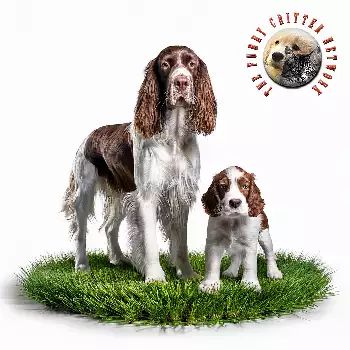
The English Springer Spaniel is a medium-sized sporting dog known for its balanced, athletic build and elegant appearance that perfectly suits its role as a versatile hunting companion. Males typically stand between 19 and 21 inches at the shoulder and weigh 45 to 55 pounds, while females measure 18 to 20 inches and weigh 40 to 50 pounds. The breed possesses a compact, sturdy frame with well-developed muscles suited for fieldwork and long days of hunting in challenging terrain. Their body is slightly longer than tall, giving them a balanced silhouette that combines power with agility and endurance. The head features a moderately long skull with a defined stop, and their kind, trusting eyes convey an alert and intelligent expression that reflects the breed's friendly disposition. Two distinct types exist within the breed: field-bred and show-bred lines, each developed for different purposes. Field-bred Springers tend to be smaller and lighter with shorter coats, bred primarily for hunting ability, athleticism, and stamina in the field. Show-bred Springers possess longer, more luxuriant coats with pronounced feathering on the ears, chest, legs, and belly, presenting a more refined appearance in the show ring. The coat is medium-length, lying flat or slightly wavy against the body, and is designed to protect against harsh weather conditions and thick brush. Common coat colors include liver and white, black and white, blue or liver roan, and tricolor patterns featuring tan markings on the eyebrows, cheeks, and under the tail. Distinctive physical features include their long, pendant ears set at eye level that hang close to the head, framing their expressive face beautifully. The traditionally docked tail wags enthusiastically and almost constantly when the dog is active or happy. The feet are compact and round with thick pads well-suited for various terrains, enabling tireless work in the field. Their movement is free and ground-covering, demonstrating the smooth, effortless gait expected of a working sporting dog. Overall appearance reflects their dual heritage as both a capable working gundog and an elegant companion.
Key Characteristics
Temperament Temperament Temperament Temperament Temperament Temperament Energy levels run high in this breed, requiring substantial daily exercise and mental engagement to prevent boredom-related behaviors and maintain good temperament. Without adequate stimulation, Springers may develop destructive habits or excessive barking that can become problematic. They particularly enjoy activities that tap into their natural abilities, such as swimming, retrieving, and scent work. Their sociable temperament generally allows them to coexist peacefully with other dogs and household pets, especially when properly socialized from puppyhood.
Health Considerations Health Considerations Health Considerations Health Considerations Health Considerations Health Considerations Ear infections occur frequently due to the breed's long, pendulous ears that trap moisture and limit air circulation within the ear canal. Regular ear cleaning and inspection help prevent chronic otitis from developing into more serious conditions. Springers also show increased susceptibility to certain autoimmune conditions including immune-mediated hemolytic anemia and sebaceous adenitis, a skin disorder affecting the oil-producing glands. Some lines carry higher rates of rage syndrome, a form of sudden-onset aggression requiring careful temperament evaluation of breeding stock. Maintaining healthy weight through proper diet and exercise helps reduce stress on joints and supports longevity.
Poodle

The Poodle is an elegant, well-proportioned dog that comes in three recognized size varieties: Standard, Miniature, and Toy, each sharing identical breed standards except for size. Standard Poodles stand over 15 inches at the shoulder and typically weigh between 45 and 70 pounds for males, with females slightly smaller at 40 to 60 pounds. Miniature Poodles measure 10 to 15 inches and weigh 15 to 17 pounds, while Toy Poodles stand under 10 inches and weigh 6 to 9 pounds. Regardless of size, all Poodles share the same breed standard proportions, featuring a squarely built body with a moderately rounded skull, long straight muzzle, and dark oval-shaped eyes that convey an alert, intelligent expression characteristic of this remarkably smart breed. The Poodle's most distinctive feature is its dense, curly coat that grows continuously rather than shedding seasonally like most other breeds. This single-layer coat can be either tightly curled or corded into rope-like cords, and its unique texture produces minimal shedding, making the breed popular among people with allergies or those who prefer a cleaner home environment. The coat comes in a wide variety of solid colors including black, white, brown, apricot, cream, silver, gray, red, and cafe-au-lait, as well as parti-color patterns recognized in some registries. Traditional grooming clips like the Continental, English Saddle, and Puppy trim showcase the breed's elegant lines while originally serving practical purposes for water retrieval by protecting vital organs and joints. Physically, the Poodle displays excellent bone structure and muscular development beneath its elaborate coat, demonstrating the athletic build required for its original work as a water retriever. The neck is well-proportioned and arched, flowing into laid-back shoulders that enable efficient movement. The breed moves with a light, springy gait that reflects its athletic heritage. Long, flat ears hang close to the head and are covered with wavy hair, while the tail is set high and carried confidently upward.
Key Characteristics
Temperament Temperament Temperament Temperament Temperament Temperament Socialization plays a crucial role in developing a well-rounded Poodle temperament. Without adequate exposure to various people, animals, and situations during puppyhood, some Poodles may become nervous or develop excessive barking habits. The breed generally gets along well with other dogs and household pets when properly introduced. They can be reserved with strangers initially but warm up once comfortable. Their alertness makes them effective watchdogs who will announce visitors, though they are not typically aggressive. Poodles require substantial mental stimulation and companionship, potentially developing separation anxiety if left alone for extended periods.
Health Considerations Health Considerations Health Considerations Health Considerations Health Considerations Health Considerations Sebaceous adenitis particularly affects Standard Poodles, with studies showing approximately 9 percent affected and 42 percent being carriers of this inflammatory skin condition. This disorder destroys the oil-producing glands, leading to hair loss, scaling, and secondary infections requiring ongoing management. Bloat, or gastric dilatation-volvulus, poses a life-threatening risk for Standard Poodles due to their deep-chested conformation, requiring immediate veterinary intervention when it occurs. Von Willebrand's disease, a bleeding disorder affecting clotting ability, and epilepsy also occur in the breed at elevated rates.
Important to Remember
Each hybrid dog is unique and may inherit any combination of traits from either parent breed. The information above represents the characteristics of the purebred parent breeds. Your Springerdoodle may favor one parent over the other or display a blend of both. We strongly encourage you to read the complete breed profiles for both the English Springer Spaniel and Poodle to fully understand the range of possible temperaments, health concerns, and care requirements.