Springer Spaniel Sheepdog
The Springer Spaniel Sheepdog is a cross between the English Springer Spaniel and the Old English Sheepdog. Because each hybrid inherits a unique combination of traits from both parents, we recommend thoroughly researching both breeds before choosing a Springer Spaniel Sheepdog. Pay special attention to temperament, health issues, and care requirements, as your dog may express characteristics from either parent breed.
English Springer Spaniel
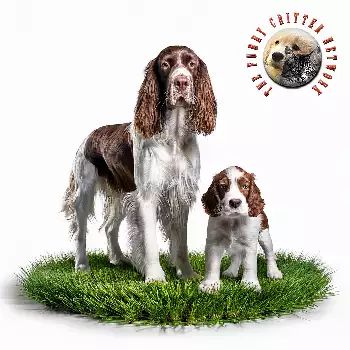
The English Springer Spaniel is a medium-sized sporting dog with a well-balanced, athletic build designed for endurance and agility in the field. Males typically stand between 19 and 21 inches at the shoulder and weigh 45 to 55 pounds, while females measure 18 to 20 inches and weigh 40 to 50 pounds. The breed possesses a moderately long head with a distinct stop, a square muzzle, and expressive oval-shaped eyes that convey an alert and kindly disposition. Their large, expressive eyes are typically hazel or dark brown and contribute to the breed's characteristic warm, trusting expression. The long, pendant ears hang close to the cheeks and are covered with wavy hair, adding to their elegant appearance and helping to funnel scent during fieldwork. The coat is one of the breed's most distinguishing features, consisting of a medium-length outer layer that lies flat or slightly wavy against the body with a dense, protective undercoat that provides insulation in cold water and inclement weather. Feathering adorns the ears, chest, legs, and belly, adding elegance to their appearance while requiring regular grooming attention to prevent matting. Acceptable coat colors include black or liver with white markings, blue or liver roan patterns, and tricolor combinations featuring tan markings above the eyes, on the cheeks, inside the ears, and under the tail. The white areas may display ticking or flecking throughout, creating attractive patterns unique to each individual dog. The body structure reflects the breed's working heritage as a flushing and retrieving dog, with a deep chest providing ample lung capacity for sustained activity, well-sprung ribs, and a strong, slightly arched loin that transmits power from the hindquarters. The topline slopes gently from withers to tail, and the tail is typically docked in working dogs, carried horizontally or slightly elevated when the dog is active and alert. The legs are straight and well-boned with compact, round feet featuring thick pads suited for navigating rough terrain and cold water. Movement is ground-covering and effortless with good reach and strong drive, demonstrating the stamina required for long days working in the field alongside hunters.
Key Characteristics
Temperament Temperament Temperament Temperament Temperament Temperament Energy levels remain high throughout much of their lives, requiring substantial daily exercise to maintain physical and mental well-being. A minimum of one to two hours of activity daily keeps these active dogs satisfied and well-behaved. Without adequate stimulation, Springers may develop undesirable behaviors stemming from boredom or excess energy, including excessive barking or destructive tendencies. They generally get along well with children and other pets when raised together, though their exuberance during play may overwhelm very small children. Separation anxiety can develop if left alone for extended periods, as these dogs crave companionship and involvement in family activities above all else.
Health Considerations Health Considerations Health Considerations Health Considerations Health Considerations Health Considerations English Springer Spaniels have an elevated risk for certain systemic conditions that owners should monitor. Studies indicate the breed has a significantly higher predisposition to chronic hepatitis compared to the general dog population, making liver health monitoring through periodic blood testing important for early detection. Autoimmune conditions, including immune-mediated hemolytic anemia where the body attacks its own red blood cells, occur more frequently in Springers than in many other breeds. Epilepsy and hypothyroidism also appear with notable frequency and require ongoing management. Regular veterinary examinations, appropriate health screenings, and maintaining a healthy weight through proper diet and exercise help maximize longevity and quality of life.
Old English Sheepdog

The Old English Sheepdog is a large, athletic dog whose profuse coat creates an unmistakable silhouette that has made the breed a recognizable icon worldwide. Males typically stand 22 inches or taller at the shoulder and weigh between 60 and 100 pounds, while females should be at least 21 inches tall with proportionate weight. Despite being obscured by abundant fur, these dogs possess a strong, squarely built body with substantial bone and well-developed musculature capable of significant physical work. The overall impression should be of a powerful, compact dog capable of great agility and endurance despite their somewhat cumbersome appearance created by the heavy coat. The head is large and fairly square, with a well-defined stop and a strong, square muzzle that houses powerful jaws. The eyes are often hidden beneath the characteristic fall of hair over the face, but they may be dark brown, blue, or one of each color, adding to the breed's unique appeal. The ears are medium-sized, carried flat against the head and covered with fur. One of the breed's most distinctive features is its unique bear-like gait, characterized by a shuffling or ambling movement when walking that transitions into an elastic gallop when running at speed. This unusual movement results from the breed's body structure and contributes to their characteristic, recognizable appearance. The coat is the Old English Sheepdog's most prominent feature, consisting of a profuse, shaggy outer layer that is neither straight nor curly, but rather has a distinct texture unique to the breed. The undercoat is soft, dense, and water-resistant, providing excellent protection from the elements during outdoor work. Acceptable colors include any shade of gray, grizzle, blue, or blue merle, with or without white markings on various parts of the body. The coat requires extensive maintenance to prevent matting and tangles, and many owners opt to keep their dogs in a shorter trim for practical purposes while maintaining breed type. The tail was traditionally docked very short as a working dog identification, though natural tails are increasingly common and may curl at the end.
Key Characteristics
Temperament Temperament Temperament Temperament Temperament Temperament The breed requires substantial mental and physical stimulation to remain content, though they are somewhat less demanding than many working breeds of similar size. They mature slowly, often not reaching full adult temperament until around three years of age when their personality fully develops. Early socialization and consistent training help channel their intelligence productively and prevent stubbornness from becoming problematic. Old English Sheepdogs thrive on companionship and do not do well when isolated from family activities for extended periods. They adapt well to various living situations provided their exercise and grooming needs are met, though their size and coat make them better suited to homes with adequate space.
Health Considerations Health Considerations Health Considerations Health Considerations Health Considerations Health Considerations Old English Sheepdogs may carry the MDR1 gene mutation, which causes sensitivity to certain medications including some commonly used sedatives, anti-parasitic drugs, and chemotherapy agents that other breeds tolerate well. Genetic testing can identify affected dogs, allowing veterinarians to select appropriate alternative medications and avoid adverse reactions. The breed experiences various eye conditions, including cataracts and progressive retinal atrophy, that can affect vision over time. Skin problems, including allergies and demodicosis, occur with some frequency and may be exacerbated by the heavy coat if not properly maintained through regular grooming. Hypothyroidism and autoimmune conditions also appear in the breed. Regular grooming not only maintains coat health but allows owners to monitor for skin issues that might otherwise be hidden beneath the dense fur.
Important to Remember
Each hybrid dog is unique and may inherit any combination of traits from either parent breed. The information above represents the characteristics of the purebred parent breeds. Your Springer Spaniel Sheepdog may favor one parent over the other or display a blend of both. We strongly encourage you to read the complete breed profiles for both the English Springer Spaniel and Old English Sheepdog to fully understand the range of possible temperaments, health concerns, and care requirements.