Springer Pit
The Springer Pit is a cross between the English Springer Spaniel and the American Pit Bull Terrier. Because each hybrid inherits a unique combination of traits from both parents, we recommend thoroughly researching both breeds before choosing a Springer Pit. Pay special attention to temperament, health issues, and care requirements, as your dog may express characteristics from either parent breed.
English Springer Spaniel
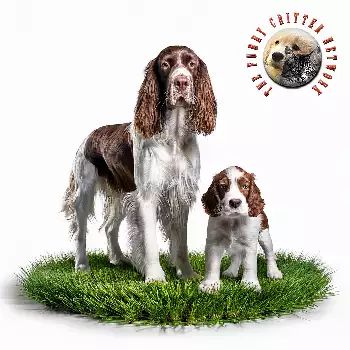
The English Springer Spaniel is a medium-sized sporting dog with a well-balanced, athletic build designed for endurance and agility in the field. Males typically stand between 19 and 21 inches at the shoulder and weigh 45 to 55 pounds, while females measure 18 to 20 inches and weigh 40 to 50 pounds. The breed possesses a moderately long head with a distinct stop, a square muzzle, and expressive oval-shaped eyes that convey an alert and kindly disposition. Their large, expressive eyes are typically hazel or dark brown and contribute to the breed's characteristic warm, trusting expression. The long, pendant ears hang close to the cheeks and are covered with wavy hair, adding to their elegant appearance and helping to funnel scent during fieldwork. The coat is one of the breed's most distinguishing features, consisting of a medium-length outer layer that lies flat or slightly wavy against the body with a dense, protective undercoat that provides insulation in cold water and inclement weather. Feathering adorns the ears, chest, legs, and belly, adding elegance to their appearance while requiring regular grooming attention to prevent matting. Acceptable coat colors include black or liver with white markings, blue or liver roan patterns, and tricolor combinations featuring tan markings above the eyes, on the cheeks, inside the ears, and under the tail. The white areas may display ticking or flecking throughout, creating attractive patterns unique to each individual dog. The body structure reflects the breed's working heritage as a flushing and retrieving dog, with a deep chest providing ample lung capacity for sustained activity, well-sprung ribs, and a strong, slightly arched loin that transmits power from the hindquarters. The topline slopes gently from withers to tail, and the tail is typically docked in working dogs, carried horizontally or slightly elevated when the dog is active and alert. The legs are straight and well-boned with compact, round feet featuring thick pads suited for navigating rough terrain and cold water. Movement is ground-covering and effortless with good reach and strong drive, demonstrating the stamina required for long days working in the field alongside hunters.
Key Characteristics
Temperament Temperament Temperament Temperament Temperament Temperament Energy levels remain high throughout much of their lives, requiring substantial daily exercise to maintain physical and mental well-being. A minimum of one to two hours of activity daily keeps these active dogs satisfied and well-behaved. Without adequate stimulation, Springers may develop undesirable behaviors stemming from boredom or excess energy, including excessive barking or destructive tendencies. They generally get along well with children and other pets when raised together, though their exuberance during play may overwhelm very small children. Separation anxiety can develop if left alone for extended periods, as these dogs crave companionship and involvement in family activities above all else.
Health Considerations Health Considerations Health Considerations Health Considerations Health Considerations Health Considerations English Springer Spaniels have an elevated risk for certain systemic conditions that owners should monitor. Studies indicate the breed has a significantly higher predisposition to chronic hepatitis compared to the general dog population, making liver health monitoring through periodic blood testing important for early detection. Autoimmune conditions, including immune-mediated hemolytic anemia where the body attacks its own red blood cells, occur more frequently in Springers than in many other breeds. Epilepsy and hypothyroidism also appear with notable frequency and require ongoing management. Regular veterinary examinations, appropriate health screenings, and maintaining a healthy weight through proper diet and exercise help maximize longevity and quality of life.
American Pit Bull Terrier

The American Pit Bull Terrier is a medium-sized, solidly built dog that projects strength and athleticism without excessive bulk or clumsiness. Males typically stand 18 to 21 inches at the shoulder and weigh between 35 and 60 pounds, while females measure 17 to 20 inches and weigh 30 to 50 pounds. The breed's well-defined musculature is immediately apparent beneath the short, smooth coat, showcasing a powerful yet agile physique developed through generations of selective breeding for physical capability and athletic performance. The overall impression is of a confident, substantial dog capable of impressive athletic feats while maintaining grace and coordination. The head is distinctive and contributes significantly to the breed's recognizable appearance throughout the world. It is medium length with a broad, flat skull and a wide, deep muzzle that houses powerful jaws. The cheeks are prominent and muscular, lending strength to the face without appearing overdone. Eyes are round to almond-shaped, set low and wide apart in the skull, and may be any color except blue in dogs with non-dilute coat colors. Ears are typically small to medium in size and may be naturally rose-shaped or half-pricked, though some owners choose to crop them. The neck is heavy and muscular, blending smoothly into well-laid-back shoulders that allow for efficient movement. The coat is short, glossy, and stiff to the touch, lying close to the skin and highlighting the breed's impressive muscular definition. Nearly all colors and patterns are acceptable according to breed standards, including solid colors, particolors, and various combinations of black, white, red, blue, brindle, and fawn. The only pattern specifically excluded by most registries is merle. The body features a deep, well-sprung chest that reaches approximately to the elbows, strong straight front legs, and powerful muscular hindquarters that provide driving force. The tail is relatively short, set low, tapering to a point, and is carried low when relaxed but may rise with excitement. Movement should be effortless and powerful, demonstrating the breed's natural athleticism and coordination in motion.
Key Characteristics
Temperament Temperament Temperament Temperament Temperament Temperament Proper socialization during puppyhood is essential for developing a well-adjusted adult dog capable of handling new situations with confidence. While the breed typically demonstrates friendliness toward humans, including strangers, some individuals may exhibit dog-directed aggression, a trait that requires responsible management and awareness. Early and ongoing exposure to other dogs in controlled settings helps minimize potential issues. The breed's strength and determination necessitate an owner capable of providing firm, fair leadership and maintaining control in all situations. With appropriate training and socialization, the American Pit Bull Terrier can be a devoted, trustworthy companion that embodies the best qualities of the terrier group.
Health Considerations Health Considerations Health Considerations Health Considerations Health Considerations Health Considerations The breed faces several other health challenges that owners should monitor throughout their dog's life. Hypothyroidism, resulting from insufficient thyroid hormone production, can cause weight gain, lethargy, skin problems, and behavioral changes. Heart conditions, particularly dilated cardiomyopathy, affect some individuals and may lead to decreased cardiac function over time requiring medication management. Eye problems including cataracts and progressive retinal atrophy can impact vision as dogs age. Cerebellar ataxia and neuronal ceroid lipofuscinosis are inherited neurological conditions that occur in some bloodlines. Responsible breeders conduct health testing and make informed breeding decisions to minimize the risk of these hereditary conditions appearing in offspring.
Important to Remember
Each hybrid dog is unique and may inherit any combination of traits from either parent breed. The information above represents the characteristics of the purebred parent breeds. Your Springer Pit may favor one parent over the other or display a blend of both. We strongly encourage you to read the complete breed profiles for both the English Springer Spaniel and American Pit Bull Terrier to fully understand the range of possible temperaments, health concerns, and care requirements.