Soft Coated Woxer
The Soft Coated Woxer is a cross between the Boxer and the Soft Coated Wheaten Terrier. Because each hybrid inherits a unique combination of traits from both parents, we recommend thoroughly researching both breeds before choosing a Soft Coated Woxer. Pay special attention to temperament, health issues, and care requirements, as your dog may express characteristics from either parent breed.
Boxer
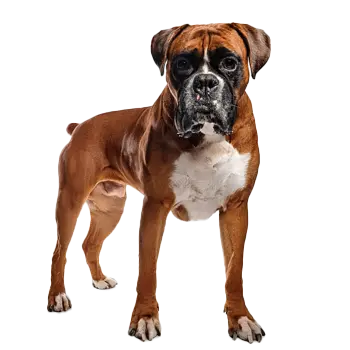
The Boxer is a medium to large-sized dog with a powerful, muscular build that reflects their athletic heritage. Male Boxers typically stand 23 to 25 inches tall at the shoulder and weigh between 65 and 80 pounds, while females are somewhat smaller at 21.5 to 23.5 inches tall and 50 to 65 pounds. Their body is compact and square-proportioned, combining substantial bone structure with smooth, well-defined musculature that conveys both strength and agility. The breed standard emphasizes balance and symmetry, with the overall impression being one of a noble, powerful dog capable of sustained physical activity. The Boxer possesses a distinctive head structure that is perhaps their most recognizable feature. They are a brachycephalic breed, meaning they have a shortened skull that creates their characteristic pushed-in face. The muzzle is broad and blunt, with a slight undershot jaw where the lower teeth extend slightly beyond the upper teeth. Their nose is large and black with widely open nostrils, while their dark brown eyes are set well apart and convey an alert, intelligent expression. The forehead displays characteristic wrinkles, and their ears, which fold forward naturally, are set high on the skull. This unique facial structure, combined with their broad chest and proud carriage, gives Boxers their distinctive noble appearance. The Boxer's coat is short, smooth, and close-fitting to the body, requiring minimal grooming to maintain its sleek appearance. The breed comes in two primary colors: fawn, which ranges from light tan to deep mahogany, and brindle, which features black stripes of varying widths over a fawn background. White markings are common and acceptable, typically appearing on the feet, chest, and face, though excessive white covering more than one-third of the body is considered a fault in show dogs. The tail is traditionally docked and carried high, though many countries now prohibit this practice, and natural tails are increasingly common.
Key Characteristics
Temperament Temperament Temperament Temperament Temperament Temperament Boxers are high-energy dogs that require substantial daily exercise, typically one to two hours of activity including walks, play sessions, and mental stimulation. They excel in dog sports such as agility, obedience, and rally, and their athletic build makes them excellent hiking and jogging companions. However, their brachycephalic structure means they can overheat quickly and should not be exercised vigorously in hot or humid conditions. They do not tolerate being left alone for extended periods and may develop separation anxiety or destructive behaviors if their social and exercise needs are not met. Early socialization is important to ensure they develop appropriate behavior around other dogs and animals.
Health Considerations Health Considerations Health Considerations Health Considerations Health Considerations Health Considerations Orthopedic issues including hip dysplasia and degenerative myelopathy affect Boxers, though perhaps at lower rates than some other large breeds. Degenerative myelopathy is a progressive spinal cord disease that causes gradual hind limb paralysis, typically appearing in older dogs. Hypothyroidism, allergies, and skin problems are relatively common, as are corneal ulcers due to their prominent eye structure. The Boxer's brachycephalic anatomy predisposes them to respiratory difficulties and heat intolerance, making it crucial to avoid strenuous exercise in warm weather and to provide access to cool, shaded areas. Dental issues and hemophilia A, a blood clotting disorder, have also been documented in the breed. Regular health screening, maintaining appropriate weight, and purchasing from breeders who conduct thorough health testing can help minimize the risk of these conditions.
Soft Coated Wheaten Terrier

The Soft Coated Wheaten Terrier is a medium-sized, compact, and squarely proportioned dog that stands 17 to 19 inches tall at the shoulder and weighs between 30 and 40 pounds, with males typically at the higher end of these ranges. Their body displays the strength and agility characteristic of a working farm dog, with a moderately long head, powerful muzzle, and large teeth for their size. The breed presents a hardy, well-balanced silhouette with a level topline and tail carried upright, projecting confidence and alertness without the aggressive stance of some other terrier breeds. The breed's most distinctive feature is their magnificent single coat, which sets them apart from most other terriers. Unlike the wiry double coats typical of terrier breeds, the Wheaten possesses a soft, silky, gently waving coat that covers the entire body in abundant waves or loose curls. Two coat types exist within the breed: the Irish coat, which is generally silkier and wavier, and the American or Heavy coat, which tends to be thicker and fuller. Both types require extensive grooming to prevent matting and maintain their characteristic flowing appearance. One of the most fascinating aspects of Soft Coated Wheaten Terriers is the dramatic color transformation their coat undergoes as they mature. Puppies are born with dark coats, often appearing reddish, mahogany, or brown, sometimes with black tips or dark masks. Over the course of 18 to 24 months, this dark coat gradually lightens and clears to the adult wheaten color, which can range from pale beige to shimmering gold, resembling the color of ripening wheat that gives the breed its name. The final adult coat color and texture may not be fully established until the dog is approximately two years old. Their warm, open expression is enhanced by hair falling forward over the eyes, though many owners trim this for better visibility.
Key Characteristics
Temperament Temperament Temperament Temperament Temperament Temperament Wheatens are devoted family dogs that form strong bonds with their owners and prefer to be involved in all household activities. They generally interact well with children and can adapt to living with other pets, particularly when raised together from a young age. However, they do require daily exercise and mental stimulation to channel their energy positively, and they do not do well when left alone for extended periods. Their alert nature makes them good watchdogs who will bark to announce visitors, though they are typically friendly rather than suspicious toward strangers once introductions are made.
Health Considerations Health Considerations Health Considerations Health Considerations Health Considerations Health Considerations Addison's disease, also known as hypoadrenocorticism, occurs when the adrenal glands fail to produce adequate hormones. Initial symptoms can be vague and intermittent, including lethargy, vomiting, and weakness, but severe cases can lead to an Addisonian crisis requiring emergency treatment. Renal dysplasia, a hereditary condition in which the kidneys develop abnormally, can cause kidney failure in young dogs and is diagnosed in Wheaten puppies more frequently than in many other breeds. Other conditions affecting the breed include inflammatory bowel disease, progressive retinal atrophy, degenerative myelopathy, von Willebrand's disease, and hypothyroidism. Regular health monitoring, purchasing from breeders who health test their breeding stock, and maintaining awareness of early warning signs are essential for managing the health of this breed.
Important to Remember
Each hybrid dog is unique and may inherit any combination of traits from either parent breed. The information above represents the characteristics of the purebred parent breeds. Your Soft Coated Woxer may favor one parent over the other or display a blend of both. We strongly encourage you to read the complete breed profiles for both the Boxer and Soft Coated Wheaten Terrier to fully understand the range of possible temperaments, health concerns, and care requirements.