Smooth Fox Pinscher
The Smooth Fox Pinscher is a cross between the Miniature Pinscher and the Smooth Fox Terrier. Because each hybrid inherits a unique combination of traits from both parents, we recommend thoroughly researching both breeds before choosing a Smooth Fox Pinscher. Pay special attention to temperament, health issues, and care requirements, as your dog may express characteristics from either parent breed.
Miniature Pinscher
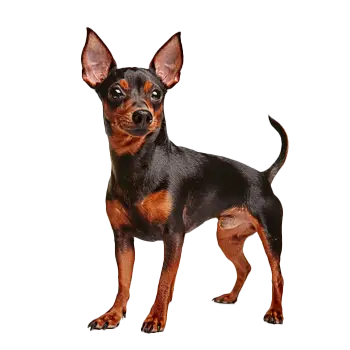
The Miniature Pinscher is a small, compact dog that stands between 10 and 12.5 inches at the shoulder, with the ideal height being 11 to 11.5 inches according to breed standards. Despite their diminutive size, these dogs typically weigh between 8 and 11 pounds and possess a sturdy, well-balanced build that conveys both elegance and substance. The breed exhibits a distinctive wedge-shaped physique with a short-coupled body that appears square when viewed from the side, meaning the length from forechest to buttocks approximately equals the height at the withers. Their overall structure combines refinement with muscular definition, featuring a smooth, hard coat that lies close to the body and accentuates their athletic form. The breed's head is narrow and tapering, with a flat skull that runs parallel to the muzzle, which is strong and proportionate to the head length. Their ears are set high and can be either cropped to stand erect or left natural in a V-shape that folds forward. The eyes are dark, slightly oval, and full of bright expression, contributing to their characteristically alert and intelligent appearance. The nose is black in most color varieties, though chocolate-colored dogs may have a self-colored nose. One of the most recognizable features of the Miniature Pinscher is their distinctive hackney gait, a high-stepping, prancing movement where the front legs are lifted high with each stride, resembling the action of a hackney horse in carriage driving. The breed comes in several recognized colors including solid clear red ranging from deep rust to lighter shades, stag red which features red with an intermingling of black hairs creating a shaded effect, and black with clearly defined rust-red markings appearing above the eyes, on the cheeks, chest, lower jaw, throat, lower half of the forelegs, inside of the hind legs, and below the hocks. Chocolate with rust points is also an accepted color pattern. The tail is typically docked in countries where this practice is permitted and is carried high and erect, adding to the breed's confident and proud carriage that has earned them the nickname King of Toys.
Key Characteristics
Temperament Temperament Temperament Temperament Temperament Temperament Miniature Pinschers possess a strong prey drive inherited from their ratting ancestry, which means they may chase small animals and should be supervised around smaller pets. They can be assertive with other dogs regardless of size and may attempt to dominate larger breeds. Early socialization is essential to help them develop appropriate behaviors around other animals and people. While they can be good with children who understand how to interact respectfully with small dogs, their small size and spirited nature mean supervision is recommended during playtime.
Health Considerations Health Considerations Health Considerations Health Considerations Health Considerations Health Considerations Other health issues to monitor include epilepsy, which can cause seizures of varying severity and frequency, and hypothyroidism, a condition where the thyroid gland does not produce adequate hormones. Heart conditions, particularly mitral valve disease affecting the heart's valves, can develop in older Miniature Pinschers. Dental problems are common due to their small mouths and crowded teeth, making regular dental care essential. Mucopolysaccharidosis type VI is a rare but serious genetic storage disease identified in the breed. Color dilution alopecia can affect dogs with blue or fawn coloring. Responsible breeders conduct health screenings on their breeding stock.
Smooth Fox Terrier

The Smooth Fox Terrier is a well-balanced, athletic dog that presents a picture of strength and agility in a compact frame built for endurance and speed. Males typically stand between 14 and 16 inches at the shoulder and weigh 17 to 19 pounds, while females are slightly smaller at 13 to 15 inches and 15 to 17 pounds. The breed possesses a distinctively square build when viewed from the side, with the length of the body from shoulder to buttocks approximately equal to the height at the withers. This balanced proportion contributes to their characteristic quick, efficient, and ground-covering movement that allows them to work tirelessly in the field. The head of the Smooth Fox Terrier is one of its most distinguishing features, presenting a long, lean appearance with a flat skull that gradually narrows toward the eyes and continues in a gentle taper to a strong muzzle. The muzzle is powerful and well-developed, tapering toward a black nose, with tight-fitting lips and strong jaws capable of delivering a punishing bite necessary for their original work as fox bolters. The eyes are small, dark, moderately deep-set, and nearly circular in shape, conveying an expression of keen intelligence, alertness, and fire. The ears are V-shaped, small, and moderately thick, folding forward with the tips dropping close to the cheeks rather than hanging by the side of the head. The breed's coat is smooth, flat, hard, dense, and abundant, providing effective protection while requiring minimal grooming. The predominant color is white, which must cover at least half of the body, with markings of black, tan, or black and tan distributed over the head and body. This predominantly white coloring was historically essential as it allowed hunters to easily distinguish the dog from the quarry during hunts. The neck is clean, muscular, and of fair length, flowing into well-laid-back shoulders that enable proper reach. The chest is deep but not broad, and the short, level back provides a strong platform. The tail is traditionally docked to three-quarters length and carried gaily but not curved over the back.
Key Characteristics
Temperament Temperament Temperament Temperament Temperament Temperament While Smooth Fox Terriers generally get along well with people of all ages, they can be quarrelsome with other dogs, particularly those of the same sex. Early socialization is crucial to help them develop appropriate behaviors around other animals. They form strong bonds with their families and thrive on companionship and interaction. Despite their small to medium size, they are robust and energetic dogs that require regular exercise and mental engagement to prevent boredom-related behaviors. Their playful nature and zest for life make them entertaining companions for active families who appreciate their spirited personality.
Health Considerations Health Considerations Health Considerations Health Considerations Health Considerations Health Considerations Neurological conditions including epilepsy and wobbler syndrome, also known as cervical vertebral instability, have been documented in the breed. Wobbler syndrome affects the cervical spine and can cause unsteady gait and coordination problems. Eye conditions beyond lens luxation include cataracts and distichiasis, where eyelashes grow abnormally and can irritate the eye. Congenital deafness, often associated with predominantly white coloring, occurs in some individuals. Dental disease is common and requires regular attention to maintain oral health. Responsible breeders screen their breeding stock for known hereditary conditions and can provide health clearances for prospective puppy buyers.
Important to Remember
Each hybrid dog is unique and may inherit any combination of traits from either parent breed. The information above represents the characteristics of the purebred parent breeds. Your Smooth Fox Pinscher may favor one parent over the other or display a blend of both. We strongly encourage you to read the complete breed profiles for both the Miniature Pinscher and Smooth Fox Terrier to fully understand the range of possible temperaments, health concerns, and care requirements.