Ski-Collie
The Ski-Collie is a cross between the American Eskimo Dog and the Collie. Because each hybrid inherits a unique combination of traits from both parents, we recommend thoroughly researching both breeds before choosing a Ski-Collie. Pay special attention to temperament, health issues, and care requirements, as your dog may express characteristics from either parent breed.
American Eskimo Dog

The American Eskimo Dog is a striking Nordic-type breed that comes in three distinct size varieties, each sharing the same beautiful proportions and characteristics. The Toy variety stands nine to twelve inches at the shoulder and weighs approximately six to ten pounds, while the Miniature measures twelve to fifteen inches and weighs ten to twenty pounds. The Standard variety is the largest, standing fifteen to nineteen inches tall and weighing twenty-five to forty pounds. Regardless of size, all American Eskimo Dogs present a compact, well-balanced body that is slightly longer than it is tall, combining strength with agility and alertness. The breed's most distinguishing feature is its magnificent double coat consisting of a dense undercoat and a longer outer coat of straight guard hairs that stand off from the body. The fur forms a pronounced ruff around the neck and shoulders, creating a lion-like mane that is more noticeable in males. The coat color is preferably pure white, though white with biscuit cream markings is also acceptable. The legs are well-feathered down to the hocks, and the profusely coated tail is carried loosely over the back when the dog is alert. The coat requires regular maintenance but sheds naturally and should never be trimmed except for tidying around the feet. The head exhibits the classic Spitz characteristics with a softly wedge-shaped skull, erect triangular ears set slightly back on the head, and medium-sized oval eyes that are typically dark brown. The expression conveys intelligence and alertness, with a bright, keen quality that is highly valued in the breed. Black pigmentation on the nose, lips, and eye rims provides striking contrast against the white coat. The American Eskimo Dog moves with a bold, energetic gait that covers ground efficiently while demonstrating the agility and endurance that made this breed a star performer in traveling circuses during the early twentieth century.
Key Characteristics
Temperament Temperament Temperament Temperament Temperament Temperament Despite their beautiful appearance and friendly demeanor, American Eskimo Dogs require owners who can provide strong, consistent leadership and maintain firm boundaries. Without proper guidance, they may attempt to assume the role of pack leader, which can result in behavioral problems. This breed has considerable energy and requires daily exercise including walks, play sessions, and opportunities to run freely in secure areas. Their vocal nature means they may bark more than some other breeds, which can be managed through training but should be considered by potential owners living in close proximity to neighbors.
Health Considerations Health Considerations Health Considerations Health Considerations Health Considerations Health Considerations Legg-Calve-Perthes disease occasionally affects American Eskimo Dogs, causing deterioration of the femoral head due to interrupted blood supply. This painful condition typically appears in young dogs and often requires surgical treatment for resolution. Dental disease requires attention in this breed, with regular brushing and professional cleanings helping to prevent periodontal problems. American Eskimo Dogs may also be prone to obesity if overfed or under-exercised, making weight management an important aspect of their overall health care. Epilepsy has been documented in the breed, though responsible breeding practices have helped reduce its prevalence.
Collie
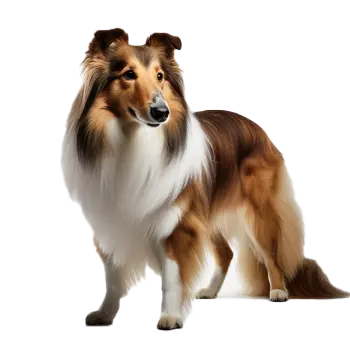
The Collie is a lithe, strong, responsive dog that carries no useless timber and stands naturally straight and firm. Males measure twenty-four to twenty-six inches at the shoulder and weigh sixty to seventy-five pounds, while females stand twenty-two to twenty-four inches and weigh fifty to sixty-five pounds. The breed presents an impressive, proud picture of true balance with every part in harmonious proportion to the whole. The deep, moderately wide chest demonstrates strength, the sloping shoulders and well-bent hocks indicate speed and grace, and the refined face displays remarkable intelligence. The body is slightly longer than the height at the withers, with a straight back that slopes slightly from the withers to the tail base. Two coat varieties exist within the breed, each with distinct characteristics. The Rough Collie possesses an abundant double coat that forms the crowning glory of this variety, with a straight, harsh outer coat and a soft, furry undercoat that nearly hides the skin. The coat is especially profuse on the mane and frill around the neck, with well-feathered forelegs and heavily coated hindquarters above the hocks. The Smooth Collie has a short, hard, dense, flat coat with good texture and an abundant undercoat. Accepted colors for both varieties include sable and white, tricolor with black, white and tan markings, blue merle with silvery blue mottled with black, and predominantly white with colored markings. The Collie's head is perhaps its most distinctive feature, bearing a general resemblance to a well-blunted lean wedge that is smooth and clean in outline. The skull is flat on top with parallel planes formed by the top of the skull and the top of the muzzle, divided by a slight but perceptible stop. The almond-shaped eyes are medium sized and set somewhat obliquely, conveying the breed's characteristic sweet expression. The ears are three-quarters erect with the tips folding forward when the dog is alert. The moderately long tail reaches to the hock joint and is carried low with an upward swirl at the end when the dog is relaxed.
Key Characteristics
Temperament Temperament Temperament Temperament Temperament Temperament Collies make excellent watchdogs, alerting their families to unusual sounds or approaching strangers with their distinctive bark. While they are not aggressive, they can be suspicious of people who seem unstable or threatening, particularly around children. This breed requires moderate daily exercise to maintain physical and mental well-being, typically satisfied by regular walks and play sessions. They adapt well to various living situations but thrive on companionship and do not do well when left alone for extended periods. Collies are generally friendly with other dogs and household pets, especially when properly socialized from puppyhood.
Health Considerations Health Considerations Health Considerations Health Considerations Health Considerations Health Considerations Dermatomyositis is an autoimmune condition affecting the skin and muscles that occurs with notable frequency in Collies. Symptoms include skin lesions, hair loss, and in severe cases, muscle inflammation and wasting. While the condition varies in severity and some dogs experience only mild symptoms, severe cases can significantly impact quality of life. Progressive retinal atrophy, degenerative myelopathy causing progressive hindquarter weakness, and bloat due to the breed's deep chest are additional concerns. Cyclic neutropenia, a rare inherited condition causing periodic immune system weakness and increased infection susceptibility, has been documented in the breed. Regular veterinary care and health screening help ensure Collies live long, comfortable lives.
Important to Remember
Each hybrid dog is unique and may inherit any combination of traits from either parent breed. The information above represents the characteristics of the purebred parent breeds. Your Ski-Collie may favor one parent over the other or display a blend of both. We strongly encourage you to read the complete breed profiles for both the American Eskimo Dog and Collie to fully understand the range of possible temperaments, health concerns, and care requirements.