Siberpoo
The Siberpoo is a cross between the Siberian Husky and the Poodle. Because each hybrid inherits a unique combination of traits from both parents, we recommend thoroughly researching both breeds before choosing a Siberpoo. Pay special attention to temperament, health issues, and care requirements, as your dog may express characteristics from either parent breed.
Siberian Husky
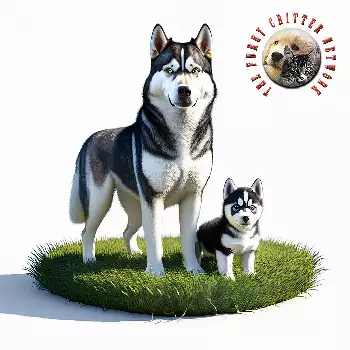
The Siberian Husky is a medium-sized working dog that exemplifies the perfect balance of power, speed, and endurance developed through centuries of selective breeding for sled work. Males typically stand between 21 and 23.5 inches at the shoulder and weigh 45 to 60 pounds, while females are slightly smaller at 20 to 22 inches tall and 35 to 50 pounds. The breed possesses a compact, well-muscled body with moderate bone structure that allows for both remarkable agility and tireless stamina during prolonged physical activity. Their overall proportions create a dog that appears slightly longer than tall, with a smooth level topline and a deep chest that reaches to the elbow without being overly broad or barrel-shaped. The Siberian Husky's double coat is one of its most distinctive and functional features, consisting of a soft, dense undercoat and a straight, medium-length outer coat of guard hairs that lies smoothly against the body. This weather-resistant coat comes in virtually all colors and patterns, from pure white to jet black, with common variations including black and white, gray and white, red and white, sable, and agouti. The breed standard notably disqualifies merle patterns while accepting heterochromia and particolored eyes as normal traits. Many Huskies display striking facial markings including masks, spectacles, and the characteristic urajiro pattern featuring lighter cream or white coloring on the muzzle, cheeks, chest, legs, belly, and underside of the tail. Their head is proportionate to the body with a moderately rounded skull and a well-defined stop that is neither too steep nor too gradual. The eyes are almond-shaped and set moderately apart, appearing in brown, blue, amber, or one of each color, giving many Huskies their captivating and expressive gaze. Ears are medium-sized, triangular, and set high on the head, carried firmly erect with slightly rounded tips and thick fur lining. The thick, well-furred tail is fox-brush shaped and typically carried in a graceful sickle curve over the back when the dog is alert or moving, though it trails naturally when at rest or during sustained work.
Key Characteristics
Temperament Temperament Temperament Temperament Temperament Temperament The breed's energy level is remarkably high, as these dogs were bred to run for miles in harsh Arctic conditions. Without adequate physical and mental stimulation, they can become destructive, anxious, and develop problematic behaviors including excessive howling or digging. Huskies are notably vocal, communicating through distinctive howls, yodels, and various talking sounds rather than typical barking. They require owners who appreciate their spirited nature and can provide the exercise, mental engagement, and companionship they need to thrive.
Health Considerations Health Considerations Health Considerations Health Considerations Health Considerations Health Considerations Several other health concerns are worth noting for prospective owners. Zinc-responsive dermatosis causes skin lesions and hair loss due to the breed's unique zinc metabolism requirements. Follicular dysplasia can result in patchy hair loss beginning around three to four months of age. Epilepsy may occur with seizure onset typically between three months and three years of age. Less common but serious conditions include uveodermatologic syndrome, an autoimmune disorder affecting the eyes and skin, and degenerative myelopathy, a progressive spinal cord disease. Regular veterinary checkups, proper nutrition, and preventive care help ensure these active dogs maintain their health and vitality throughout their lives.
Poodle

The Poodle is an elegant, athletic breed that comes in three size varieties: Standard, Miniature, and Toy. Standard Poodles, which are most commonly used in hybrid breeding programs, stand over 15 inches at the shoulder and typically measure 18 to 24 inches tall, weighing between 45 and 70 pounds. The breed presents a square body proportion with a proud carriage and an air of distinction that sets it apart from other dogs. Despite being categorized in the Non-Sporting Group for Standards or Toy Group for smaller varieties, the Poodle was originally bred as a water retriever and retains a strong, athletic build capable of sustained physical activity and impressive swimming ability. The Poodle's coat is perhaps its most recognizable feature, consisting of dense, curly hair that is harsh in texture and naturally grows continuously rather than shedding like typical dog fur. This unique coat comes in a wide array of solid colors including black, white, brown, gray, silver, blue, apricot, red, cream, café-au-lait, and silver beige. The American Kennel Club standard disqualifies parti-colored dogs in the show ring. The coat does not shed in the conventional sense, making Poodles a popular choice for those seeking lower-allergen companions, though all dogs produce some allergens. Regular professional grooming every four to six weeks is essential to maintain coat health and prevent painful matting. The Poodle's head is moderately rounded with a distinct stop and a long, straight muzzle that contributes to its refined profile. Dark, oval-shaped eyes convey intelligence and alertness, while long ears hang close to the head, set at or slightly below eye level. The neck is long and elegant, leading to a level topline and well-sprung ribs that provide ample lung capacity. The traditionally docked tail is set high and carried proudly upward, though undocked tails are increasingly common. The overall impression is of an intelligent, well-proportioned dog whose refined appearance belies considerable athleticism and working capability.
Key Characteristics
Temperament Temperament Temperament Temperament Temperament Temperament Standard Poodles tend to be slightly more reserved and dignified than their Miniature and Toy counterparts, who may exhibit more active and mischievous behaviors. All varieties make excellent family dogs when properly trained and are generally good with children and other pets when raised with them. The breed has a moderate to high energy level requiring regular exercise, and they excel at swimming thanks to their water retriever heritage. Poodles can be prone to separation anxiety if left alone for extended periods and thrive in households where they receive consistent companionship and engagement.
Health Considerations Health Considerations Health Considerations Health Considerations Health Considerations Health Considerations Idiopathic epilepsy causing seizures typically begins between one and five years of age and is believed to have a genetic component in Poodles. Sebaceous adenitis is an inflammatory skin condition causing hair loss and skin scaling that is more common in Standard Poodles than most other breeds. Von Willebrand's disease, a bleeding disorder affecting blood clotting, occurs in the breed and can be detected through DNA testing. Smaller Poodle varieties may experience Legg-Calvé-Perthes disease affecting hip development, tracheal collapse, and dental crowding. Hypothyroidism, Cushing's disease, and various skin allergies are additional conditions seen across all Poodle sizes. Regular veterinary checkups and health screening of breeding stock help manage these hereditary concerns.
Important to Remember
Each hybrid dog is unique and may inherit any combination of traits from either parent breed. The information above represents the characteristics of the purebred parent breeds. Your Siberpoo may favor one parent over the other or display a blend of both. We strongly encourage you to read the complete breed profiles for both the Siberian Husky and Poodle to fully understand the range of possible temperaments, health concerns, and care requirements.