Siberian Shiba
The Siberian Shiba is a cross between the Siberian Husky and the Shiba Inu. Because each hybrid inherits a unique combination of traits from both parents, we recommend thoroughly researching both breeds before choosing a Siberian Shiba. Pay special attention to temperament, health issues, and care requirements, as your dog may express characteristics from either parent breed.
Siberian Husky
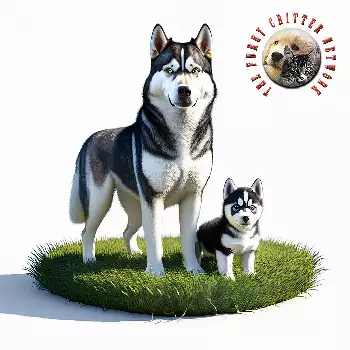
The Siberian Husky is a medium-sized working dog that exemplifies the perfect balance of power, speed, and endurance developed through centuries of selective breeding for sled work. Males typically stand between 21 and 23.5 inches at the shoulder and weigh 45 to 60 pounds, while females are slightly smaller at 20 to 22 inches tall and 35 to 50 pounds. The breed possesses a compact, well-muscled body with moderate bone structure that allows for both remarkable agility and tireless stamina during prolonged physical activity. Their overall proportions create a dog that appears slightly longer than tall, with a smooth level topline and a deep chest that reaches to the elbow without being overly broad or barrel-shaped. The Siberian Husky's double coat is one of its most distinctive and functional features, consisting of a soft, dense undercoat and a straight, medium-length outer coat of guard hairs that lies smoothly against the body. This weather-resistant coat comes in virtually all colors and patterns, from pure white to jet black, with common variations including black and white, gray and white, red and white, sable, and agouti. The breed standard notably disqualifies merle patterns while accepting heterochromia and particolored eyes as normal traits. Many Huskies display striking facial markings including masks, spectacles, and the characteristic urajiro pattern featuring lighter cream or white coloring on the muzzle, cheeks, chest, legs, belly, and underside of the tail. Their head is proportionate to the body with a moderately rounded skull and a well-defined stop that is neither too steep nor too gradual. The eyes are almond-shaped and set moderately apart, appearing in brown, blue, amber, or one of each color, giving many Huskies their captivating and expressive gaze. Ears are medium-sized, triangular, and set high on the head, carried firmly erect with slightly rounded tips and thick fur lining. The thick, well-furred tail is fox-brush shaped and typically carried in a graceful sickle curve over the back when the dog is alert or moving, though it trails naturally when at rest or during sustained work.
Key Characteristics
Temperament Temperament Temperament Temperament Temperament Temperament The breed's energy level is remarkably high, as these dogs were bred to run for miles in harsh Arctic conditions. Without adequate physical and mental stimulation, they can become destructive, anxious, and develop problematic behaviors including excessive howling or digging. Huskies are notably vocal, communicating through distinctive howls, yodels, and various talking sounds rather than typical barking. They require owners who appreciate their spirited nature and can provide the exercise, mental engagement, and companionship they need to thrive.
Health Considerations Health Considerations Health Considerations Health Considerations Health Considerations Health Considerations Several other health concerns are worth noting for prospective owners. Zinc-responsive dermatosis causes skin lesions and hair loss due to the breed's unique zinc metabolism requirements. Follicular dysplasia can result in patchy hair loss beginning around three to four months of age. Epilepsy may occur with seizure onset typically between three months and three years of age. Less common but serious conditions include uveodermatologic syndrome, an autoimmune disorder affecting the eyes and skin, and degenerative myelopathy, a progressive spinal cord disease. Regular veterinary checkups, proper nutrition, and preventive care help ensure these active dogs maintain their health and vitality throughout their lives.
Shiba Inu

The Shiba Inu is a small, compact dog with a well-muscled, agile build that reflects its heritage as a hunting dog in the mountainous regions of Japan where it pursued small game through dense brush. Males typically stand 14.5 to 16.5 inches at the shoulder and weigh approximately 23 pounds, while females are smaller at 13.5 to 15.5 inches tall and around 17 pounds. The breed possesses excellent proportions with a body that is slightly longer than tall, creating a balanced, athletic appearance that suggests both speed and agility. Their overall structure conveys strength and nimbleness, with moderate bone that is neither too heavy nor too refined for effective movement. The Shiba Inu's double coat is a defining characteristic, consisting of a stiff, straight outer coat and a soft, thick undercoat that provides excellent insulation against both cold and heat. Coat colors include red, which is the most popular and iconic shade that has made the breed famous worldwide, as well as black and tan, sesame, and cream. The breed standard requires urajiro, which is the distinctive pattern of cream or white markings on the cheeks, muzzle sides, throat, chest, belly, underside of the tail, and inner legs. This pattern gives the Shiba its characteristic appearance and is considered essential to proper breed type. The coat sheds heavily, particularly during seasonal changes in spring and autumn when the undercoat blows out completely. The Shiba's head is distinctively fox-like with a broad forehead, well-defined stop, and a muzzle that tapers slightly toward the black nose. Their small, triangular ears are firmly erect and tilt slightly forward, contributing to their perpetually alert expression. Eyes are somewhat triangular and deep-set with dark brown coloring that conveys intelligence and confidence. One of the breed's most charming features is its tail, which is thick and powerful, carried in a curled position over the back, either as a single curl or sickle shape. The overall impression is of a well-balanced, moderately compact dog with an expression that is bold, alert, and self-assured.
Key Characteristics
Temperament Temperament Temperament Temperament Temperament Temperament Shibas have a strong prey drive rooted in their hunting heritage, making them unreliable around small animals such as cats, rabbits, and rodents. They can also be dog-aggressive, particularly with same-sex dogs, and may be possessive of their toys, food, and territory. Early and extensive socialization is critical to developing a well-adjusted adult dog. The breed is famous for the dramatic Shiba scream, a high-pitched vocalization produced when stressed, excited, or unhappy. While not typically cuddly or overtly affectionate in the manner of some breeds, Shibas form deep bonds with their families and express their loyalty in more subtle ways.
Health Considerations Health Considerations Health Considerations Health Considerations Health Considerations Health Considerations Allergies and atopic dermatitis are common concerns in this breed, with environmental allergens such as pollen, dust mites, and mold triggering skin irritation, itching, and secondary infections. Managing allergies may require dietary modifications, environmental controls, and veterinary treatment. Hypothyroidism affecting thyroid hormone production can occur and is treatable with medication. Dental disease develops quickly in Shibas, making regular dental care essential. More serious but rarer conditions include GM1 and GM2 gangliosidosis, inherited neurological disorders, and neuronal ceroid lipofuscinosis, a progressive disease typically appearing between one and three years of age. Epilepsy and seizure disorders have also been reported in the breed.
Important to Remember
Each hybrid dog is unique and may inherit any combination of traits from either parent breed. The information above represents the characteristics of the purebred parent breeds. Your Siberian Shiba may favor one parent over the other or display a blend of both. We strongly encourage you to read the complete breed profiles for both the Siberian Husky and Shiba Inu to fully understand the range of possible temperaments, health concerns, and care requirements.