Siberian Keeshond
The Siberian Keeshond is a cross between the Siberian Husky and the Keeshond. Because each hybrid inherits a unique combination of traits from both parents, we recommend thoroughly researching both breeds before choosing a Siberian Keeshond. Pay special attention to temperament, health issues, and care requirements, as your dog may express characteristics from either parent breed.
Siberian Husky
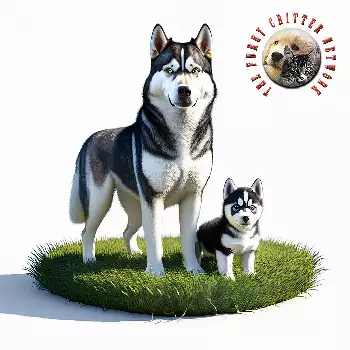
The Siberian Husky is a medium-sized working dog that embodies grace, power, and endurance in a beautifully balanced package designed for demanding arctic conditions. Males typically stand between 21 and 23.5 inches at the shoulder and weigh 45 to 60 pounds, while females are somewhat smaller at 20 to 22 inches tall and 35 to 50 pounds. The breed presents a moderately compact body with well-developed musculature that reflects its heritage as an endurance sled dog capable of pulling light loads over vast frozen distances at sustained speeds. The overall impression is one of effortless movement and natural athleticism without any suggestion of excessive weight or coarseness. The Siberian Husky's head is proportionate to the body, featuring a slightly rounded skull and a medium-length muzzle that tapers toward the nose with clean lines. The ears are medium-sized, triangular, and set high on the head, standing erect and adding to the breed's alert expression. Perhaps the most striking feature is the eyes, which may be brown, blue, or one of each color in a condition called heterochromia, and convey an expression that is keen, friendly, and sometimes mischievous. The nose can be black, liver, or flesh-colored depending on coat color, and a pink-streaked snow nose is acceptable during winter months. The breed's double coat is medium in length, consisting of a soft, dense undercoat and straight, smooth guard hairs that lie flat against the body without standing off. This weather-resistant coat comes in virtually all colors, from pure white to black, with a variety of markings on the head that are unique to the breed. Common patterns include caps, masks, and spectacle markings around the eyes that add to the breed's distinctive appearance. The well-furred tail resembles a fox brush and is carried in a graceful sickle curve over the back when the dog is alert, though it may trail behind when relaxed or working. The feet are oval-shaped with well-furred toes that provide protection against cold surfaces.
Key Characteristics
Temperament Temperament Temperament Temperament Temperament Temperament The breed's energy level is legendary, reflecting their background as endurance athletes capable of running for hours in harsh conditions. Siberian Huskies require substantial daily exercise and mental stimulation to prevent destructive behaviors born of boredom. They are accomplished escape artists, capable of digging under, climbing over, or finding weak points in fencing, so secure containment is essential. The breed is known for its vocalizations, including distinctive howling rather than barking, and their mischievous, playful nature persists well into adulthood, making them entertaining but demanding companions.
Health Considerations Health Considerations Health Considerations Health Considerations Health Considerations Health Considerations Several genetic conditions specific to Siberian Huskies have been identified through recent research. Shaking puppy syndrome type 1 causes tremors in young puppies that may resolve but can result in sudden death before age two. Siberian Husky polyneuropathy type 1 produces progressive gait abnormalities, weakness, and muscle wasting. Hyperuricosuria, caused by a mutation in the uric acid transporter gene, increases the risk of urate urinary stones, particularly in males. Responsible breeders screen for these conditions to reduce their occurrence. With appropriate care, regular veterinary attention, and genetic health testing of breeding stock, Siberian Huskies typically enjoy a lifespan of 12 to 14 years.
Keeshond

The Keeshond is a medium-sized spitz-type dog that presents a sturdy, well-balanced silhouette with an abundant coat that enhances its impressive and eye-catching appearance. Males ideally stand 18 inches at the shoulder with an acceptable range of 17 to 19 inches, while females are slightly smaller at 17 inches ideal height with a range of 16 to 18 inches. Both sexes typically weigh between 35 and 45 pounds, placing them solidly in the medium-size category. The body is compact and square in proportion, with the length from forechest to buttocks approximately equal to the height at the withers, creating a harmonious outline that conveys substance without coarseness or excessive heaviness. The breed's head contributes significantly to its distinctive fox-like expression, featuring a wedge-shaped skull when viewed from above, with a well-defined stop and a medium-length muzzle that is neither too pointed nor too broad. The ears are small, triangular, and set high on the head, standing erect and adding to the alert appearance that characterizes the breed. The eyes are medium-sized, dark brown, and almond-shaped, surrounded by the breed's signature spectacle markings that create an intelligent, questioning expression. These distinctive dark markings around the eyes, combined with expressive eyebrows and cream-colored shadings, give the Keeshond a uniquely appealing face that breed enthusiasts find irresistible. The Keeshond's magnificent coat is perhaps its most striking feature, consisting of a long, straight, harsh outer coat standing off from a thick, downy undercoat that provides excellent insulation. The coloring is a distinctive mixture of gray, black, and cream, with the outer coat having black tips that create the characteristic shading pattern admired in the show ring. A profuse ruff encircles the neck, more pronounced in males, giving them a lion-like appearance. The hindquarters feature distinctive trousers of longer hair that add to the breed's elegance. The tail is tightly curled and carried over the back, well-feathered and lying flat against the body. The overall impression is of a handsome, well-groomed dog whose coat requires significant but rewarding maintenance.
Key Characteristics
Temperament Temperament Temperament Temperament Temperament Temperament While Keeshonds make excellent watchdogs due to their alertness and tendency to bark when they notice something unusual, they are not aggressive guardians. They will alert their family to the presence of strangers but typically warm up quickly once introduced. The breed generally gets along wonderfully with children, displaying patience and gentleness during play, and they typically coexist peacefully with other dogs and household pets. Their moderate energy level makes them adaptable to various living situations, including apartments, provided they receive daily walks and playtime to satisfy their need for activity and mental stimulation.
Health Considerations Health Considerations Health Considerations Health Considerations Health Considerations Health Considerations Eye conditions affecting the Keeshond include progressive retinal atrophy, which causes gradual vision loss, and other hereditary eye disorders that responsible breeders screen for prior to breeding. Epilepsy occurs in the breed, causing seizures that can often be managed with medication. Heart disease, particularly mitral valve disease, may develop as dogs age. Alopecia X is a cosmetic condition causing hair loss that affects some individuals. Degenerative myelopathy and distichiasis, an eyelash abnormality, are also seen in the breed. Regular veterinary care, maintaining a healthy weight, and working with breeders who perform comprehensive health testing all contribute to maximizing the health and longevity of these wonderful companions.
Important to Remember
Each hybrid dog is unique and may inherit any combination of traits from either parent breed. The information above represents the characteristics of the purebred parent breeds. Your Siberian Keeshond may favor one parent over the other or display a blend of both. We strongly encourage you to read the complete breed profiles for both the Siberian Husky and Keeshond to fully understand the range of possible temperaments, health concerns, and care requirements.