Siberian Indian Dog
The Siberian Indian Dog is a cross between the Siberian Husky and the Native American Indian Dog. Because each hybrid inherits a unique combination of traits from both parents, we recommend thoroughly researching both breeds before choosing a Siberian Indian Dog. Pay special attention to temperament, health issues, and care requirements, as your dog may express characteristics from either parent breed.
Siberian Husky
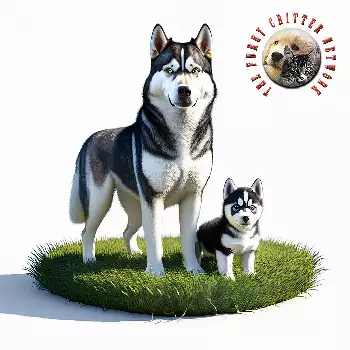
The Siberian Husky is a medium-sized working dog that embodies grace, power, and endurance in a beautifully balanced package designed for demanding arctic conditions. Males typically stand between 21 and 23.5 inches at the shoulder and weigh 45 to 60 pounds, while females are somewhat smaller at 20 to 22 inches tall and 35 to 50 pounds. The breed presents a moderately compact body with well-developed musculature that reflects its heritage as an endurance sled dog capable of pulling light loads over vast frozen distances at sustained speeds. The overall impression is one of effortless movement and natural athleticism without any suggestion of excessive weight or coarseness. The Siberian Husky's head is proportionate to the body, featuring a slightly rounded skull and a medium-length muzzle that tapers toward the nose with clean lines. The ears are medium-sized, triangular, and set high on the head, standing erect and adding to the breed's alert expression. Perhaps the most striking feature is the eyes, which may be brown, blue, or one of each color in a condition called heterochromia, and convey an expression that is keen, friendly, and sometimes mischievous. The nose can be black, liver, or flesh-colored depending on coat color, and a pink-streaked snow nose is acceptable during winter months. The breed's double coat is medium in length, consisting of a soft, dense undercoat and straight, smooth guard hairs that lie flat against the body without standing off. This weather-resistant coat comes in virtually all colors, from pure white to black, with a variety of markings on the head that are unique to the breed. Common patterns include caps, masks, and spectacle markings around the eyes that add to the breed's distinctive appearance. The well-furred tail resembles a fox brush and is carried in a graceful sickle curve over the back when the dog is alert, though it may trail behind when relaxed or working. The feet are oval-shaped with well-furred toes that provide protection against cold surfaces.
Key Characteristics
Temperament Temperament Temperament Temperament Temperament Temperament The breed's energy level is legendary, reflecting their background as endurance athletes capable of running for hours in harsh conditions. Siberian Huskies require substantial daily exercise and mental stimulation to prevent destructive behaviors born of boredom. They are accomplished escape artists, capable of digging under, climbing over, or finding weak points in fencing, so secure containment is essential. The breed is known for its vocalizations, including distinctive howling rather than barking, and their mischievous, playful nature persists well into adulthood, making them entertaining but demanding companions.
Health Considerations Health Considerations Health Considerations Health Considerations Health Considerations Health Considerations Several genetic conditions specific to Siberian Huskies have been identified through recent research. Shaking puppy syndrome type 1 causes tremors in young puppies that may resolve but can result in sudden death before age two. Siberian Husky polyneuropathy type 1 produces progressive gait abnormalities, weakness, and muscle wasting. Hyperuricosuria, caused by a mutation in the uric acid transporter gene, increases the risk of urate urinary stones, particularly in males. Responsible breeders screen for these conditions to reduce their occurrence. With appropriate care, regular veterinary attention, and genetic health testing of breeding stock, Siberian Huskies typically enjoy a lifespan of 12 to 14 years.
Native American Indian Dog

The Native American Indian Dog is a striking breed that presents an unmistakably wolf-like appearance while maintaining the temperament of a domesticated companion suitable for family life. This breed exists in two size varieties, with males ranging from 21 to 34 inches at the shoulder and weighing between 55 and 120 pounds, while females stand 18 to 20 inches tall and weigh 45 to 100 pounds. The body structure is somewhat square to slightly rectangular, with the length measured from forechest to rump being equal to or just slightly greater than the height at the withers. The overall impression is one of natural athleticism, primitive elegance, and wild beauty combined with domestic sensibility. The head is proportionate to the body, featuring a broad, angular skull with medium-sized almond-shaped eyes that are typically brown or amber in color and convey intelligence and awareness. The ears are somewhat long yet erect, with a triangular shape and abundant hair that provides protection from the elements. The expression conveys intelligence and alertness while remaining approachable and friendly. The tail is long and carried downward with a slight curve, though some individuals may carry it curled over the back in typical spitz fashion when alert or excited. The muzzle is well-developed and contributes to the breed's distinctive wolf-like profile that makes them so visually striking. The Native American Indian Dog possesses a weather-resistant double coat that varies in density and length depending on climate and season, adapting remarkably to environmental conditions. Two coat types exist within the breed: a short, dense variety and a longer version with more substantial furnishings around the neck and legs. The undercoat is thick and woolly, providing excellent insulation, while the guard hairs are straight, coarse, and often display the characteristic agouti banding pattern seen in wild canids. Coat colors span a wide range including silver, black, tortoiseshell, red, golden, gray, chocolate, and various combinations thereof. The colors typically blend smoothly together rather than forming sharply defined markings. The breed sheds its undercoat once yearly in the spring, often in large clumps during the molting period.
Key Characteristics
Temperament Temperament Temperament Temperament Temperament Temperament The breed has moderate to high exercise requirements and does not adapt well to apartment living or confined spaces. Native American Indian Dogs thrive when given access to a securely fenced yard where they can exercise freely. They benefit from approximately 45 to 60 minutes of daily physical activity, which can include hiking, jogging, or interactive play sessions. These versatile dogs excel in various activities and have historically served as herding dogs, tracking dogs, hunting companions, and guardians. They generally get along well with other dogs and can coexist peacefully with livestock when properly trained, though supervision is always recommended during interactions with other animals.
Health Considerations Health Considerations Health Considerations Health Considerations Health Considerations Health Considerations A genetic condition called urolithiasis has been identified in the breed, specifically related to a mutation in the APRT gene. This condition, sometimes referred to as NAID-type urolithiasis, increases the risk of bladder stone formation. Genetic testing is available to identify carriers and affected individuals, allowing breeders to make informed breeding decisions. Beyond these concerns, the Native American Indian Dog enjoys remarkably good health overall. With proper care, appropriate nutrition, regular veterinary checkups, and attention to genetic screening in breeding programs, these dogs can achieve an impressive lifespan of 14 to 19 years, making them among the longer-lived large breeds.
Important to Remember
Each hybrid dog is unique and may inherit any combination of traits from either parent breed. The information above represents the characteristics of the purebred parent breeds. Your Siberian Indian Dog may favor one parent over the other or display a blend of both. We strongly encourage you to read the complete breed profiles for both the Siberian Husky and Native American Indian Dog to fully understand the range of possible temperaments, health concerns, and care requirements.