Siberian Boston
The Siberian Boston is a cross between the Siberian Husky and the Boston Terrier. Because each hybrid inherits a unique combination of traits from both parents, we recommend thoroughly researching both breeds before choosing a Siberian Boston. Pay special attention to temperament, health issues, and care requirements, as your dog may express characteristics from either parent breed.
Siberian Husky
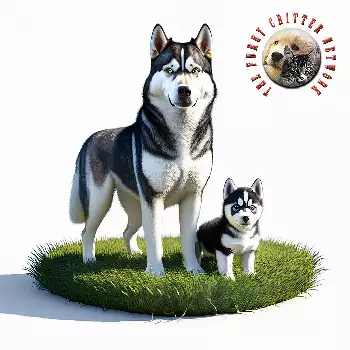
The Siberian Husky is a medium-sized working dog that presents a picture of balance, power, and endurance. Males typically stand between 21 and 23.5 inches at the shoulder and weigh 45 to 60 pounds, while females measure 20 to 22 inches in height and weigh 35 to 50 pounds. The breed's body is moderately compact with a length slightly greater than height, creating the rectangular outline characteristic of sled dogs built for efficient movement over great distances. The Siberian Husky moves with a smooth, effortless gait that reflects its heritage of pulling light loads at moderate speeds across vast frozen expanses, covering ground with minimal expenditure of energy. The head of the Siberian Husky is proportionate to the body, presenting a refined appearance with a medium-length muzzle that tapers gradually toward the nose. The breed's eyes rank among its most striking features, appearing in shades of blue, brown, or one of each color, and sometimes displaying particolored patterns within the same eye. The eyes are almond-shaped and set slightly obliquely, conveying an expression that is keen, friendly, and sometimes mischievous. Medium-sized triangular ears set high on the head and carried erect add to the breed's alert and interested expression. The well-furred tail resembles a fox brush and is carried in a graceful sickle curve when the dog is at attention, though it may trail behind when the dog is working or relaxed. The Siberian Husky's double coat provides essential protection against Arctic temperatures and represents one of the breed's defining characteristics. The undercoat is soft, dense, and sufficiently long to support the outer coat, while the outer coat consists of straight, smooth-lying guard hairs of medium length. The coat gives the dog a well-furred appearance without obscuring the clean-cut outline of the body. All colors and markings are permitted, ranging from pure white through various shades of gray, tan, and red to solid black, with most individuals displaying striking facial markings and white undersides. The breed sheds its dense undercoat profusely once or twice annually, requiring increased grooming during these periods.
Key Characteristics
Temperament Temperament Temperament Temperament Temperament Temperament The Siberian Husky's energy levels demand serious consideration from potential owners. These athletic dogs require substantial daily exercise and mental stimulation to remain content. Without adequate outlets for their energy, Huskies may develop destructive behaviors including excessive digging and legendary escape artistry. They can scale fences, dig under barriers, and find weaknesses in enclosures that would contain other breeds. Their strong prey drive means they cannot be trusted off-leash in unsecured areas, as the impulse to chase may override any training. Huskies are notably vocal, communicating through howls, yodels, and distinctive talking sounds rather than typical barking. They thrive in active households that can provide the physical and mental challenges these remarkable athletes require.
Health Considerations Health Considerations Health Considerations Health Considerations Health Considerations Health Considerations Additional health considerations include hypothyroidism, a condition where the thyroid gland produces insufficient hormones, leading to weight gain, lethargy, and skin problems that respond well to medication. Some Huskies experience zinc deficiency that manifests as skin lesions and hair loss, particularly around the face and footpads, requiring dietary supplementation. Follicular dysplasia can cause patchy hair loss. Epilepsy occurs in some lines, producing seizures that typically can be managed with medication. Uveodermatologic syndrome, an autoimmune condition affecting the eyes and skin, occurs at higher rates in Huskies than in most breeds. Despite these potential concerns, the Siberian Husky typically enjoys a lifespan of 12 to 14 years when provided with appropriate care, regular veterinary attention, and the active lifestyle the breed requires.
Boston Terrier
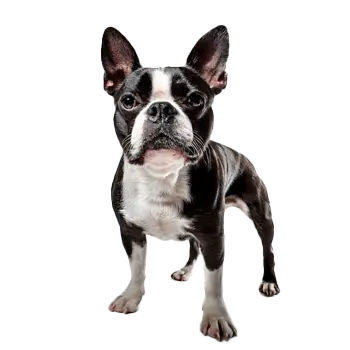
The Boston Terrier is a small, compact dog that presents a distinctively elegant appearance, earning the affectionate nickname American Gentleman for its tuxedo-like markings. The breed stands between 12 and 17 inches at the shoulder, with weight divided into three classes: under 15 pounds, 15 to 20 pounds, and 20 to 25 pounds. The body is short and well-muscled, presenting a square outline when viewed from the side, with the length of the body approximately equal to the height at the withers. The chest is deep and moderately wide, the back is short, and the rump curves slightly to the set-on of a characteristically short tail that may be straight, screw-shaped, or curled but is always carried low. The Boston Terrier's head is perhaps its most distinctive feature, characterized by a square, flat-topped skull and a short, wide muzzle that classifies this breed among the brachycephalic types. The face is free of wrinkles, with well-defined cheeks and an expression of intelligence and determination. Large, round, dark eyes are set wide apart and positioned squarely in the skull, conveying warmth and alertness that contributes significantly to the breed's appealing expression. The ears are small, thin, and carried erect, either natural or cropped, though natural ears are increasingly common. The jaw is broad and square, with the lower jaw sufficiently wide to balance the proportions of the head. The Boston Terrier's short, smooth coat lies close to the body and has a fine texture that highlights the breed's muscular definition. The hallmark coloring consists of brindle, seal, or black with white markings arranged in a specific pattern that gives the appearance of formal evening wear. White markings typically include a band around the muzzle, a blaze between the eyes extending over the head, a collar around the neck, and a white chest, though the ideal show specimen displays symmetrical markings with a full white collar and white covering the chest and fore legs. The coat requires minimal grooming beyond regular brushing to manage moderate shedding. Despite the short coat, Boston Terriers are sensitive to temperature extremes and require protection in both hot and cold weather due to their brachycephalic anatomy.
Key Characteristics
Temperament Temperament Temperament Temperament Temperament Temperament Boston Terriers exhibit a friendly and accepting attitude toward both familiar people and strangers, making them poor guard dogs but excellent social companions. They typically get along well with children and other pets, though their sometimes enthusiastic play style requires supervision with very young children. The breed's moderate energy level suits a variety of living situations, from apartments to larger homes, as long as daily exercise and mental stimulation needs are met. Boston Terriers can develop separation anxiety if left alone frequently, reflecting their strong attachment to family members. Their expressive faces and comical personalities make them natural entertainers who often seem to enjoy making their families laugh, reinforcing the joyful bonds they form with their people.
Health Considerations Health Considerations Health Considerations Health Considerations Health Considerations Health Considerations Patellar luxation, where the kneecap dislocates from its normal position, affects Boston Terriers at notable rates and can range from minor inconvenience to significant mobility impairment requiring surgical correction. Deafness occurs in the breed, particularly associated with excessive white coloring. Heart murmurs and other cardiac conditions require monitoring. Remarkably, more than 80 percent of Boston Terrier litters require cesarean section delivery due to the puppies' large heads relative to the birth canal, representing a significant consideration for breeding programs. The breed's sensitivity to temperature extremes demands careful management in both hot and cold conditions. Despite these health considerations, well-cared-for Boston Terriers typically enjoy lifespans of 11 to 13 years with appropriate veterinary care and attention to their special needs.
Important to Remember
Each hybrid dog is unique and may inherit any combination of traits from either parent breed. The information above represents the characteristics of the purebred parent breeds. Your Siberian Boston may favor one parent over the other or display a blend of both. We strongly encourage you to read the complete breed profiles for both the Siberian Husky and Boston Terrier to fully understand the range of possible temperaments, health concerns, and care requirements.