Scottish Deer Greyhound
The Scottish Deer Greyhound is a cross between the Greyhound and the Scottish Deerhound. Because each hybrid inherits a unique combination of traits from both parents, we recommend thoroughly researching both breeds before choosing a Scottish Deer Greyhound. Pay special attention to temperament, health issues, and care requirements, as your dog may express characteristics from either parent breed.
Greyhound
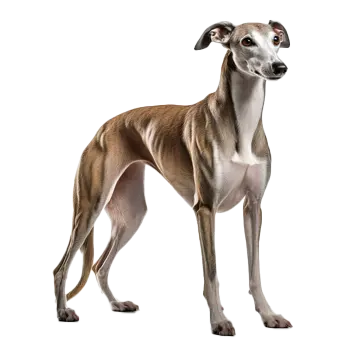
The Greyhound is the epitome of canine speed and elegance, possessing a streamlined, muscular body that has been perfected over thousands of years for coursing game at incredible speeds. Males typically stand around 28 to 30 inches at the shoulder, while females measure 27 to 28 inches, with weights ranging from 60 to 70 pounds for males and 60 to 65 pounds for females. The breed's distinctive silhouette features a long, narrow head, exceptionally deep chest, dramatically tucked abdomen, and powerful, well-angulated hindquarters that propel it to speeds exceeding 40 miles per hour, making it the fastest breed of domestic dog. The Greyhound's body is built for supreme aerodynamic efficiency, with every physical feature contributing to its exceptional running ability and endurance. The chest is deep and capacious, providing ample room for the large heart and lungs needed to sustain high-speed pursuit over open ground. The back is muscular and relatively long, with a characteristic arch over the loin that provides the flexibility essential for the breed's distinctive double-suspension gallop, where all four feet leave the ground twice during each stride. The legs are long and straight with well-developed muscles, ending in compact, tight feet with well-knuckled toes that grip the ground effectively during acceleration and sharp turns. The long tail is carried low, slightly curved, and tapers to a fine point, serving as a rudder during high-speed maneuvers. The coat is short, smooth, and fine-textured, lying close to the body with virtually no undercoat, which contributes to the breed's sleek appearance but provides minimal insulation against temperature extremes. This characteristic makes Greyhounds sensitive to both cold and heat, often requiring coats in winter weather and protection from excessive sun exposure in summer. The breed comes in an extraordinary variety of colors and patterns, including solid colors like black, white, red, blue, fawn, and brindle, as well as various combinations with white markings. The head is long and narrow with a barely perceptible stop, featuring small, folded rose ears and dark, bright eyes that convey an intelligent, keen expression reflecting centuries of selective breeding for visual acuity.
Key Characteristics
Temperament Temperament Temperament Temperament Temperament Temperament Greyhounds typically display a reserved, almost aloof demeanor with strangers while being deeply affectionate with their families. They are not naturally demonstrative dogs but show their love through quiet presence and subtle gestures. The breed generally coexists peacefully with other dogs, particularly other sighthounds, as their pack hunting heritage has bred out dog aggression. However, their strong prey drive means they may not be suitable for homes with small pets such as cats or rabbits unless carefully introduced and supervised. Despite their calm indoor demeanor, Greyhounds require opportunities to run in secure, fenced areas where they can safely express their natural athleticism.
Health Considerations Health Considerations Health Considerations Health Considerations Health Considerations Health Considerations Greyhounds possess unique blood chemistry that differs from other dog breeds, which can affect interpretation of laboratory results and response to certain medications. They have higher red blood cell counts and lower platelet counts than other breeds, and their blood is often in high demand for canine transfusions due to its universal compatibility. The breed is notably sensitive to anesthesia due to a deficiency in the cytochrome P450 enzyme system, requiring experienced veterinary care during any procedures involving sedation. Delayed postoperative bleeding can occur 36 to 72 hours after surgery due to unique clotting characteristics. Osteosarcoma, an aggressive bone cancer, occurs more frequently in Greyhounds than many other breeds and typically presents as lameness in a leg. Dental disease is particularly prevalent in the breed, partly due to genetic predisposition and thin enamel, requiring regular professional cleanings and home dental care. Other conditions seen in Greyhounds include hypothyroidism, various eye conditions such as pannus, and a pattern baldness condition that causes noninflammatory hair loss but poses no health risk.
Scottish Deerhound
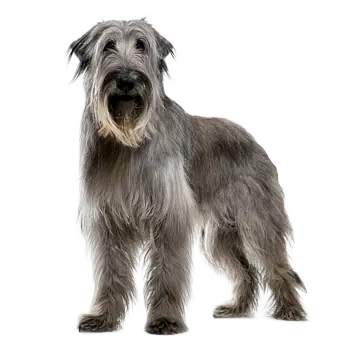
The Scottish Deerhound is a majestic giant among sighthounds, often described as resembling a rough-coated Greyhound of larger size and heavier bone. Males stand a minimum of 30 to 32 inches at the shoulder and weigh between 85 and 110 pounds, while females measure from 28 inches upward and weigh 75 to 95 pounds. The breed's overall impression is one of dignified power combined with elegant athleticism, featuring a body that is built for the stamina and strength needed to course the great red deer of the Scottish Highlands. The Scottish Deerhound's distinctive coat is one of its defining features, consisting of a harsh, wiry outer layer that measures three to four inches in length on the body, neck, and quarters. The hair on the head, breast, and belly is somewhat softer, and the breed sports a characteristic beard, mustache, and pronounced eyebrows that contribute to its noble expression. The ideal coat is thick, close-lying, and ragged in appearance, with a crisp texture that provides excellent protection against cold, wet weather. While dark blue-gray is the most preferred color, acceptable shades include darker and lighter grays, various brindles, and yellow, sandy red, or red fawn with black points. A small amount of white on the chest or toes is permissible but not desired. The head is long and level, broadest at the ears and tapering toward the muzzle, which is pointed but not snipey. The skull is flat rather than rounded, with a very slight rise over the eyes but no pronounced stop. Dark eyes are moderately full with a soft expression at rest but keen and far-reaching when the dog is alert. The ears are small, soft, and set high, folded back like a Greyhound's when relaxed but often raised when the dog is excited. The neck is long and strong, often adorned with a mane, and the chest is deep rather than broad, providing the lung capacity essential for sustained pursuit. The long tail reaches nearly to the ground, is carried low with a slight upward curve, and is well covered with wiry hair.
Key Characteristics
Temperament Temperament Temperament Temperament Temperament Temperament The laid-back nature of adult Scottish Deerhounds often surprises those expecting a high-energy athlete, as these dogs are content to spend much of their day lounging on comfortable surfaces. However, this calm indoor demeanor should not obscure their need for regular exercise and opportunities to run. When something catches their eye, the chase instinct activates instantly, transforming the relaxed house companion into a focused, single-minded hunter. This strong prey drive means they require secure, fenced areas for off-leash exercise and may not be suitable for homes with small pets. Scottish Deerhound puppies are notably more energetic and destructive than adults, requiring patience and extensive exercise during their prolonged adolescence before maturing into the dignified adults for which the breed is known.
Health Considerations Health Considerations Health Considerations Health Considerations Health Considerations Health Considerations Osteosarcoma, an aggressive bone cancer, occurs with higher frequency in Scottish Deerhounds than in many other breeds and is a leading cause of death in the breed. This cancer typically develops in the legs, presenting initially as lameness or swelling, and unfortunately has often spread to other organs by the time it is detected. Treatment options include amputation of the affected limb combined with chemotherapy, though the prognosis remains guarded. Bloat and gastric dilatation-volvulus pose serious risks due to the breed's deep chest, requiring owners to implement preventive feeding practices and remain alert to warning signs. A prophylactic gastropexy can help prevent the fatal stomach torsion component of this condition. Other health concerns include cystinuria, an inherited kidney defect that can cause bladder stones; hypothyroidism; sensitivity to anesthesia; delayed bleeding following surgery; and factor VII deficiency, a blood clotting disorder for which genetic testing is available. The breed's tendency to rest on hard surfaces can lead to calluses and pressure sores that require monitoring and soft bedding to prevent.
Important to Remember
Each hybrid dog is unique and may inherit any combination of traits from either parent breed. The information above represents the characteristics of the purebred parent breeds. Your Scottish Deer Greyhound may favor one parent over the other or display a blend of both. We strongly encourage you to read the complete breed profiles for both the Greyhound and Scottish Deerhound to fully understand the range of possible temperaments, health concerns, and care requirements.