Scoodle
The Scoodle is a cross between the Scottish Terrier and the Poodle. Because each hybrid inherits a unique combination of traits from both parents, we recommend thoroughly researching both breeds before choosing a Scoodle. Pay special attention to temperament, health issues, and care requirements, as your dog may express characteristics from either parent breed.
Scottish Terrier
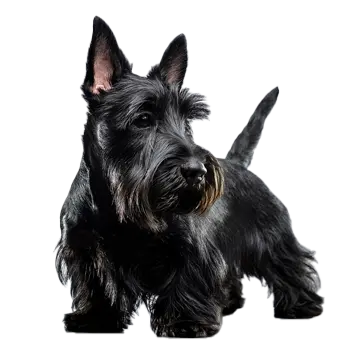
The Scottish Terrier is a small but solidly built dog that presents a distinctive silhouette recognized worldwide. Standing approximately 10 inches at the withers, this compact breed weighs between 18 and 22 pounds, with males typically at the higher end of that range. The Scottie possesses a thick-set, cobby body suspended between short, heavy legs that give the breed its characteristic low-to-the-ground stance. Despite their small stature, these dogs are remarkably powerful and muscular, bred originally to pursue quarry underground where their compact build proved advantageous. The body is well-proportioned with a moderately short back and deep chest that would appear nearly heart-shaped if viewed in cross-section. The Scottish Terrier's head is one of its most striking features, being long in proportion to the overall size of the dog. The skull is slightly domed and covered with short, hard hair, while the muzzle is approximately equal in length to the skull with only a slight taper toward the nose. The distinctive beard and eyebrows frame expressive, dark eyes that convey the breed's characteristic keen, piercing expression often described as varminty. Small, erect ears sit high on the skull and contribute to the alert, intelligent appearance that defines the breed. The nose is always black regardless of coat color and projects somewhat over the mouth. The breed's double coat is a hallmark feature consisting of a hard, wiry outer coat approximately two inches long and a soft, dense undercoat. Acceptable colors include black, wheaten, and brindle in any shade, with many black and brindle dogs showing sprinklings of white or silver hairs that are considered normal. White markings are permitted only on the chest and chin in minimal amounts. The longer furnishings on the beard, legs, and lower body may be slightly softer than the body coat but should never appear fluffy. Regular grooming including hand-stripping maintains the coat's proper texture and the breed's classic silhouette.
Key Characteristics
Temperament Temperament Temperament Temperament Temperament Temperament While affectionate with their families, Scottish Terriers are not typically suited for households with very young children, as they value their personal space and do not tolerate rough handling. They have strong prey drives inherited from their vermin-hunting ancestry and may chase small animals. Socialization from an early age helps temper some of their more stubborn tendencies, though prospective owners should understand that Scotties consider themselves companions rather than pets and expect to be treated accordingly. Their independent nature and specific care requirements make them better suited to experienced dog owners who appreciate their unique personality.
Health Considerations Health Considerations Health Considerations Health Considerations Health Considerations Health Considerations Scottish Terriers have a significantly elevated risk of bladder cancer, specifically transitional cell carcinoma, with studies indicating they are 18 to 20 times more likely to develop this cancer than mixed breed dogs. This predisposition makes regular veterinary checkups and prompt attention to any urinary symptoms particularly important. Other conditions seen in the breed include patellar luxation, hypothyroidism, and various skin allergies. Responsible breeders screen for these conditions and maintain careful records to reduce their occurrence. Regular health monitoring and a relationship with a veterinarian familiar with the breed's specific concerns will help ensure your Scottish Terrier lives a long, healthy life.
Poodle

The Poodle is an elegant, well-proportioned dog that comes in three recognized size varieties: Standard, Miniature, and Toy. Standard Poodles stand over 15 inches at the shoulder and typically weigh between 45 and 70 pounds, while Miniature Poodles measure between 10 and 15 inches, and Toy Poodles stand under 10 inches. Regardless of size, all Poodles share the same breed standard proportions and characteristics, presenting a squarely built dog with a proud carriage and dignified bearing. The body is well-muscled with a deep chest and level topline, conveying an impression of athletic capability rather than the delicate appearance some might expect from their stylized show trims. The Poodle's head features a moderately rounded skull with a long, straight muzzle and dark, oval-shaped eyes that express intelligence and alertness. The ears are set at or below eye level and hang close to the head, covered with long, wavy hair. The neck is well-proportioned and rises from strong, smoothly muscled shoulders, contributing to the breed's characteristic elegant silhouette. The tail is set high and carried up, traditionally docked in countries where the practice is permitted but left natural where docking is prohibited. The overall impression should be of an active, intelligent dog with an air of distinction and dignity. The Poodle's coat is perhaps its most distinctive feature, consisting of naturally curly or corded hair that continues to grow rather than shedding seasonally like many other breeds. This unique coat texture requires regular professional grooming but produces minimal shedding, making Poodles a popular choice for those with allergies. The coat comes in a wide variety of solid colors including black, white, brown, silver, gray, cream, apricot, red, and cafe-au-lait. Various clip styles have evolved from the breed's working origins, with the traditional Continental and English Saddle clips designed originally to protect vital organs and joints while allowing freedom of movement in cold water during duck hunting. Pet owners often choose simpler clips that are easier to maintain while still showcasing the breed's elegant appearance.
Key Characteristics
Temperament Temperament Temperament Temperament Temperament Temperament While Poodles are generally friendly dogs, their temperament varies somewhat between size varieties. Standard Poodles tend to be calmer and more patient, while Miniature and Toy Poodles may be more energetic and sometimes more prone to anxiety-driven behaviors. Without proper socialization, Poodles can become reserved or suspicious of strangers, and some may be protective of their families. They typically get along well with children and other pets when raised with them but should be supervised around very young children due to their sensitivity. All Poodles are active dogs requiring daily exercise and mental engagement, though their adaptable nature allows them to thrive in various living situations when their needs are met.
Health Considerations Health Considerations Health Considerations Health Considerations Health Considerations Health Considerations Von Willebrand's disease, a blood clotting disorder, is found in Poodles and can be identified through DNA testing before breeding. Bloat, or gastric dilatation-volvulus, is a concern primarily in Standard Poodles and other deep-chested breeds, representing a life-threatening emergency requiring immediate veterinary attention. Epilepsy, hypothyroidism, and various allergies are additional conditions seen in the breed with some frequency. The smaller Poodle varieties may be prone to dental issues due to tooth crowding and patellar luxation. Responsible breeders screen for these hereditary conditions and provide health clearances for breeding dogs. Regular veterinary care, appropriate nutrition, and attention to any changes in health help ensure Poodles live their typically long lives in good health.
Important to Remember
Each hybrid dog is unique and may inherit any combination of traits from either parent breed. The information above represents the characteristics of the purebred parent breeds. Your Scoodle may favor one parent over the other or display a blend of both. We strongly encourage you to read the complete breed profiles for both the Scottish Terrier and Poodle to fully understand the range of possible temperaments, health concerns, and care requirements.