Sco-Shi
The Sco-Shi is a cross between the Scottish Terrier and the Shih Tzu. Because each hybrid inherits a unique combination of traits from both parents, we recommend thoroughly researching both breeds before choosing a Sco-Shi. Pay special attention to temperament, health issues, and care requirements, as your dog may express characteristics from either parent breed.
Scottish Terrier
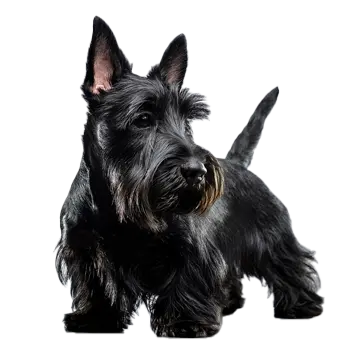
The Scottish Terrier is a small, compact, short-legged dog of substantial bone and good substance, presenting a powerful silhouette despite its modest size that immediately commands attention. Standing 10 to 11 inches tall at the shoulder and weighing between 18 and 22 pounds for females and 19 to 22 pounds for males, the Scottie conveys an unmistakable impression of strength, determination, and rugged character. The breed originated in the Scottish Highlands where they were developed to hunt vermin including rats, badgers, and foxes, a heritage that shaped their distinctive physical characteristics and earned them the nickname Diehard for their remarkable tenacity, courage, and refusal to back down from a challenge. The Scottish Terrier's head is one of its most distinctive features, being long in proportion to the overall size of the dog with parallel planes of the skull and muzzle that create a refined profile. The head appears powerful without being coarse, with small, almond-shaped eyes that are dark brown or nearly black and set deep under heavy brows, creating the characteristic keen, piercing, varminty expression that is so essential to breed type. The ears are small, pointed, and carried erect, positioned near the outer edge of the skull. The muzzle is approximately equal in length to the skull and features a large black nose that projects somewhat over the mouth. The breed possesses a weather-resistant double coat consisting of a hard, wiry outer layer and a soft, dense undercoat that protected them while working in the harsh Scottish terrain. Recognized colors include solid black, wheaten ranging from light straw to warm reddish shades, and brindle of any color. The longer furnishings on the beard, legs, and lower body create the breed's distinctive profile and should be hand-stripped for show dogs or professionally groomed for pets. The tail is moderately short, thick at the base, and carried erect with a slight curve, resembling an upturned carrot. The breed's compact, cobby body is hung between short, sturdy legs with powerful hindquarters.
Key Characteristics
Temperament Temperament Temperament Temperament Temperament Temperament Training a Scottish Terrier requires patience and consistency, as the breed's independent thinking can manifest as stubbornness. They are intelligent dogs who learn quickly but may choose not to comply if they don't see the point of a command. Positive reinforcement methods work best, as harsh corrections can damage the trust between Scottie and owner. The breed requires regular exercise and mental stimulation to prevent boredom-related behaviors, though they are not as hyperactive as some other terrier breeds. When properly trained and socialized, the Scottish Terrier makes a devoted, entertaining companion with a unique personality that inspires fierce loyalty in those who appreciate the breed's distinctive character.
Health Considerations Health Considerations Health Considerations Health Considerations Health Considerations Health Considerations Additional health concerns include craniomandibular osteopathy, a painful bone disease affecting the jaw in young puppies; hypothyroidism; Cushing's disease, which Scotties develop more frequently than other breeds; patellar luxation; liver shunts; and various eye conditions including cataracts and glaucoma. The breed is also more prone to dental disease than average and requires diligent dental care throughout life. Responsible breeders test for von Willebrand's disease, eye problems, and patellar luxation through health screening programs. With proper care and attention to these potential issues, Scottish Terriers typically enjoy a lifespan of 12 to 15 years.
Shih Tzu
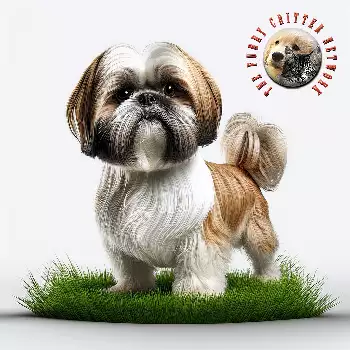
The Shih Tzu is a small, sturdy companion dog with a distinctive appearance that reflects its royal Chinese heritage and centuries of careful breeding for beauty and charm. Standing ideally between 9 and 10.5 inches at the shoulder and weighing 9 to 16 pounds, this breed presents a solid, well-balanced silhouette with a body that is slightly longer than it is tall, giving them a compact yet elegant appearance. The breed originated in Tibet and was refined in the imperial palaces of China, where the name translates to little lion, reflecting both the breed's leonine appearance with its flowing mane-like coat and its connection to Buddhist mythology. The Shih Tzu was treasured by Chinese royalty for centuries as a cherished palace companion and lap warmer. The breed's head is one of its most striking and recognizable features, being large and round with a warm, sweet, trusting expression that melts hearts. The face features a short, square muzzle set no more than one inch from the tip of the nose to the stop, large dark prominent eyes set wide apart that look directly forward, and long drop ears covered with flowing hair that blends seamlessly into the body coat. The characteristic chrysanthemum-like face results from hair growing in all directions around the nose, creating a distinctive floral pattern. A slight underbite is typical and acceptable in the breed standard, contributing to the unique facial structure. The neck is well-proportioned and flows smoothly into the body, which should appear sturdy without being overly heavy or cobby. The Shih Tzu's coat is perhaps its most luxurious and distinguishing feature, consisting of a dense, long, flowing double coat that may display a slight wave but should never be curly. All coat colors are acceptable in the show ring, providing tremendous variety within the breed from solid golds and reds to black and white and everything in between. The hair on the head is typically tied up in a topknot to keep it out of the eyes, creating the classic style. The tail is heavily plumed and carried in a graceful curved position over the back.
Key Characteristics
Temperament Temperament Temperament Temperament Temperament Temperament While intelligent and capable of learning commands, Shih Tzus can display an independent streak that some interpret as stubbornness. Training should focus on positive reinforcement methods with patience and consistency. The breed generally gets along well with children when interactions are supervised and with other pets, including dogs and cats. Their stable, sweet temperament and manageable size have made them particularly popular with seniors and families alike. The Shih Tzu's primary desire is simply to be loved and to provide love in return, a characteristic that has endeared them to dog lovers for over a thousand years.
Health Considerations Health Considerations Health Considerations Health Considerations Health Considerations Health Considerations Dental disease is the most commonly reported health issue in Shih Tzus, affecting nearly 10 percent of the population according to veterinary data. The breed's small mouth often leads to overcrowded teeth and predisposes them to periodontal disease, making regular dental care critical. Other conditions seen in the breed include umbilical hernias, which occur at four times the rate of dogs overall; patellar luxation; hip dysplasia; hypothyroidism; and intervertebral disc disease. Ear infections can be common due to the breed's drop ears and abundant hair. Despite these concerns, the Shih Tzu enjoys a relatively long lifespan averaging 12.7 years, notably longer than many other brachycephalic breeds.
Important to Remember
Each hybrid dog is unique and may inherit any combination of traits from either parent breed. The information above represents the characteristics of the purebred parent breeds. Your Sco-Shi may favor one parent over the other or display a blend of both. We strongly encourage you to read the complete breed profiles for both the Scottish Terrier and Shih Tzu to fully understand the range of possible temperaments, health concerns, and care requirements.