Saluki Greyhound
The Saluki Greyhound is a cross between the Saluki and the Greyhound. Because each hybrid inherits a unique combination of traits from both parents, we recommend thoroughly researching both breeds before choosing a Saluki Greyhound. Pay special attention to temperament, health issues, and care requirements, as your dog may express characteristics from either parent breed.
Saluki

The Saluki is an elegant and graceful sighthound that exudes both speed and refinement, representing one of the oldest known breeds of domesticated dogs. This medium to large breed stands between 23 and 28 inches at the shoulder, with males typically measuring toward the taller end of the range while females remain proportionately smaller. Weight ranges from 35 to 65 pounds, though they appear considerably lighter due to their lean, streamlined build that prioritizes function over bulk. The body is characterized by a deep, narrow chest that provides excellent lung capacity essential for sustained running, a long and slightly arched back that contributes to their flexible galloping stride, and a distinctive tuck-up at the abdomen that enhances their aerodynamic profile. Their legs are long and muscular with well-developed thighs, built for incredible speed and endurance across various terrains. The Saluki's coat comes in two distinct varieties: smooth and feathered. The smooth variety has short, silky hair lying close to the body with no fringing, while the feathered variety displays longer, silky hair on the ears, tail, backs of the legs, and sometimes between the toes. Both coat types feature the same soft, silky texture that requires relatively minimal grooming compared to many other breeds. Acceptable colors span a remarkably wide range including white, cream, fawn, golden, red, grizzle and tan, black and tan, and tricolor combinations. Brindle coloring is not permitted according to most breed standards and is considered unacceptable in the show ring. The head is distinctively long and narrow with a moderately wide skull that tapers gracefully toward the nose, creating the refined appearance characteristic of the breed. Their large, oval-shaped eyes are dark to hazel in color and convey an expression of gentle dignity, intelligence, and far-seeing wisdom. The ears are long, set at eye level or slightly higher, and covered with silky hair in feathered varieties, hanging close to the head. The tail is long, set low, and carried in a natural curve with slight feathering on the underside. Overall, the Saluki presents a picture of aristocratic beauty combined with functional athleticism, perfectly designed for the swift pursuit of game across desert landscapes.
Key Characteristics
Temperament Temperament Temperament Temperament Temperament Temperament Salukis generally get along well with other dogs, especially other sighthounds, having been bred to work cooperatively in packs during hunts. However, their high prey drive means they should be carefully supervised around small animals and cats unless raised together from puppyhood and even then caution is warranted. With children, Salukis are tolerant but prefer gentle handling and may not enjoy rough play or sudden movements. Early socialization is essential to develop their confidence with new people and unfamiliar situations. They are extremely sensitive to harsh corrections and respond best to patient, positive training methods that respect their independent nature and dignified personality.
Health Considerations Health Considerations Health Considerations Health Considerations Health Considerations Health Considerations Salukis are particularly sensitive to anesthesia due to their low body fat percentage, which affects how they metabolize certain drugs. This sensitivity extends to many common medications and flea treatments, so veterinarians experienced with sighthounds should be consulted for medical care. The breed can be prone to certain cancers, including hemangiosarcoma and lymphoma. Bloat, or gastric dilatation-volvulus, is a life-threatening condition that can affect deep-chested breeds like the Saluki, making awareness of symptoms and prevention strategies important. Regular dental care is essential as the breed can be prone to periodontal disease. Maintaining a lean body condition is crucial as these dogs are not designed to carry extra weight.
Greyhound
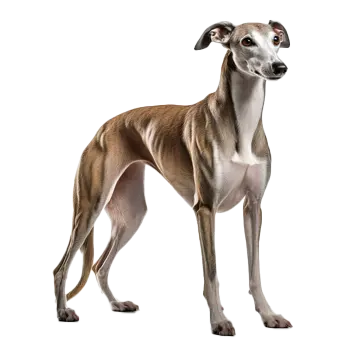
The Greyhound is the epitome of canine speed and aerodynamic efficiency, built specifically for high-velocity pursuit of game and widely recognized as the fastest dog breed in the world. Males typically stand between 28 and 30 inches at the shoulder, while females range from 26 to 28 inches, making them impressively tall dogs. Weight generally falls between 60 and 70 pounds for males and 55 to 65 pounds for females, though racing Greyhounds may be lighter to optimize their performance. The body is a masterpiece of functional design, featuring a deep chest that accommodates large lungs and heart necessary for sustained speed, a flexible spine that enables the distinctive double-suspension gallop reaching speeds up to 45 miles per hour, and powerful hindquarters that generate explosive acceleration. The coat is short, smooth, and close-fitting, requiring minimal grooming while providing sleek coverage over the muscular frame beneath. Greyhounds come in virtually every color and pattern imaginable, including white, fawn, red, brindle, black, blue, and various combinations with white markings. Their skin lies remarkably close to the body with virtually no subcutaneous fat, giving them their distinctive lean appearance that clearly shows muscle definition and bone structure. This lack of body fat makes them particularly sensitive to temperature extremes. The tail is long, tapering to a fine point, and carried low with a slight upward curve when the dog is moving. The head is long and narrow with a barely perceptible stop between the skull and the elongated muzzle. The muzzle itself is long and powerful, housing strong jaws capable of grasping prey. Eyes are dark and bright, set obliquely, conveying an intelligent, gentle expression that belies their fierce hunting heritage. The ears are small, fine-textured, and folded back against the neck in what is called a rose ear, though they prick forward when the dog is alert or interested. Legs are long, straight, and well-muscled with developed thighs, and the feet are compact with well-arched toes designed for traction. The overall impression is of power, grace, and incredible athletic potential combined in an elegant package.
Key Characteristics
Temperament Temperament Temperament Temperament Temperament Temperament Despite their laid-back indoor personality, Greyhounds possess a strong prey drive that is hard-wired from centuries of selective breeding. They must always be kept on leash or in securely fenced areas when outdoors, as they can spot movement from incredible distances and will pursue without regard to commands. Training requires patience and consistency as Greyhounds are sensitive souls who respond poorly to harsh methods. They are intelligent but can appear stubborn when asked to perform repetitive tasks. Positive reinforcement and gentle guidance yield the best results. Early socialization is important, particularly for retired racing dogs who may need help adjusting to home life, stairs, glass doors, and typical household items.
Health Considerations Health Considerations Health Considerations Health Considerations Health Considerations Health Considerations Dental disease is particularly prevalent in Greyhounds, with many dogs developing significant tartar buildup and periodontal problems at relatively young ages. Regular dental care and professional cleanings are essential. Progressive retinal atrophy can occur in the breed, eventually leading to vision loss. Hip dysplasia, while less common than in many large breeds, does appear. Hypothyroidism is also seen in Greyhounds. Like other sighthounds, Greyhounds are extremely sensitive to anesthesia and certain medications due to their low body fat percentage and unique metabolism. Flea and tick preventatives containing certain chemicals can be toxic to them. Their thin skin is prone to lacerations, and their lack of body fat makes them susceptible to cold weather and pressure sores.
Important to Remember
Each hybrid dog is unique and may inherit any combination of traits from either parent breed. The information above represents the characteristics of the purebred parent breeds. Your Saluki Greyhound may favor one parent over the other or display a blend of both. We strongly encourage you to read the complete breed profiles for both the Saluki and Greyhound to fully understand the range of possible temperaments, health concerns, and care requirements.