Rat-Cha
The Rat-Cha is a cross between the Chihuahua and the Rat Terrier. Because each hybrid inherits a unique combination of traits from both parents, we recommend thoroughly researching both breeds before choosing a Rat-Cha. Pay special attention to temperament, health issues, and care requirements, as your dog may express characteristics from either parent breed.
Chihuahua
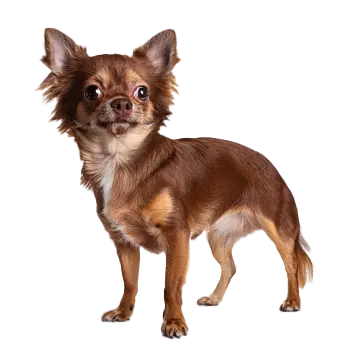
The Chihuahua holds the distinction of being the smallest recognized dog breed in the world, with the American Kennel Club standard requiring dogs to weigh no more than six pounds. Standing only 5 to 8 inches tall at the shoulder, these tiny dogs possess a compact, slightly off-square body that is marginally longer when measured from the point of shoulder to the buttocks than the height at the withers. Despite their diminutive size, Chihuahuas should appear well-balanced and sturdy, never frail or spindly. The breed carries itself with a confident, self-assured stance that defies its small stature. Shorter bodies are preferred in males, while females may be slightly longer to accommodate for bearing young. The Chihuahua's head is its most distinctive feature, characterized by a well-rounded apple dome skull that may or may not have a molera, which is a soft spot similar to a human baby's fontanelle. The muzzle is moderately short and slightly pointed, forming an approximately 90-degree angle where it meets the skull. The eyes are large, round, full, and set well apart, typically dark or ruby colored, though lighter eyes are acceptable in dogs with lighter coat colors. The ears are large and erect, held at a 45-degree angle when alert, and should be flared at the base and taper to a slightly rounded point. The expression should be saucy and alert. The breed comes in two distinct coat varieties: smooth and long. Smooth coat Chihuahuas have short, glossy, close-lying fur that may have a heavier coat with undercoat, with a ruff on the neck preferred. Long coat Chihuahuas feature soft, flat or slightly wavy hair with an undercoat, plus feathering on the ears, tail, chest, legs, and feet. Both varieties may come in any color, including solid, marked, or splashed patterns, with all colors being equally acceptable. The tail is moderately long, either carried in a sickle curve or in a loop over the back with the tip barely touching the back. The breed moves with a swift, firm, sturdy gait, demonstrating good reach in front and strong drive from behind despite its small size.
Key Characteristics
Temperament Temperament Temperament Temperament Temperament Temperament Early and thorough socialization is essential for Chihuahuas to prevent fear-based aggression and excessive timidity. Without proper socialization, they can become overly nervous, yappy, or defensive in new situations. The breed is prone to developing separation anxiety due to their strong attachment to their owners. They are sensitive to their owners' emotions and moods, often reflecting the emotional state of the household. Chihuahuas may shiver or tremble when excited, anxious, or cold, which is a normal characteristic of the breed. They thrive on attention and companionship, preferring to be included in all family activities rather than left alone.
Health Considerations Health Considerations Health Considerations Health Considerations Health Considerations Health Considerations Hydrocephalus, an accumulation of fluid in the brain, occurs more frequently in Chihuahuas than in many other breeds, particularly those with very rounded heads. Tracheal collapse, where the windpipe weakens and flattens, can cause breathing difficulties and a characteristic honking cough. Heart disease, especially mitral valve disease, is common in older Chihuahuas. The breed may also experience eye problems due to their prominent, protruding eyes, which are susceptible to injury and dryness. Retained baby teeth often require veterinary extraction. The molera, or soft spot on the skull, which is acceptable in the breed standard, requires careful handling to prevent injury. Despite these concerns, with appropriate care, regular veterinary checkups, and attention to their fragile nature, Chihuahuas can enjoy long, healthy lives.
Rat Terrier
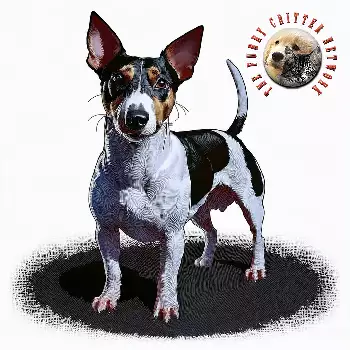
The Rat Terrier is a well-muscled, compact American breed that comes in two distinct size varieties recognized by the American Kennel Club. The Miniature variety stands between 10 and 13 inches at the withers, while the Standard variety measures 13 to 18 inches tall. Weight is proportional to height, typically ranging from 10 to 25 pounds depending on the size variety. The breed possesses a sturdy, athletic build with a deep chest, strong shoulders, solid neck, and powerful legs that reflect its heritage as a working farm dog. The body is compact yet substantial, giving the appearance of a dog built for both speed and endurance. The topline is level when standing and moving, contributing to the breed's balanced silhouette. The Rat Terrier's coat is short, smooth, dense, and shiny, lying close to the body and requiring minimal grooming. The breed is always parti-colored, featuring a white base with patches of one or more additional colors. Acceptable colors include black, chocolate, red, apricot, blue, fawn, tan, and lemon, with tan points being common in tricolor patterns. The coat should have a glossy appearance that reflects the dog's overall good health. Seasonal shedding is moderate and can be managed with regular brushing. The skin fits smoothly over the muscular body without excess wrinkling. The head is wedge-shaped when viewed from above, with a moderately broad skull that tapers slightly toward the muzzle. The stop is moderate but distinct. The ears can be carried erect, semi-erect, tipped, or button style, though they should always be alert and mobile when the dog is attentive. Eyes are oval-shaped, set wide apart, and come in various colors that complement the coat, expressing intelligence and alertness. The breed may be born with either a natural bobtail or a full-length tail, both of which are equally acceptable. When present, the tail is carried in an upward curve. One of the Rat Terrier's most distinctive features is its hackney-like gait, characterized by a high-stepping, elegant movement that demonstrates the breed's exceptional agility and athleticism.
Key Characteristics
Temperament Temperament Temperament Temperament Temperament Temperament Rat Terriers are adaptable dogs that can thrive in various living situations, from apartments to homes with large yards. They require at least 20 to 30 minutes of daily exercise, though most will happily participate in much more activity. These dogs have moderate to high energy levels but are not typically hyperactive, often content to spend significant time napping near their owners after sufficient exercise. Without proper training and leadership, they may develop small dog syndrome, attempting to become the pack leader. Early socialization and consistent training help ensure they develop into well-adjusted, confident companions.
Health Considerations Health Considerations Health Considerations Health Considerations Health Considerations Health Considerations Von Willebrand's disease, a blood clotting disorder, is frequently found in Rat Terriers and can cause excessive bleeding during surgery or injury. DNA testing is available to identify carriers. Dental disease is also common in this breed, with issues ranging from misaligned teeth to missing teeth. The breed may also be affected by degenerative myelopathy, a progressive spinal cord disease similar to ALS in humans. Despite these potential concerns, Rat Terriers are notably long-lived, with an average lifespan of 15 to 18 years, and many individuals commonly reaching 15 years or older with proper care and regular veterinary checkups.
Important to Remember
Each hybrid dog is unique and may inherit any combination of traits from either parent breed. The information above represents the characteristics of the purebred parent breeds. Your Rat-Cha may favor one parent over the other or display a blend of both. We strongly encourage you to read the complete breed profiles for both the Chihuahua and Rat Terrier to fully understand the range of possible temperaments, health concerns, and care requirements.