Pug-A-Mo
The Pug-A-Mo is a cross between the Pug and the American Eskimo Dog. Because each hybrid inherits a unique combination of traits from both parents, we recommend thoroughly researching both breeds before choosing a Pug-A-Mo. Pay special attention to temperament, health issues, and care requirements, as your dog may express characteristics from either parent breed.
Pug
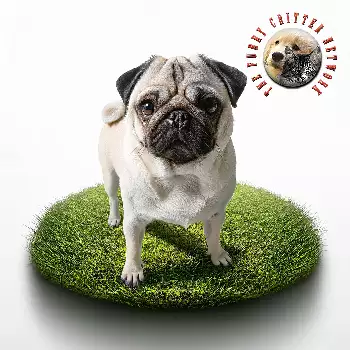
The Pug is a small, sturdy toy breed that packs a substantial body into a compact frame, presenting a square and cobby appearance that is distinctly different from other toy breeds. Standing 10 to 13 inches at the shoulder and weighing between 14 and 18 pounds, the Pug exhibits a muscular, thickset build that conveys strength despite its diminutive size. The body is short and square with a wide chest, well-sprung ribs, and a level topline. The breed should feel solid and hard of muscle when handled, never appearing lean or leggy. The tail is one of the Pug's distinguishing features, curling tightly over the hip in a double curl that is highly prized in the show ring. The head of the Pug is large and round, featuring the brachycephalic facial structure that gives the breed its distinctive appearance. The face is characterized by deep wrinkles, particularly a large, deep wrinkle over the nose called the nose roll. The muzzle is short, blunt, and square, never upfaced or down-faced. Large, prominent, globular eyes are dark in color and convey a soft, concerned expression that Pug enthusiasts find irresistible. The ears are thin, small, and soft, set high on the head and folding either in a button ear style that folds forward with the tip lying close to the skull, or as a rose ear that folds with the front edge falling toward the eye. Pugs possess a fine, smooth, soft, and glossy double coat that lies close to the body. The breed comes in two accepted colors: fawn, which ranges from a silver-fawn to an apricot-fawn with a black mask, and solid black. Fawn Pugs display clearly defined markings including a black mask covering the muzzle and extending to cover the ears, black moles on the cheeks called beauty spots, a thumb mark or diamond on the forehead, and a dark trace line running from the occiput to the tail. The coat sheds year-round despite its short length, with seasonal increases in shedding during spring and fall. The skin is soft but not loose and wrinkled like some other brachycephalic breeds.
Key Characteristics
Temperament Temperament Temperament Temperament Temperament Temperament While generally eager to please, Pugs can display a stubborn streak that requires patient, positive training methods. They are intelligent dogs that learn quickly when properly motivated, typically responding well to food rewards and praise. House training can sometimes be challenging with this breed, requiring consistency and patience. Pugs form extremely strong attachments to their families and can develop separation anxiety if left alone for extended periods. They typically get along well with children and other pets, making them excellent family companions. The breed is moderately vocal, using their distinctive bark to alert owners to visitors or interesting occurrences, though they are not typically excessive barkers.
Health Considerations Health Considerations Health Considerations Health Considerations Health Considerations Health Considerations Ocular problems are extremely common in Pugs due to their prominent eyes and shallow eye sockets. Conditions include pigmentary keratitis, where pigment spreads across the cornea potentially causing blindness, as well as dry eye, corneal ulcers, entropion, and proptosis, which is displacement of the eyeball from the socket. The breed is also prone to luxating patella, hip dysplasia, hemivertebrae causing spinal issues, skin fold dermatitis requiring regular cleaning of facial wrinkles, dental disease due to crowded teeth, and obesity. With proper veterinary care and management, Pugs typically live 12 to 15 years, though their quality of life depends heavily on managing their breed-specific health challenges.
American Eskimo Dog

The American Eskimo Dog is a striking Nordic-type breed that combines beauty with athletic capability, featuring a brilliant white coat and alert, intelligent expression. The breed comes in three recognized sizes: toy standing 9 to 12 inches and weighing 6 to 10 pounds, miniature measuring 12 to 15 inches and weighing 10 to 20 pounds, and standard ranging from 15 to 19 inches and weighing 18 to 35 pounds. Regardless of size, the American Eskimo Dog presents a well-balanced, compact body that is slightly longer than tall, conveying an impression of strength and agility without appearing clumsy or cumbersome. The breed moves with a bold, energetic gait that demonstrates good reach and drive. The head of the American Eskimo Dog is wedge-shaped with a slightly crowned skull that is broad between the ears and softly wedged, blending smoothly into a broad muzzle that does not exceed the length of the skull. The stop is well-defined but not abrupt, and the expression is keen, intelligent, and alert. Eyes are slightly oval in shape, set well apart and not slanted, ranging from dark to medium brown in color with black to dark brown eye rims and white eyelashes. The ears are triangular, slightly blunt-tipped, held erect, and set on high yet well apart, conforming to head size. The nose, lips, and eye rims are always black, creating distinctive points that contrast beautifully with the white coat. The American Eskimo Dog possesses a stand-off double coat consisting of a dense, plush undercoat and a longer outer coat that grows through it without curl or wave. A pronounced lion-like ruff around the neck and shoulders is characteristic of the breed and typically more profuse in males. The backs of the front legs are well-feathered, and the rump and hind legs down to the hocks display thick trousers. The tail is richly plumed and carried loosely over the back when alert. Pure white is the most desired color, though white with biscuit cream markings is also acceptable. The skin beneath the luxurious coat is pink or gray. Despite the coat's impressive appearance, proper texture allows dirt to fall away, and the natural oils help keep the dog clean between baths.
Key Characteristics
Temperament Temperament Temperament Temperament Temperament Temperament American Eskimo Dogs are active, energetic companions that require regular physical exercise and mental stimulation to remain happy and well-behaved. Without adequate outlets for their energy and intelligence, they may become bored and develop destructive behaviors or excessive barking. Daily walks, play sessions, and interactive games help satisfy their need for activity. The breed should not be left alone for extended periods as they crave companionship and may develop separation anxiety. American Eskimo Dogs typically get along well with children and can coexist peacefully with other pets, especially when raised together, though their high energy may be overwhelming for very young children or elderly pets.
Health Considerations Health Considerations Health Considerations Health Considerations Health Considerations Health Considerations Hip dysplasia, while more commonly associated with larger breeds, does occur in American Eskimo Dogs and involves abnormal development of the hip joint that can lead to arthritis and mobility issues. Responsible breeders screen their breeding dogs through organizations like the Orthopedic Foundation for Animals. Patellar luxation, where the kneecap slides out of its normal position, is another orthopedic concern in the breed that can range from mild to severe. Epilepsy, a neurological condition causing recurrent seizures, affects American Eskimo Dogs at higher rates than some other breeds and may require lifelong management with anticonvulsant medications. The breed is also prone to obesity if diet and exercise are not carefully managed, cataracts particularly in aging dogs, and Legg-Calve-Perthes disease affecting the hip. Regular veterinary examinations and health screenings help maintain optimal health throughout the breed's lifespan.
Important to Remember
Each hybrid dog is unique and may inherit any combination of traits from either parent breed. The information above represents the characteristics of the purebred parent breeds. Your Pug-A-Mo may favor one parent over the other or display a blend of both. We strongly encourage you to read the complete breed profiles for both the Pug and American Eskimo Dog to fully understand the range of possible temperaments, health concerns, and care requirements.