Pooda Houla
The Pooda Houla is a cross between the Catahoula Leopard Dog and the Poodle. Because each hybrid inherits a unique combination of traits from both parents, we recommend thoroughly researching both breeds before choosing a Pooda Houla. Pay special attention to temperament, health issues, and care requirements, as your dog may express characteristics from either parent breed.
Catahoula Leopard Dog
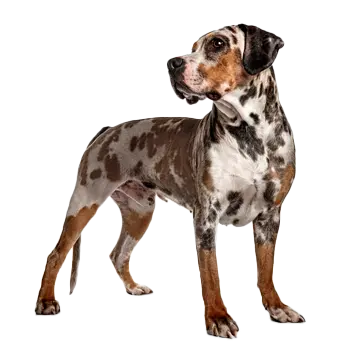
The Catahoula Leopard Dog is a medium-to-large multi-purpose working breed that presents a well-muscled, powerful physique balanced with remarkable agility and endurance. Males typically stand between 22 to 26 inches at the shoulder and weigh 65 to 95 pounds, while females range from 20 to 24 inches and 50 to 65 pounds. The body is slightly longer than tall, with an ideal length-to-height ratio between 5:4 and 10:9, creating a somewhat rectangular silhouette. The breed features a broad head with a strong, well-defined muzzle, drop ears that may be cropped or left natural, and a deep chest that provides ample lung capacity for sustained work. Males should appear masculine and substantial while females appear more refined yet still sturdy. One of the breed's most distinctive features is its striking coat pattern, which can display the characteristic leopard-like spots created by the merle gene. The short to medium-length single coat comes in a remarkable variety of colors and patterns including blue merle, red merle, brindle, and solid colors such as black, red, yellow, and chocolate. The coat lies close to the body, is smooth or slightly coarse in texture, and sheds moderately throughout the year. Weekly brushing helps maintain coat health and manage shedding, while bathing is only needed occasionally unless the dog gets particularly dirty during outdoor activities. The Catahoula's eyes are perhaps its most mesmerizing feature, coming in an extraordinary range of colors including pale blue, amber, green, brown, or combinations thereof. Many Catahoulas display heterochromia, having two different colored eyes, or cracked eyes where two colors appear within the same eye. The breed also possesses distinctive webbed feet, an adaptation that makes them excellent swimmers and allows them to navigate the soft, marshy terrain of their Louisiana homeland. The tail is long and carried in a natural curve, completing the picture of this uniquely American breed that was named the official state dog of Louisiana in 1979.
Key Characteristics
Temperament Temperament Temperament Temperament Temperament Temperament This breed requires substantial physical and mental stimulation to thrive, needing at least one to two hours of vigorous exercise daily along with meaningful work or activities to engage their sharp minds. Without adequate outlets for their energy and intelligence, Catahoulas can become destructive and develop behavioral problems. They excel in activities such as herding, tracking, agility, and search and rescue work. The breed is not recommended for apartment living or for first-time dog owners, as they need space to move and an owner who understands working dog psychology and can provide the structured environment they need to flourish.
Health Considerations Health Considerations Health Considerations Health Considerations Health Considerations Health Considerations Gastric dilatation-volvulus, commonly known as bloat, is a life-threatening emergency that can affect Catahoulas due to their deep chest conformation. Owners should feed multiple smaller meals rather than one large meal, avoid exercise immediately before and after eating, and learn to recognize the early signs of this condition. Other health issues occasionally seen in the breed include hypothyroidism, epilepsy, eosinophilic panosteitis in growing dogs, and various spinal deformities. Regular veterinary checkups, a nutritious diet, appropriate exercise, and purchasing from health-tested breeding stock all contribute to raising a healthy Catahoula.
Poodle

The Poodle is an elegant, well-proportioned breed that comes in three recognized size varieties, each sharing the same breed standard proportions and characteristics. Standard Poodles stand over 15 inches at the shoulder and typically weigh between 40 to 70 pounds, Miniature Poodles measure 10 to 15 inches and weigh 10 to 15 pounds, while Toy Poodles stand 10 inches or under and weigh only 4 to 6 pounds. Regardless of size, the Poodle presents a square silhouette when properly proportioned, with the length from breastbone to rump approximately equal to the height at the withers. The breed carries itself with an unmistakable air of dignity and pride. The Poodle's most distinctive feature is its dense, curly, single-layer coat that grows continuously rather than shedding seasonally. This unique coat texture has made the breed popular among allergy sufferers, as it produces less dander and is often described as hypoallergenic. The coat comes in a wide range of solid colors recognized by major kennel clubs, including black, white, brown, blue, gray, silver, cafe au lait, silver beige, cream, apricot, and red. The coat requires regular professional grooming every four to eight weeks and daily brushing to prevent matting, as neglected coats will form cords similar to dreadlocks. Beneath the elaborate show clips that many associate with the breed lies an athletic, well-muscled dog built for active work. The head is moderately rounded with a long, straight muzzle and an intelligent, alert expression. The ears hang close to the head and are set at or slightly below eye level, featuring long, thick feathering. The eyes are dark and oval-shaped, conveying the breed's keen intelligence and eager disposition. The Poodle moves with a light, springy gait that demonstrates both elegance and athleticism, reflecting the breed's origins as a capable water retriever and all-around sporting dog.
Key Characteristics
Temperament Temperament Temperament Temperament Temperament Temperament Poodles are generally friendly with other dogs and can get along well with cats and other pets when properly socialized. They are patient and gentle with children, though the smaller varieties should be supervised around very young children who may handle them too roughly. The breed can develop separation anxiety if left alone too frequently or for too long, potentially resulting in destructive behaviors. They require both physical exercise and mental stimulation daily, with Standard Poodles needing at least an hour of activity while smaller varieties have proportionally lower but still significant exercise needs. Poodles excel in virtually any canine sport or activity and maintain their enthusiasm for play throughout their lives.
Health Considerations Health Considerations Health Considerations Health Considerations Health Considerations Health Considerations Standard Poodles face an elevated risk of gastric dilatation-volvulus, or bloat, a potentially fatal condition where the stomach fills with gas and may twist on itself. Sebaceous adenitis, a skin condition that affects the oil-producing glands and can cause hair loss and skin problems, is another concern particularly in Standard Poodles, with studies suggesting up to 50 percent may be carriers or affected. Smaller Poodle varieties are prone to luxating patella, where the kneecap slips out of position, and Legg-Calve-Perthes disease, which affects blood supply to the hip joint. The breed is also predisposed to epilepsy, hypothyroidism, and certain cardiac conditions. Comprehensive health testing through programs like the Canine Health Information Center helps breeders make informed decisions to improve overall breed health.
Important to Remember
Each hybrid dog is unique and may inherit any combination of traits from either parent breed. The information above represents the characteristics of the purebred parent breeds. Your Pooda Houla may favor one parent over the other or display a blend of both. We strongly encourage you to read the complete breed profiles for both the Catahoula Leopard Dog and Poodle to fully understand the range of possible temperaments, health concerns, and care requirements.