Pooahoula
The Pooahoula is a cross between the Catahoula Leopard Dog and the Poodle. Because each hybrid inherits a unique combination of traits from both parents, we recommend thoroughly researching both breeds before choosing a Pooahoula. Pay special attention to temperament, health issues, and care requirements, as your dog may express characteristics from either parent breed.
Catahoula Leopard Dog
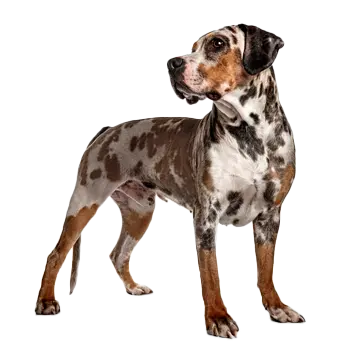
The Catahoula Leopard Dog is a medium to large working breed that originated in Louisiana during the nineteenth century and was officially designated as the state dog in 1979 by Governor Edwin Edwards. Males typically stand between twenty-two and twenty-six inches at the withers and weigh fifty to ninety-five pounds, presenting a muscular, athletic build with a rectangular body outline that conveys strength and agility. The breed's diverse ancestry, which includes Native American dogs, Spanish mastiffs, greyhounds, and later French Beauceron dogs brought by settlers, contributed to considerable variation in appearance while maintaining consistent working ability and drive. The Catahoula's coat is smooth and single-layered, ranging from short to medium in length, and comes in a remarkable variety of colors and patterns that make each dog unique. The leopard or merle pattern is most commonly associated with the breed, appearing in blue merle, red merle, brindle, and patchwork variations, though solid colors with white markings on the face, legs, and chest are also common and equally valued. The merle gene creates the distinctive mottled or spotted pattern by randomly diluting pigment in certain areas of the coat. Predominantly white coats are discouraged by breed standards due to health concerns, and breeders consistently prioritize working ability over color or pattern preferences. The most striking feature of the Catahoula is its extraordinary eyes, which may be any color or combination of colors including blue, brown, green, amber, and gold. Glass eyes displaying a very pale blue that appears almost white are frequently seen and highly prized, and heterochromia, where each eye is a different color, is common and considered characteristic of the breed. Individual eyes may also display multiple colors in cracked or spotted patterns. The breed has triangular drop ears that may be cropped or left natural, a broad skull, and a long tail that tapers to the end. Catahoulas possess distinctive webbed feet that aided their ancestors in navigating the swamps and dense forests of Louisiana during hunting expeditions.
Key Characteristics
Temperament Temperament Temperament Temperament Temperament Temperament Catahoulas have exceptionally high energy levels and require substantial daily exercise, typically one to two hours of vigorous physical activity. They excel at outdoor activities including swimming, hiking, and retrieving, and many thrive in competitive dog sports such as agility and herding trials. Without adequate physical and mental stimulation, these dogs can become bored and destructive. The breed is not recommended for first-time dog owners or those living in apartments, as they need space to move and a structured environment with clear expectations to thrive as family companions.
Health Considerations Health Considerations Health Considerations Health Considerations Health Considerations Health Considerations Gastric dilatation-volvulus, commonly known as bloat, is a life-threatening emergency that can affect Catahoulas due to their deep chests. This condition occurs when the stomach fills with gas and may twist on itself, cutting off blood supply and requiring immediate veterinary intervention. Other health concerns include diabetes, eosinophilic panosteitis which causes shifting leg lameness in growing dogs, and spinal deformities. Some Catahoulas may carry genes for chondrodystrophy and intervertebral disc disease that can cause back problems. Prospective owners should work with breeders who perform recommended health screenings and avoid breeding merle to merle combinations that increase the risk of deafness and eye abnormalities.
Poodle

The Poodle is recognized in four size varieties, each sharing the same elegant proportions and distinctive appearance that have made the breed one of the most recognizable in the canine world. The Standard Poodle stands over fifteen inches at the withers and typically weighs between forty and seventy pounds, with some larger individuals marketed as Royal or Giant Poodles reaching up to one hundred pounds or more. The Medium Poodle, recognized in European registries, ranges from fourteen to eighteen inches and weighs approximately fifteen to nineteen kilograms. The Miniature variety measures between ten and fifteen inches tall, weighing around twelve to fourteen kilograms, while the Toy Poodle stands at ten inches or under and weighs approximately six to seven and a half pounds. All varieties share a characteristic square build with a long, elegant neck and straight back. The Poodle's coat is its crowning feature, consisting of dense, curly hair that can be either tightly curled or corded into even lengths depending on grooming preference. The breed comes in a wide range of solid colors including black, white, gray, silver, brown, apricot, cream, and red, with shading variations also accepted in the show ring. Parti-colored Poodles exist but are not shown in conformation. Their dark, oval-shaped eyes convey an alert and intelligent expression that is characteristic of the breed. The ears are long and heavily feathered, set at or slightly below eye level, and hang close to the head, extending to approximately the corner of the lip when pulled forward. The Poodle moves with a springy, lively gait that reflects its athletic heritage as a water retriever. The tail is typically docked to a moderate length in countries where this practice remains legal and is carried high, waving gaily when the dog is in motion. Poodles are exceptional jumpers with a leggy appearance and long muzzle combined with dropped ears. Their grooming requirements are significant, with show dogs requiring elaborate continental or English saddle clips while many companion dogs are kept in simpler puppy clips or kennel cuts that maintain an even coat length throughout the body for easier maintenance.
Key Characteristics
Temperament Temperament Temperament Temperament Temperament Temperament Poodles are sensitive dogs that do not respond well to harsh training methods and thrive with positive reinforcement techniques that reward desired behaviors. They are not suited to kennel life and prefer to be with their families as much as possible throughout the day. These dogs can develop separation anxiety if left alone for extended periods and may become destructive or develop nervous behaviors without adequate mental stimulation and companionship. Their sensitive nature means they do best in calm, stable households where they receive consistent attention and engagement from their owners.
Health Considerations Health Considerations Health Considerations Health Considerations Health Considerations Health Considerations Toy and Miniature Poodles are prone to patellar luxation, where the kneecap slips out of position causing intermittent lameness. Von Willebrand's disease, a blood clotting disorder, has been documented in the breed and can cause excessive bleeding during surgery or injury. Sebaceous adenitis, a skin condition that affects the oil-producing glands, occurs most commonly in Standard Poodles and causes hair loss and scaling. Regular dental care is essential as smaller Poodle varieties are particularly susceptible to periodontal disease. Prospective owners should seek breeders who perform appropriate health screenings and genetic testing.
Important to Remember
Each hybrid dog is unique and may inherit any combination of traits from either parent breed. The information above represents the characteristics of the purebred parent breeds. Your Pooahoula may favor one parent over the other or display a blend of both. We strongly encourage you to read the complete breed profiles for both the Catahoula Leopard Dog and Poodle to fully understand the range of possible temperaments, health concerns, and care requirements.