Pit Bullmastiff
The Pit Bullmastiff is a cross between the American Pit Bull Terrier and the Bullmastiff. Because each hybrid inherits a unique combination of traits from both parents, we recommend thoroughly researching both breeds before choosing a Pit Bullmastiff. Pay special attention to temperament, health issues, and care requirements, as your dog may express characteristics from either parent breed.
American Pit Bull Terrier

The American Pit Bull Terrier is a medium-sized, solidly built dog that combines strength, athleticism, and agility in a compact, muscular frame. Males typically stand 18 to 21 inches at the shoulder and weigh 35 to 60 pounds, while females measure 17 to 20 inches and weigh 30 to 50 pounds. The breed exhibits a well-defined, moderately broad skull with a deep, wide muzzle and powerful jaws that reflect its terrier heritage. The overall impression is one of great strength relative to size, with a body that is slightly longer than tall and displays well-sprung ribs and a deep chest that provides ample heart and lung capacity for sustained physical activity. The coat of the American Pit Bull Terrier is short, smooth, and glossy, lying close to the body and requiring minimal grooming beyond regular brushing to remove loose hair. The breed comes in virtually all colors and patterns except merle, including solid colors such as red, black, brown, white, fawn, and blue, as well as brindle patterns and combinations with white markings. The skin fits tightly without wrinkles except on the neck and chest where loose skin is acceptable. The breed's coat provides little protection from cold weather, making indoor living arrangements preferable in colder climates. The American Pit Bull Terrier moves with a springy, effortless gait that demonstrates coordination and power without wasted motion. The head is carried on a thick, slightly arched neck that tapers from the shoulders to the skull and is set on well-laid-back shoulders that enable good reach in movement. The eyes are round to almond-shaped, set well apart, and come in all colors except blue. Ears may be cropped or left natural, with natural ears being small to medium in size and rose or half-pricked in carriage. The tail extends naturally from the spine as a continuation of the topline and tapers to a point.
Key Characteristics
Temperament Temperament Temperament Temperament Temperament Temperament This breed has high energy levels and requires substantial daily exercise to remain physically fit and mentally balanced. American Pit Bull Terriers maintain a puppylike enthusiasm well into adulthood and approach play with infectious joy and determination. They are not well-suited for sedentary lifestyles and can become destructive or develop behavioral problems without adequate outlets for their energy. The breed's strength and athletic ability necessitate owners who can provide firm, consistent leadership combined with affection and understanding. When raised responsibly with proper training and socialization, the American Pit Bull Terrier demonstrates why it was once considered an ideal family dog and all-American companion.
Health Considerations Health Considerations Health Considerations Health Considerations Health Considerations Health Considerations Cardiac conditions including heart disease occur in the breed, making regular veterinary cardiac evaluations advisable particularly as dogs mature. Hypothyroidism, a deficiency of thyroid hormone, can cause weight gain, lethargy, and coat problems but is typically manageable with daily medication once diagnosed. Eye conditions including cataracts and progressive retinal atrophy can affect vision, while patellar luxation may occur though less commonly than in smaller breeds. Cerebellar ataxia, a neurological condition causing coordination problems, has been identified in some breed lines. Regular veterinary care, appropriate exercise, and attention to breed-specific health concerns help American Pit Bull Terriers live long, healthy lives.
Bullmastiff
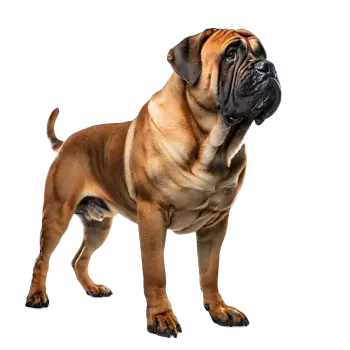
The Bullmastiff is a large, powerfully built guardian breed that displays symmetry, strength, and endurance while remaining surprisingly agile for its substantial size. Males stand 25 to 27 inches at the shoulder and weigh 110 to 130 pounds, while females measure 24 to 26 inches and weigh 100 to 120 pounds. The breed was developed in nineteenth-century England through a foundation breeding of approximately sixty percent Mastiff and forty percent Bulldog, creating a dog capable of tracking and holding poachers without mauling them. The body is nearly square in proportion, with the length from the breastbone to the rear of the thigh only slightly exceeding the height from withers to ground. The coat of the Bullmastiff is short, dense, and lies flat against the body, providing weather protection without excessive maintenance requirements. The breed comes exclusively in three color varieties: fawn ranging from light tan to reddish-brown, red ranging from light red-fawn to a deep, rich mahogany, and brindle showing a striped pattern overlaying either the fawn or red base color. A small amount of white on the chest is acceptable but not desirable, and no other white markings should appear. The characteristic black mask on the muzzle is essential to proper breed type, with darker coloring extending around the eyes and adding to the expression. The head is the breed's most distinctive feature, appearing large and square with considerable breadth and depth. The skull is broad and flat between the ears, and the muzzle is short, broad, and deep, measuring approximately one-third the length from the nose to the occiput. Dark, medium-sized eyes set apart by a furrow between them convey an alert, intelligent expression. The ears are V-shaped, set high and wide, and lie close to the cheeks in a folded position that gives the head an even broader appearance. The Bullmastiff moves with a smooth, powerful gait that demonstrates purpose and ground-covering efficiency despite the breed's considerable mass.
Key Characteristics
Temperament Temperament Temperament Temperament Temperament Temperament Early socialization is essential for Bullmastiffs given their strong guardian instincts and substantial size. Puppies need extensive exposure to different people, animals, and environments to develop into well-adjusted adults who can distinguish appropriate responses from overprotection. Obedience training should begin early while the dog is still manageable in size, establishing clear leadership and boundaries. The breed can be independent thinkers and may test boundaries, requiring owners who can provide calm, consistent guidance. Bullmastiffs are generally good with children in their own family but should be supervised around unfamiliar youngsters due to their size and protective nature.
Health Considerations Health Considerations Health Considerations Health Considerations Health Considerations Health Considerations Cardiac conditions affect Bullmastiffs, including subaortic stenosis and cardiomyopathy, making regular cardiac evaluation by a veterinarian important throughout the dog's life. Cancer, particularly lymphoma and mast cell tumors, occurs at higher rates in the breed than in the general dog population. Eye problems including entropion, where the eyelids roll inward and irritate the cornea, may require surgical correction. Progressive retinal atrophy can cause vision loss in affected individuals. Hypothyroidism occurs in the breed and requires lifelong management with daily medication. Regular veterinary examinations, weight management to reduce joint stress, and attention to breed-specific health concerns help Bullmastiff owners provide the best possible care for these loyal guardians.
Important to Remember
Each hybrid dog is unique and may inherit any combination of traits from either parent breed. The information above represents the characteristics of the purebred parent breeds. Your Pit Bullmastiff may favor one parent over the other or display a blend of both. We strongly encourage you to read the complete breed profiles for both the American Pit Bull Terrier and Bullmastiff to fully understand the range of possible temperaments, health concerns, and care requirements.