Pinny-Poo
The Pinny-Poo is a cross between the Miniature Pinscher and the Poodle. Because each hybrid inherits a unique combination of traits from both parents, we recommend thoroughly researching both breeds before choosing a Pinny-Poo. Pay special attention to temperament, health issues, and care requirements, as your dog may express characteristics from either parent breed.
Miniature Pinscher
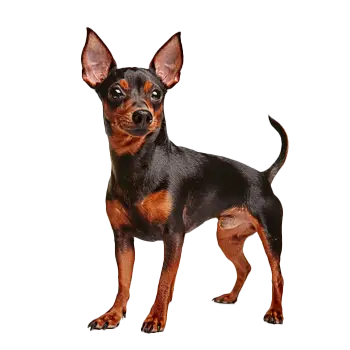
The Miniature Pinscher is a compact, elegantly built toy breed that stands between 10 and 12.5 inches at the shoulder and typically weighs 8 to 11 pounds. Despite being commonly mistaken for a miniature version of the Doberman Pinscher, the Min Pin is actually an older breed with its own distinct heritage tracing back to Germany where it was developed from the German Pinscher, Dachshund, and Italian Greyhound. The breed possesses a sturdy, well-balanced frame with a square body proportion, meaning the length from the chest to the hindquarters roughly equals the height at the withers. The overall appearance conveys an impression of fearlessness, complete self-possession, and spirited animation. The coat of the Miniature Pinscher is short, smooth, and lies close to the body with a sleek, lustrous appearance that requires minimal grooming. Acceptable coat colors include solid clear red ranging from rich deer red to dark stag red, as well as black with clearly defined rust-red markings appearing above the eyes, on the muzzle, throat, chest, legs, and beneath the tail. Chocolate with rust markings in the same pattern is also recognized. The breed should have a clean, well-defined outline without any coarseness or excessive refinement that would compromise its athletic build. One of the most distinctive features of the Miniature Pinscher is its characteristic high-stepping hackney gait, reminiscent of a hackney horse at trot. This unique movement involves the front legs lifting high with a pronounced bend at the wrist, creating an elegant, prancing action that sets this breed apart from all others. The head is carried proudly erect, complementing the confident demeanor. Dark, slightly oval eyes convey an alert, bright expression, while the ears may be cropped to stand erect or left natural in a small, upright or folded position. The tail is typically docked to create a balanced silhouette.
Key Characteristics
Temperament Temperament Temperament Temperament Temperament Temperament Despite their small size, Miniature Pinschers have substantial exercise requirements and thrive on both physical activity and mental stimulation. They are curious explorers with a strong prey drive inherited from their ratting ancestry, which can lead them to chase small animals and attempt daring escapes from enclosed spaces. The breed's boundless energy and mischievous nature make it unsuitable for sedentary households or owners seeking a calm lap dog. Min Pins do best with experienced dog owners who understand how to establish firm, consistent leadership while respecting the dog's spirited independence.
Health Considerations Health Considerations Health Considerations Health Considerations Health Considerations Health Considerations Other health issues to monitor include epilepsy, which can cause recurring seizures that may be controlled with medication, and hypothyroidism, a hormonal disorder affecting the thyroid gland that can lead to weight gain, lethargy, and coat problems. The breed's small size also makes it susceptible to dental disease, requiring regular teeth cleaning and dental care to prevent periodontal problems. Responsible breeders screen their breeding stock for these conditions through health testing, and prospective owners should request documentation of health clearances when selecting a puppy.
Poodle

The Poodle is an elegant, athletic breed that comes in three recognized size varieties: Standard, Miniature, and Toy. Standard Poodles stand over 15 inches at the shoulder with no upper height limit, typically weighing 40 to 70 pounds. Miniature Poodles measure between 10 and 15 inches and weigh 10 to 15 pounds, while Toy Poodles stand under 10 inches and weigh 4 to 6 pounds. Regardless of size, all Poodles share the same breed standard proportions with a squarely built body, proud carriage, and an air of distinction. The breed's build reflects its working heritage as a water retriever, with a moderate frame that is neither fine-boned nor coarse. The Poodle's most distinctive feature is its dense, curly coat that has a unique texture unlike any other breed. The hair grows continuously and has minimal shedding, making Poodles a popular choice for allergy sufferers, though no dog is truly hypoallergenic. The coat can be presented in various traditional clips for show purposes or maintained in a practical sporting trim for easier care. Accepted colors include solid shades of black, white, brown, gray, silver, blue, cream, apricot, red, and cafe-au-lait, with the coat appearing uniform throughout without patterns or multiple colors in show dogs. The head is refined and moderately rounded with a long, straight muzzle and tight-fitting lips. Dark, oval-shaped eyes convey an alert and intelligent expression that reflects the breed's keen mind. The ears hang close to the head, set at or slightly below eye level, and are covered with long, wavy hair. The Poodle moves with a light, effortless, springy gait that demonstrates excellent reach and drive. The breed's athletic build enables it to excel at various activities from agility to swimming, while its graceful appearance makes it equally at home in the conformation show ring. The overall impression is one of balanced elegance combined with athletic capability.
Key Characteristics
Temperament Temperament Temperament Temperament Temperament Temperament Despite their sometimes glamorous appearance, Poodles retain strong working instincts and require regular physical exercise alongside mental enrichment. They are athletic dogs that enjoy activities such as swimming, retrieving, hiking, and organized sports. The breed can develop separation anxiety if left alone for extended periods, as their social nature craves companionship. Standard Poodles tend to be calm and reserved compared to the more excitable Miniature and Toy varieties, though all sizes share the essential Poodle traits of intelligence, trainability, and devotion to their families.
Health Considerations Health Considerations Health Considerations Health Considerations Health Considerations Health Considerations Additional health concerns include Addison's disease, a hormonal disorder affecting the adrenal glands that can cause lethargy, vomiting, and collapse if untreated. Standard Poodles are at increased risk for gastric dilatation-volvulus, commonly known as bloat, a life-threatening emergency where the stomach fills with gas and potentially twists on itself. Epilepsy occurs in the breed, though it can often be managed with medication. Von Willebrand's disease, a bleeding disorder caused by deficiency of a clotting factor, has been identified in Poodles and can be detected through DNA testing. Regular veterinary care and awareness of breed-specific health issues help ensure Poodles live long, healthy lives.
Important to Remember
Each hybrid dog is unique and may inherit any combination of traits from either parent breed. The information above represents the characteristics of the purebred parent breeds. Your Pinny-Poo may favor one parent over the other or display a blend of both. We strongly encourage you to read the complete breed profiles for both the Miniature Pinscher and Poodle to fully understand the range of possible temperaments, health concerns, and care requirements.