Pembroke Corswiss
The Pembroke Corswiss is a cross between the Pembroke Welsh Corgi and the Greater Swiss Mountain Dog. Because each hybrid inherits a unique combination of traits from both parents, we recommend thoroughly researching both breeds before choosing a Pembroke Corswiss. Pay special attention to temperament, health issues, and care requirements, as your dog may express characteristics from either parent breed.
Pembroke Welsh Corgi
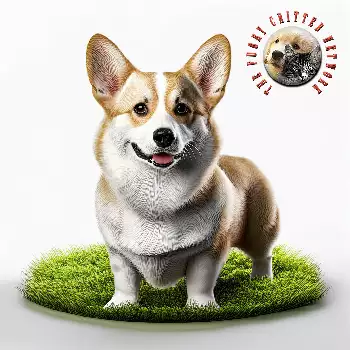
The Pembroke Welsh Corgi is a low-set, sturdy, and compact herding dog that gives the impression of substance and stamina within a small package. Standing just 10 to 12 inches tall at the shoulder, males typically weigh between 27 and 30 pounds while females range from 25 to 28 pounds. Despite their diminutive stature, these dogs possess a surprisingly powerful and athletic build that enabled them to work as cattle herders in the rugged terrain of Wales. The breed is classified as an achondroplastic dwarf, meaning their short legs result from a genetic condition that affects bone growth while maintaining normal body proportions elsewhere. Their body length is slightly greater than their height, creating the distinctive elongated silhouette that characterizes the breed. The Pembroke Welsh Corgi features a fox-like head with intelligent, alert eyes that convey a keen and watchful expression. Their ears are medium-sized, erect, and slightly rounded at the tips, contributing to their characteristically alert appearance. The breed sports a weather-resistant double coat consisting of a thick, soft undercoat covered by a coarser, longer outer coat of medium length. Acceptable coat colors include red, sable, fawn, and black and tan, with or without white markings on the legs, chest, neck, muzzle, and as a narrow blaze on the head. White should not predominate over the primary body color. One distinguishing feature of the Pembroke Welsh Corgi compared to the Cardigan variety is the tail, which is traditionally docked to no more than two inches in length, though natural bobtails do occur within the breed. The legs appear short and straight when viewed from the front, though they may incline slightly inward to compensate for the breed's width of chest. The overall impression is of a confident, well-balanced dog built for endurance rather than speed, capable of working long hours in demanding conditions. The breed has a typical lifespan of 12 to 13 years.
Key Characteristics
Temperament Temperament Temperament Temperament Temperament Temperament Pembroke Welsh Corgis typically get along well with children when properly socialized, though their herding behaviors should be monitored around young family members. They can be reserved or cautious around strangers initially but warm up quickly once properly introduced. The breed is known for being vocal and may bark excessively if bored or understimulated, making them excellent watchdogs but potentially challenging in noise-sensitive living situations. They generally coexist peacefully with other pets when raised together, though their herding instincts may occasionally cause them to attempt to control the movements of other animals in the household.
Health Considerations Health Considerations Health Considerations Health Considerations Health Considerations Health Considerations Additional health concerns include Von Willebrand's disease, a bleeding disorder that affects the blood's ability to clot properly, and epilepsy, which can cause recurring seizures. The breed has a strong tendency toward obesity, which can exacerbate joint problems and other health issues, making weight management through proper diet and exercise essential. Hypothyroidism, exercise-induced collapse, and dental disease are also conditions that may affect the breed. Genetic testing panels are available that screen for multiple conditions including degenerative myelopathy, exercise-induced collapse, Von Willebrand's disease, and progressive retinal atrophy, allowing breeders and owners to make informed decisions about breeding and health management.
Greater Swiss Mountain Dog

The Greater Swiss Mountain Dog is a large, powerful, and impressively muscular breed that embodies the ideal working draft dog physique. Males typically stand between 25.5 and 28.5 inches at the shoulder and weigh 115 to 140 pounds, while females measure 23.5 to 27 inches and weigh 85 to 110 pounds. The breed presents an image of immense strength and substance, with heavy bone structure and well-developed musculature that enabled these dogs to perform demanding draft work in the Swiss Alps for centuries. Despite their considerable size, Greater Swiss Mountain Dogs should appear agile and capable of sustained physical effort rather than cumbersome or lethargic. The Greater Swiss Mountain Dog features a broad, flat skull with a well-defined but not overly pronounced stop. The muzzle is strong, blunt, and approximately equal in length to the skull, creating a balanced appearance. Their eyes are medium-sized, almond-shaped, and dark brown in color, expressing an alert and intelligent demeanor. Medium brown eyes are acceptable but less preferred. The ears are medium-sized, triangular, and set high on the head, hanging close to the cheeks when relaxed and brought forward when the dog is attentive. The neck is strong, muscular, and of moderate length, blending smoothly into well-laid-back shoulders that provide the foundation for powerful movement. The breed's coat is a distinctive double coat consisting of a dense outer coat measuring one to two inches in thickness and a thick undercoat that may be gray or tawny in color. The Greater Swiss Mountain Dog is always tricolored, displaying a black base coat with symmetrical rust or red markings on the cheeks, above the eyes, on the chest, and on the legs, complemented by white markings on the muzzle, chest, feet, and tail tip, often with a white blaze extending between the eyes. The tail is fairly heavy and reaches to the hocks, carried level with the back or slightly elevated when the dog is alert but never curled over the back. The breed has a typical lifespan of 10 to 11 years, though some sources suggest 8 to 11 years.
Key Characteristics
Temperament Temperament Temperament Temperament Temperament Temperament Greater Swiss Mountain Dogs are slow to mature both physically and mentally, often retaining puppy-like behaviors and energy levels until three years of age or beyond. This extended adolescence requires owners to maintain patience during the training process and understand that mature behavior develops gradually. The breed forms strong bonds with all family members and does not do well when isolated from the family unit, potentially developing separation anxiety if left alone for extended periods. They generally get along well with other dogs and household pets when properly socialized, though their size requires supervision around small animals. The breed's working heritage means they appreciate having tasks to perform and respond positively to activities like cart pulling and hiking.
Health Considerations Health Considerations Health Considerations Health Considerations Health Considerations Health Considerations Osteochondritis dissecans is another orthopedic condition seen in the breed, where cartilage fails to properly convert to bone during development, potentially causing lameness and joint pain. Eye problems including cataracts and entropion, a condition where the eyelid rolls inward causing irritation to the cornea, have been documented in the breed. Epilepsy can cause recurring seizures, and Von Willebrand's disease affects blood clotting ability. Urinary incontinence is relatively common in spayed females of this breed. Careful management of exercise during the growth period is essential, as the breed's heavy bone structure and rapid growth rate make puppies vulnerable to developmental orthopedic problems if allowed to engage in high-impact activities before skeletal maturity at approximately two years of age.
Important to Remember
Each hybrid dog is unique and may inherit any combination of traits from either parent breed. The information above represents the characteristics of the purebred parent breeds. Your Pembroke Corswiss may favor one parent over the other or display a blend of both. We strongly encourage you to read the complete breed profiles for both the Pembroke Welsh Corgi and Greater Swiss Mountain Dog to fully understand the range of possible temperaments, health concerns, and care requirements.