Mastapeake
The Mastapeake is a cross between the Mastiff and the Chesapeake Bay Retriever. Because each hybrid inherits a unique combination of traits from both parents, we recommend thoroughly researching both breeds before choosing a Mastapeake. Pay special attention to temperament, health issues, and care requirements, as your dog may express characteristics from either parent breed.
Mastiff
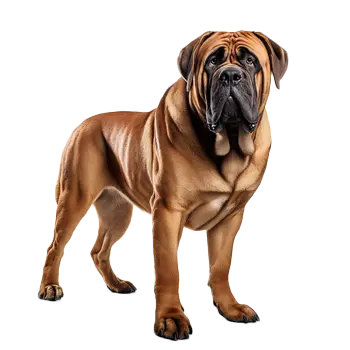
The Mastiff stands as one of the largest and most imposing dog breeds in the world, holding records for overall mass among canine breeds. Males typically reach heights of 30 inches or more at the shoulder and weigh between 160 and 230 pounds, while females measure at least 27.5 inches tall and weigh between 120 and 170 pounds. This breed possesses a massive, heavy-boned frame with a powerful, muscular build that conveys both strength and dignity. The body is rectangular and well-proportioned, with a broad chest, deep ribcage, and substantial bone structure throughout. Despite their enormous size, Mastiffs should move with purpose and coordination, displaying a ground-covering gait that demonstrates their athletic capability. The head of the Mastiff is one of its most distinctive features, being broad and massive with a short, square muzzle and pronounced stop. The face displays characteristic heavy wrinkles, particularly when the dog is alert or interested, which frame expressive dark eyes set wide apart. A black mask covers the muzzle and extends up around the eyes, adding to the breed's distinctive appearance. The ears are small in proportion to the head, V-shaped, and set high on the skull, lying close to the cheeks. The breed's expression should convey a combination of alertness, kindness, and dignity that reflects its gentle temperament. The coat of the Mastiff is short, straight, and dense, lying close to the body and providing adequate weather protection. Acceptable coat colors include apricot, fawn, and brindle, always accompanied by the characteristic black mask on the face. The skin is moderately loose, particularly around the head and neck, contributing to the heavily wrinkled appearance that defines the breed. The tail is set moderately high, wide at the root, and tapers to the tip, reaching to the hocks or slightly below. Overall, the Mastiff presents a picture of massive symmetry and balanced proportions that commands immediate attention and respect.
Key Characteristics
Temperament Temperament Temperament Temperament Temperament Temperament Training a Mastiff requires patience and consistency, as these dogs can be somewhat stubborn and independent-minded. They respond best to positive reinforcement methods and gentle handling, as harsh corrections can damage their sensitive nature. Early socialization is essential to help Mastiffs develop into well-adjusted adults who are comfortable in various situations. Despite their calm demeanor, Mastiffs have moderate exercise needs and enjoy daily walks and play sessions. They are sensitive dogs who tune into their owners' emotions and often attempt to provide comfort during stressful times.
Health Considerations Health Considerations Health Considerations Health Considerations Health Considerations Health Considerations Cardiac issues, including dilated cardiomyopathy, affect Mastiffs at higher rates than many other breeds. Regular cardiac screening is recommended throughout the dog's life. The breed also shows predisposition to certain cancers, particularly osteosarcoma and hemangiosarcoma, which are common causes of death in giant breeds. Progressive retinal atrophy can affect vision, and obesity poses a significant risk due to the strain excess weight places on already stressed joints and organs. Regular veterinary care, appropriate nutrition, and weight management are essential for maintaining a Mastiff's health and quality of life.
Chesapeake Bay Retriever

The Chesapeake Bay Retriever is a medium to large-sized dog built for demanding work in harsh conditions. Males typically stand 23 to 26 inches at the shoulder and weigh 65 to 80 pounds, while females measure 21 to 24 inches and weigh 55 to 70 pounds. This breed possesses a unique conformation where the hindquarters are set as high as or slightly higher than the shoulders, creating a distinctive silhouette that differs from other retriever breeds. The body is strong and powerful with a broad chest, well-sprung ribs, and muscular hindquarters that provide the strength needed for swimming and retrieving in challenging conditions. The overall impression is of a medium-sized, well-balanced dog with the endurance and power for all-day work. One of the Chesapeake's most distinguishing features is its exceptional coat, which has evolved specifically for protection in cold water environments. The outer coat is harsh, oily, and wavy, particularly on the shoulders, neck, back, and loins, while remaining shorter on the face and legs. The undercoat is dense and wooly, providing insulation against frigid water temperatures. This double coat has a distinctive texture that causes water to roll off like droplets from oil, allowing the dog to shake dry within moments of leaving the water. Coat colors are designed for natural camouflage and include various shades of brown, sedge, and deadgrass, ranging from dark brown to light tan. The head of the Chesapeake is broad and round with a medium stop and powerful jaws capable of carrying large game birds. The eyes are one of the breed's most striking features, being yellowish or amber in color, which is unique among retriever breeds. The ears are small, set high, and hang loosely. The feet are webbed, providing excellent swimming propulsion, and are hare-shaped rather than round. The tail is medium length, moderately heavy at the base, and may be straight or slightly curved but never curled over the back.
Key Characteristics
Temperament Temperament Temperament Temperament Temperament Temperament Despite their serious working heritage, Chesapeakes possess a bright, happy disposition with their families. They are affectionate dogs who enjoy being included in family activities and can be quite playful with people they trust. Their high energy level demands substantial daily exercise, including opportunities to swim whenever possible. Water work is essential to the breed's well-being, as swimming fulfills both physical exercise needs and mental satisfaction. Without adequate outlets for their energy and intelligence, Chesapeakes can become destructive or develop behavioral problems. They generally do well with children in their own family but should be supervised around unfamiliar children.
Health Considerations Health Considerations Health Considerations Health Considerations Health Considerations Health Considerations Exercise-induced collapse can affect Chesapeakes, causing affected dogs to experience weakness and collapse during or after intense physical activity. This inherited condition is particularly relevant given the breed's high energy level and working heritage. Von Willebrand's disease, a bleeding disorder caused by deficiency of a clotting protein, also occurs in the breed. Additional health concerns include hypothyroidism, bloat, and various eye conditions beyond PRA, including cataracts and entropion. Regular veterinary checkups, appropriate exercise management, and working with breeders who conduct comprehensive health testing help ensure Chesapeakes live long, active lives.
Important to Remember
Each hybrid dog is unique and may inherit any combination of traits from either parent breed. The information above represents the characteristics of the purebred parent breeds. Your Mastapeake may favor one parent over the other or display a blend of both. We strongly encourage you to read the complete breed profiles for both the Mastiff and Chesapeake Bay Retriever to fully understand the range of possible temperaments, health concerns, and care requirements.