Maspyr
The Maspyr is a cross between the Mastiff and the Great Pyrenees. Because each hybrid inherits a unique combination of traits from both parents, we recommend thoroughly researching both breeds before choosing a Maspyr. Pay special attention to temperament, health issues, and care requirements, as your dog may express characteristics from either parent breed.
Mastiff
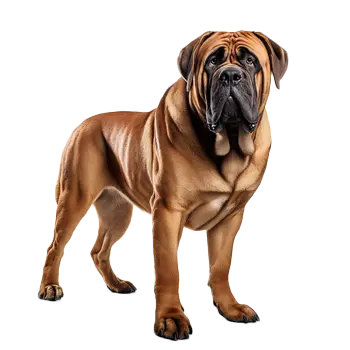
The Mastiff, also known as the English Mastiff, is one of the largest and most massive dog breeds in the world, presenting an awe-inspiring combination of size, strength, and dignified presence. Males stand a minimum of thirty inches at the shoulder and typically weigh between one hundred sixty and two hundred thirty pounds or more, while females are slightly smaller with a minimum height of twenty-seven and a half inches and weights typically ranging from one hundred twenty to one hundred seventy pounds. The breed possesses a massive, rectangular body that is longer than it is tall, with tremendous bone and muscle that creates an impression of immense power and grandeur. The Mastiff's head is perhaps its most distinctive feature, appearing large and square when viewed from any angle. The skull is broad and flat between the ears, with a well-defined stop and a short, broad muzzle that is approximately half the length of the skull. The characteristic wrinkles on the forehead and face add to the breed's noble and somewhat melancholy expression. The small, V-shaped ears are set high and wide apart, lying close to the cheeks. The eyes are medium-sized, set apart, and dark brown in color, conveying a calm, alert expression. The jowls are pronounced and pendulous, contributing to the breed's reputation for drooling. The Mastiff coat is short, straight, and close-lying, providing adequate protection without excessive maintenance requirements. Accepted colors include fawn, apricot, and brindle, all of which must be accompanied by a black mask that covers the muzzle, ears, and nose, with black also appearing around the eye sockets and extending upward between them. The chest is wide and deep, descending between the forelegs and providing ample room for the heart and lungs necessary to power this massive frame. The tail is set high, reaching to the hocks, and is wider at the base, tapering to a point. When the dog is in motion, the tail may be carried slightly curved but never over the back.
Key Characteristics
Temperament Temperament Temperament Temperament Temperament Temperament Training a Mastiff requires patience, consistency, and positive reinforcement methods, as the breed can be somewhat stubborn and slow to respond to commands despite their intelligence. Early socialization is absolutely critical given their eventual size, and basic obedience training should begin in puppyhood when the dog is still manageable. Mastiffs have relatively low energy levels compared to many breeds and are often described as couch potatoes, content with moderate daily exercise and plenty of nap time. They are sensitive dogs that do not respond well to harsh training methods and may become withdrawn or anxious if treated roughly. The breed can be prone to separation anxiety and does best when included in family activities.
Health Considerations Health Considerations Health Considerations Health Considerations Health Considerations Health Considerations Heart disease, particularly dilated cardiomyopathy, affects Mastiffs at higher rates than many other breeds and can lead to heart failure. Regular cardiac screenings are recommended throughout the dog's life. Cancer, especially osteosarcoma, is unfortunately common in Mastiffs and is often diagnosed at relatively young ages. Hypothyroidism, a condition involving inadequate thyroid hormone production, occurs in the breed and can cause weight gain, lethargy, and skin problems. Progressive retinal atrophy and other eye conditions have been identified in Mastiffs, and regular ophthalmologic examinations are advisable. Degenerative myelopathy, a progressive neurological disease affecting the spinal cord, has been reported in the breed. Wobbler syndrome, affecting the cervical spine, and panosteitis, a developmental condition causing shifting leg lameness in growing puppies, are additional concerns. Obesity is a serious risk given the breed's low energy level and fondness for food, and maintaining a healthy weight is crucial for minimizing stress on joints and organs.
Great Pyrenees

The Great Pyrenees is a majestic large breed that combines elegance with impressive size and strength, originally developed to guard livestock in the mountainous terrain between France and Spain. Males typically stand between twenty-seven and thirty-two inches at the shoulder and weigh one hundred pounds or more, while females are somewhat smaller, ranging from twenty-five to twenty-nine inches in height with weights starting around eighty-five pounds. The breed possesses a well-balanced, slightly rectangular body that is only somewhat longer than it is tall, with strong bone and sufficient muscle to provide endurance and power for the demanding work of protecting flocks from predators. The Great Pyrenees is immediately recognizable by its magnificent weather-resistant double coat, which served to protect the breed from harsh mountain climates. The outer coat is long, flat, and thick, consisting of coarse hair that may be straight or slightly wavy, while the undercoat is dense, fine, and woolly. The coat is particularly profuse around the neck and shoulders, forming an impressive ruff or mane that is more pronounced in males. The tail is heavily feathered, forming a beautiful plume, and there is feathering along the back of the front legs and thighs, creating a distinctive pantaloon effect. The standard color is white or white with markings of gray, badger, reddish brown, or varying shades of tan, typically appearing on the ears, head, tail, and occasionally as body spots. The head of the Great Pyrenees is wedge-shaped and not heavy in proportion to the body, with a slightly rounded crown and a gentle stop. The expression is elegant, intelligent, and contemplative, reflecting the breed's thoughtful nature. The eyes are medium-sized, almond-shaped, and set slightly obliquely, displaying a rich dark brown color with close-fitting lids and black rims. The ears are small to medium in size, V-shaped with rounded tips, set at eye level and normally carried low, flat, and close to the head. The nose is black and prominent. One distinctive breed characteristic is the presence of double dewclaws on each rear leg, an important trait specified in the breed standard.
Key Characteristics
Temperament Temperament Temperament Temperament Temperament Temperament The Great Pyrenees retains strong guardian instincts even in companion dog settings, naturally patrolling their territory and remaining vigilant for potential threats. They are nocturnal by nature, having evolved to guard flocks during nighttime hours, which can result in increased activity and barking during evening hours. Speaking of barking, this is the breed's first line of defense and they use their deep, impressive voice liberally to announce visitors, suspicious sounds, or anything else they deem noteworthy. Early socialization is essential to help them distinguish between genuine threats and normal occurrences. Great Pyrenees tend to be reserved with strangers, taking time to assess new people before accepting them. They generally do well with other pets, viewing smaller animals as charges to be protected rather than prey.
Health Considerations Health Considerations Health Considerations Health Considerations Health Considerations Health Considerations Addison's disease, also known as hypoadrenocorticism, occurs more frequently in Great Pyrenees than in many other breeds. This condition involves inadequate production of hormones by the adrenal glands and can be difficult to diagnose due to its variable symptoms, but once identified, it can be successfully managed with medication. Bone cancer, particularly osteosarcoma, affects large and giant breeds at higher rates and is unfortunately common in Great Pyrenees. Neuronal degeneration is an inherited neurological condition specific to this breed that causes progressive coordination problems beginning in puppyhood. Chondrodysplasia, a form of dwarfism, is another inherited condition that has been identified in the breed. Eye conditions including cataracts, entropion, and canine multifocal retinopathy can occur and should be monitored through regular ophthalmologic examinations. Deafness is more prevalent in white-coated breeds and may affect some Great Pyrenees. Patellar luxation and various skin conditions, including allergies, have also been reported in the breed.
Important to Remember
Each hybrid dog is unique and may inherit any combination of traits from either parent breed. The information above represents the characteristics of the purebred parent breeds. Your Maspyr may favor one parent over the other or display a blend of both. We strongly encourage you to read the complete breed profiles for both the Mastiff and Great Pyrenees to fully understand the range of possible temperaments, health concerns, and care requirements.