LeoBerner
The LeoBerner is a cross between the Leonberger and the Bernese Mountain Dog. Because each hybrid inherits a unique combination of traits from both parents, we recommend thoroughly researching both breeds before choosing a LeoBerner. Pay special attention to temperament, health issues, and care requirements, as your dog may express characteristics from either parent breed.
Leonberger
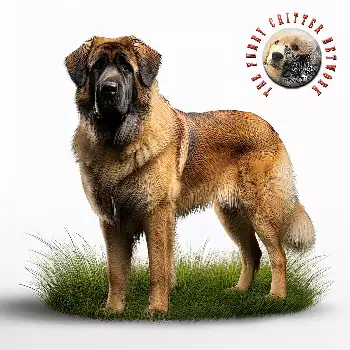
The Leonberger is a truly majestic giant breed that presents an impressively powerful and substantial figure, with males standing twenty-eight to thirty-one and a half inches at the shoulder and weighing between one hundred ten and one hundred seventy pounds at maturity. Females are somewhat smaller but still substantial, measuring twenty-five and a half to twenty-nine and a half inches tall and weighing ninety to one hundred forty pounds. This breed displays notably marked sexual dimorphism, with males appearing distinctly masculine with broader heads, heavier bone structure, and more substantial overall presence, while females present a more elegant and refined appearance while still maintaining the breed's characteristic strength, substance, and impressive stature. The Leonberger's most distinctive and recognizable feature is its unmistakable lion-like appearance, complete with a characteristic black mask that extends prominently from the nose up to and over the eyes, giving the face a noble, dignified, and distinguished expression. Males develop a pronounced and luxurious mane of longer fur around the neck and chest that becomes increasingly impressive as they mature, typically reaching full development around two to three years of age. The head is broad and well-proportioned with a slightly domed skull, and the dark brown oval eyes convey a friendly, intelligent, and kind expression. The ears are triangular, medium-sized, and set high on the skull, hanging close to the head with well-feathered edges that frame the face attractively. The double coat is medium to long in length, lying relatively flat against the body with a distinctly water-resistant quality that made these dogs excellent working companions for water rescue operations. The outer coat is straight or slightly wavy but never curly, with substantial feathering apparent on the backs of the legs, the bushy tail, and across the chest. Acceptable coat colors include lion-yellow, golden, red, red-brown, and sandy shades, with all colors characteristically lightening toward the lower portions of the body including the legs and underbelly. The tail is bushy and abundantly feathered, carried hanging when relaxed and slightly elevated when the dog is alert or in motion. The feet are notably webbed between the toes, reflecting the breed's historical use in demanding water rescue work throughout Europe.
Key Characteristics
Temperament Temperament Temperament Temperament Temperament Temperament Leonbergers require substantial daily interaction with their families and absolutely do not thrive when relegated to purely outdoor living situations or left alone for extended periods. They may develop significant separation anxiety if their fundamental need for companionship is not met adequately and consistently. Despite their typically calm indoor behavior, these dogs are definitely not couch potatoes and require regular moderate exercise to maintain both physical and mental health. They particularly enjoy swimming and activities that allow them to work cooperatively alongside their owners. Their notably sensitive nature means they respond very poorly to harsh corrections, requiring firm but consistently gentle guidance throughout their training.
Health Considerations Health Considerations Health Considerations Health Considerations Health Considerations Health Considerations Gastric dilatation-volvulus, commonly known as bloat, poses a life-threatening emergency risk for this deep-chested breed that requires immediate veterinary intervention. This serious condition occurs when the stomach fills rapidly with gas and twists on itself, cutting off blood flow to vital organs. Preventive measures include feeding smaller, more frequent meals throughout the day and avoiding vigorous exercise immediately before and after eating. Dilated cardiomyopathy, a heart condition where the heart muscle progressively weakens and enlarges, can affect Leonbergers and may eventually lead to heart failure. Leonberger polyneuropathy, a hereditary neurological condition specific to this breed, causes progressive weakness and coordination problems in affected dogs.
Bernese Mountain Dog

The Bernese Mountain Dog is a large, sturdy breed that combines strength with agility, built for the demanding work of draft and droving in the mountainous regions of Switzerland. Males stand twenty-five to twenty-seven and a half inches at the shoulder and weigh eighty to one hundred fifteen pounds, while females measure twenty-three to twenty-six inches tall and weigh seventy to ninety-five pounds. The body is slightly longer than tall, creating a substantial rectangular outline that conveys power without coarseness. The overall impression is one of a well-balanced dog capable of sustained physical effort. The breed's distinctive tricolored coat is perhaps its most recognizable feature, consisting of a jet black base color with rich rust or tan markings and crisp white accents in specific locations. The rust markings appear over each eye, on the cheeks, on the sides of the chest, on all four legs, and under the tail. White markings include a characteristic blaze running up the center of the face, a white muzzle band, and a white marking on the chest that traditionally forms an inverted cross or horseshoe shape known as the Swiss cross. The coat is long, thick, and slightly wavy or straight, with a natural sheen when properly maintained. The head is flat on top with a well-defined but moderate stop, and the dark brown, almond-shaped eyes convey a gentle, intelligent expression that reflects the breed's amiable nature. The ears are medium-sized, triangular, set high, and hang close to the head when at rest, raising slightly at the base when the dog is alert. The nose is always black, and the lips are clean with minimal drool compared to some other large breeds. The tail is bushy and carried low when relaxed, rising to back level or slightly above when the dog is alert or in motion, but never curling over the back.
Key Characteristics
Temperament Temperament Temperament Temperament Temperament Temperament Despite their relaxed indoor behavior, Bernese Mountain Dogs are not sedentary and require regular moderate exercise to maintain physical and mental health. They mature slowly compared to many breeds, often retaining puppy-like playfulness and energy well into their third year of life. This extended adolescence requires patience in training, though their intelligence and desire to please make them responsive students when approached with consistency and positive methods. They are known as leaners who enjoy physical contact with their people, often pressing their substantial weight against family members as a sign of affection.
Health Considerations Health Considerations Health Considerations Health Considerations Health Considerations Health Considerations Gastric dilatation-volvulus, or bloat, represents a life-threatening emergency that deep-chested breeds like the Bernese Mountain Dog face at increased risk. This condition requires immediate veterinary intervention and can be fatal within hours if untreated. Progressive retinal atrophy causes gradual vision loss in affected dogs, while von Willebrand's disease is a hereditary blood clotting disorder that can cause excessive bleeding during injuries or surgical procedures. Degenerative myelopathy, a progressive spinal cord disease, and various other cancers also affect the breed at concerning rates, emphasizing the importance of selecting puppies from health-tested parents.
Important to Remember
Each hybrid dog is unique and may inherit any combination of traits from either parent breed. The information above represents the characteristics of the purebred parent breeds. Your LeoBerner may favor one parent over the other or display a blend of both. We strongly encourage you to read the complete breed profiles for both the Leonberger and Bernese Mountain Dog to fully understand the range of possible temperaments, health concerns, and care requirements.