Ja-Chon
The Ja-Chon is a cross between the Bichon Frise and the Japanese Chin. Because each hybrid inherits a unique combination of traits from both parents, we recommend thoroughly researching both breeds before choosing a Ja-Chon. Pay special attention to temperament, health issues, and care requirements, as your dog may express characteristics from either parent breed.
Bichon Frise
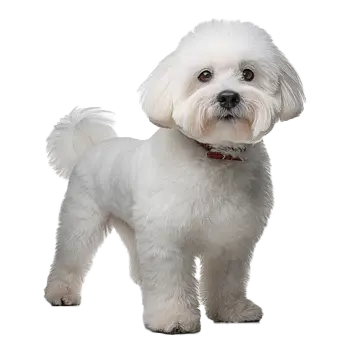
The Bichon Frise is a small, sturdy dog that stands between 9.5 and 11.5 inches tall at the shoulder and typically weighs between 12 and 18 pounds. This breed presents a compact, well-proportioned body with a slightly rounded skull known as the apple dome and a moderately defined stop. The muzzle is not pointed or snipey, maintaining balanced proportions with the head and measuring approximately three-fifths the length of the skull. Their dark, round eyes convey an alert and curious expression, surrounded by dark halos of pigmented skin that enhance their soft, intelligent gaze. The drop ears are covered with long flowing hair that blends seamlessly into the coat, hanging close to the head. The neck is long and carried proudly, supporting the characteristic powder-puff appearance that makes this breed instantly recognizable. The Bichon Frise possesses a distinctive double coat that creates its signature fluffy silhouette. The undercoat is soft and dense, providing excellent insulation against temperature extremes, while the outer coat is coarser with gentle spiraling curls that give the breed its characteristic springy texture. The coat color is always white, though some dogs may display subtle shadings of buff, cream, or apricot around the ears or on the body, particularly in younger animals. When properly groomed by hand scissoring, the coat is trimmed to reveal the natural outline of the body while maintaining fullness around the head and ears for that iconic rounded appearance that resembles a powder puff or cotton ball. The body structure of the Bichon Frise reflects its heritage as a companion dog bred for charm and portability. The chest is well-developed and moderately broad, with well-sprung ribs that provide adequate lung capacity without appearing barrel-shaped. The topline is level and muscular, leading to a tail that is set high and carried curved gracefully over the back, heavily plumed with flowing silky hair that lies flat against the back. The legs are straight and well-boned without appearing heavy or coarse, ending in tight, round feet that resemble cat paws with arched toes. Movement is effortless and precise, displaying good reach and drive that reflects the breed's overall balance and soundness.
Key Characteristics
Temperament Temperament Temperament Temperament Temperament Temperament Despite their small size, Bichon Frises make alert watchdogs who will announce visitors with their characteristic bark, though they lack the aggressive tendencies that would make them effective guard dogs. They generally get along well with other pets and children, though interactions with very young children should be supervised due to the breed's relatively small stature. One important consideration is that Bichons can develop separation anxiety if left alone for extended periods, as their strong attachment to their families makes solitude difficult. They are best suited to households where someone is home frequently or where they can accompany their owners throughout the day.
Health Considerations Health Considerations Health Considerations Health Considerations Health Considerations Health Considerations Additional health concerns in the Bichon Frise include liver shunts, where blood flow bypasses the liver and prevents proper toxin filtration, as well as bladder stones that can cause urinary difficulties. Cushing's disease and diabetes occur at higher rates in the breed compared to the general dog population, particularly in middle-aged and senior dogs. Dental disease is extremely common due to their small mouths and crowded teeth, making daily dental care and regular professional cleanings essential. Responsible breeders screen their breeding stock for many of these conditions, so obtaining health clearances from a reputable breeder can help reduce the risk of inheriting serious health problems.
Japanese Chin

The Japanese Chin is an elegant toy breed that stands between 8 and 11 inches tall at the shoulder and typically weighs between 7 and 11 pounds, with the American Kennel Club breed standard preferring lighter specimens. This aristocratic breed presents a distinctly square outline when viewed from the side, with a body length approximately equal to its height at the withers. The head is large in proportion to the body, featuring a broad, rounded skull and a very short, wide muzzle that contributes to the breed's distinctive Oriental expression. The face is characterized by a well-cushioned area under the eyes and a deep stop between the forehead and nose. The Japanese Chin's most striking feature is its large, round eyes that are set wide apart and project a look of astonishment that is unique to the breed. The eyes are dark in color and lustrous, with just a small amount of white showing in the inner corners, adding to their expressive quality. The ears are small, V-shaped, and set wide apart, hanging slightly forward and covered with long, silky hair that blends into the neck furnishings. The muzzle is extremely short and broad, with a wide nose whose color corresponds to the coat markings, being either black or coordinated with the coat in red-marked dogs. The coat of the Japanese Chin is single-layered without an undercoat, consisting of straight, silky hair that is profuse and stands away from the body, particularly around the neck, shoulders, and chest where it forms an abundant mane. The tail is heavily plumed with long, flowing hair and is carried proudly arched over the back, draping to either side. Coat colors include black and white, red and white in various shades from lemon to deep mahogany, and tricolor combining black, white, and tan points. The coat requires regular grooming but is relatively easy to maintain compared to other long-coated breeds, as the silky texture resists matting. The overall impression is one of stylish elegance combined with a dainty yet substantial build.
Key Characteristics
Temperament Temperament Temperament Temperament Temperament Temperament The Japanese Chin's exercise needs are modest compared to more active breeds, making them excellent apartment companions and suitable for less mobile owners. A few short walks daily combined with indoor play sessions typically satisfy their physical requirements. However, they do enjoy interactive games and thrive when given opportunities to engage mentally with puzzle toys or training activities. This breed generally does well with older, respectful children who understand how to interact gently with small dogs, but may become overwhelmed by the chaos of very young children. Japanese Chins can develop separation anxiety when left alone for extended periods and prefer homes where they receive regular attention and companionship throughout the day.
Health Considerations Health Considerations Health Considerations Health Considerations Health Considerations Health Considerations Additional health considerations for Japanese Chins include patellar luxation, a common orthopedic issue in toy breeds where the kneecap slips out of position. Dental disease is prevalent due to the breed's small mouth and crowded teeth, making regular dental care essential from puppyhood onward. The breed can also be prone to hypoglycemia, particularly as puppies, which requires careful attention to feeding schedules and monitoring for signs of low blood sugar such as weakness, trembling, or lethargy. Because of their brachycephalic conformation, Japanese Chins may struggle with anesthesia, so owners should ensure their veterinarian is experienced with flat-faced breeds before any surgical procedures.
Important to Remember
Each hybrid dog is unique and may inherit any combination of traits from either parent breed. The information above represents the characteristics of the purebred parent breeds. Your Ja-Chon may favor one parent over the other or display a blend of both. We strongly encourage you to read the complete breed profiles for both the Bichon Frise and Japanese Chin to fully understand the range of possible temperaments, health concerns, and care requirements.