Italian Greyhuahua
The Italian Greyhuahua is a cross between the Chihuahua and the Italian Greyhound. Because each hybrid inherits a unique combination of traits from both parents, we recommend thoroughly researching both breeds before choosing a Italian Greyhuahua. Pay special attention to temperament, health issues, and care requirements, as your dog may express characteristics from either parent breed.
Chihuahua
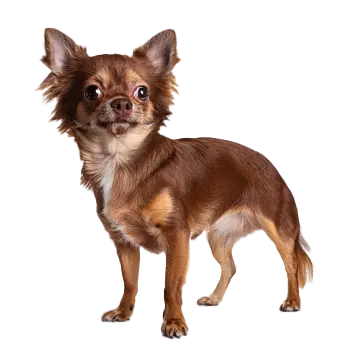
The Chihuahua is the smallest recognized dog breed, with the American Kennel Club breed standard specifying a maximum weight of six pounds and typical height ranging from six to nine inches at the shoulder. Dogs exceeding six pounds are disqualified from conformation competition, though they make equally wonderful pets. This compact toy breed possesses a distinctive well-rounded apple dome skull that is a hallmark characteristic of the breed. Their large, luminous eyes are full and round but not protruding, set well apart, and can be dark or ruby colored, with lighter eyes permissible in light-colored dogs. The Chihuahua's large, erect ears are held at approximately forty-five degree angles when alert. The Chihuahua comes in two distinct coat varieties: Smooth Coat and Long Coat. The Smooth Coat variety has a short, glossy coat that lies close to the body with a ruff on the neck and more scanty coverage on the head and ears. The Long Coat variety features a soft, flat or slightly wavy coat with an undercoat, fringed ears, a full plumed tail, feathering on the legs, and a large ruff on the neck. Both varieties come in virtually any color or combination of colors, including solid, marked, or splashed patterns, with no color preferences or disqualifications in the breed standard. The breed's body is slightly longer than tall, creating an off-square proportion. The Chihuahua moves with a firm, sturdy action that displays good reach in front and strong drive from the rear. Despite their diminutive size, they possess a confident carriage that conveys their self-assured personality. Many Chihuahuas retain a molera, a soft spot on the skull similar to that found in human infants, which is considered normal for the breed and not a defect. Their expression is described as saucy, reflecting the breed's alert and terrier-like demeanor. The Chihuahua's compact size and adaptable nature have made them one of the most popular toy breeds worldwide.
Key Characteristics
Temperament Temperament Temperament Temperament Temperament Temperament Chihuahuas can be suspicious of strangers and may take considerable time to warm up to new people. They generally prefer the company of other Chihuahuas over other breeds but can learn to coexist with other pets when properly introduced. The breed is not typically recommended for households with very young children, as Chihuahuas are easily injured by rough handling and may snap defensively if they feel threatened. They require gentle handling and do best with older children who understand how to interact appropriately with small dogs. Chihuahuas thrive on attention and companionship, often developing separation anxiety if left alone for extended periods.
Health Considerations Health Considerations Health Considerations Health Considerations Health Considerations Health Considerations Tracheal collapse is a progressive condition that affects the cartilage rings of the trachea, causing breathing difficulties and a characteristic honking cough. This condition is more common in toy breeds and can be managed with medication or surgery in severe cases. Heart problems, particularly mitral valve disease, occur with increased frequency in Chihuahuas and should be monitored through regular veterinary checkups. Hydrocephalus, an accumulation of fluid in the brain, can occur in puppies and may cause neurological symptoms. Due to their extremely small size and minimal body fat, Chihuahuas are highly sensitive to cold temperatures and require protective clothing during winter months to prevent hypothermia.
Italian Greyhound
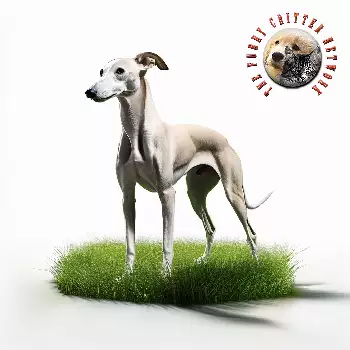
The Italian Greyhound is an elegant and slender toy breed that stands between thirteen and fifteen inches at the shoulder and weighs seven to fourteen pounds. This miniature sighthound possesses a refined, graceful appearance with a body that is built for speed and agility. The breed features a narrow, long head with a fine muzzle that tapers to a dark nose, and their skull is almost flat with a slight stop. Their ears are small, delicate, and folded back along the head in what is described as a rose-shaped formation. The Italian Greyhound's deep chest and tucked abdomen create the distinctive silhouette characteristic of sighthound breeds, while their long, slender legs end in distinctive hare-shaped feet with well-arched toes. The neck is long, gracefully arched, and blends smoothly into the shoulders. The coat of the Italian Greyhound is short, glossy, and satin-like in texture, lying close to the body and requiring minimal grooming. This breed comes in a wide variety of colors including black, blue, cream, fawn, red, sable, and various shades of these colors with or without white markings. The American Kennel Club breed standard accepts any color or marking except brindle and the black-and-tan markings found in some other breeds. Their skin is thin and supple, adding to their refined appearance but also making them more susceptible to cold temperatures and minor injuries. White markings are commonly seen on the chest, feet, and sometimes as a blaze on the face. The Italian Greyhound moves with a distinctive high-stepping, free-flowing gait that showcases their elegant structure. Their long, tapering tail is set low and curves gracefully, often carried between the legs when the dog is relaxed. The breed's expressive dark eyes convey an alert and intelligent demeanor and are medium-sized with a soft, appealing expression. Despite their delicate appearance, Italian Greyhounds are surprisingly athletic and capable of impressive bursts of speed, reaching up to twenty-five miles per hour when running. Their overall appearance should convey refinement and elegance in every aspect.
Key Characteristics
Temperament Temperament Temperament Temperament Temperament Temperament The breed tends to be reserved and somewhat aloof with strangers, though they typically warm up over time. Early socialization is essential to help them develop confidence and prevent excessive shyness or timidity. Italian Greyhounds can coexist peacefully with other dogs and pets, particularly if raised together, though their strong prey drive may cause them to chase small animals. They are generally good with gentle older children but may not be the best match for households with very young children due to their fragile build and sensitivity to rough handling.
Health Considerations Health Considerations Health Considerations Health Considerations Health Considerations Health Considerations Progressive retinal atrophy and primary closed angle glaucoma are hereditary eye conditions that can lead to vision loss or blindness in affected dogs. Genetic testing is available and recommended for breeding stock to reduce the incidence of these conditions. Italian Greyhounds may also experience hypothyroidism, epilepsy, autoimmune disorders, and color dilution alopecia in dogs with dilute coat colors. Due to their thin coat and low body fat, Italian Greyhounds are extremely sensitive to cold temperatures and require protection such as sweaters or coats during cooler weather.
Important to Remember
Each hybrid dog is unique and may inherit any combination of traits from either parent breed. The information above represents the characteristics of the purebred parent breeds. Your Italian Greyhuahua may favor one parent over the other or display a blend of both. We strongly encourage you to read the complete breed profiles for both the Chihuahua and Italian Greyhound to fully understand the range of possible temperaments, health concerns, and care requirements.