Irish Troodle
The Irish Troodle is a cross between the Irish Terrier and the Poodle. Because each hybrid inherits a unique combination of traits from both parents, we recommend thoroughly researching both breeds before choosing a Irish Troodle. Pay special attention to temperament, health issues, and care requirements, as your dog may express characteristics from either parent breed.
Irish Terrier
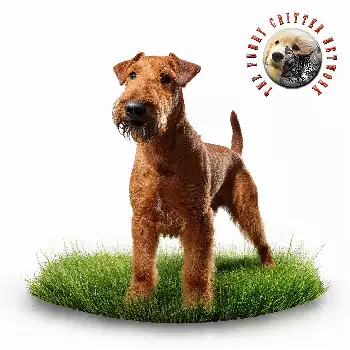
The Irish Terrier is a medium-sized terrier breed standing approximately 18 to 20 inches at the shoulder, with males weighing around 27 pounds and females approximately 25 pounds, making them one of the larger terrier breeds while maintaining an athletic build. Breed standards describe the ideal Irish Terrier as racy, red, and rectangular, meaning they should appear powerful without being heavy or cloddy, displaying a refined elegance combined with obvious strength. Their body is proportionately longer than many other terrier breeds, with a tendency toward athletic lines while maintaining substantial bone and muscle that enables them to work tirelessly. The breed's distinctive double coat consists of a dense, wiry outer layer and a softer undercoat, both presenting in beautiful shades of red that make the breed instantly recognizable. Acceptable colors include bright red, golden red, red wheaten, and wheaten, with a small patch of white permitted only on the chest according to breed standards. Puppies are often born with black hairs scattered throughout their coat that gradually lighten to the standard red coloring as they mature during their first year. The coat lies flat against the skin and should be dense enough that the skin is barely visible when parted with the fingers, providing excellent protection against weather and rough terrain. Irish Terriers possess a long, flat head with a strong, muscular jaw and keen, dark eyes that convey their characteristic fiery expression and alert intelligence. The face is adorned with a small beard and bushy eyebrows that add to their distinctive appearance and give them a wise, somewhat dignified expression. Their V-shaped ears fold forward close to the cheeks, framing the face attractively. The neck is moderately long and graceful, leading to a body featuring a deep chest for lung capacity, a strong straight back, and a slightly arched loin providing flexibility. The tail is traditionally docked to about three-quarters length, though natural tails are now common in many countries where docking is prohibited.
Key Characteristics
Temperament Temperament Temperament Temperament Temperament Temperament Irish Terriers are intelligent dogs with an independent streak that can make training challenging for inexperienced owners who are unfamiliar with terrier temperament. They respond best to positive reinforcement methods that keep sessions short and interesting, and may become stubborn or uncooperative if training sessions are repetitive or boring. These energetic dogs require substantial daily exercise, typically one to one and a half hours, and thrive on activities that engage both body and mind, such as agility training, hiking, or interactive games. They make excellent watchdogs, alerting their families to anything unusual with their characteristic bark while remaining generally friendly toward familiar visitors who pose no threat.
Health Considerations Health Considerations Health Considerations Health Considerations Health Considerations Health Considerations Some Irish Terriers may experience hip dysplasia, though this occurs less frequently than in many other breeds of similar size and is not considered a major concern for the breed. Regular veterinary checkups and maintaining a healthy weight throughout life help minimize the risk of joint problems. The breed's wiry coat requires regular maintenance including hand-stripping every few months to maintain its proper texture and appearance, as clipping can damage coat quality. Owners should also be attentive to dental health, as small and medium breeds can be prone to dental disease, and keep ears clean to prevent infections. Overall, the Irish Terrier's generally sound health makes them an excellent choice for owners seeking a hardy companion with fewer genetic health concerns than many purebred alternatives.
Poodle

The Poodle is recognized in three size varieties by major kennel clubs: Standard Poodles stand over 15 inches at the shoulder and typically weigh between 45 and 70 pounds; Miniature Poodles measure 10 to 15 inches tall and weigh 15 to 17 pounds; Toy Poodles stand 10 inches or under and weigh 6 to 9 pounds. All varieties share the same elegant, square-built body with a proud carriage that reflects the breed's aristocratic heritage as both working water retrievers and companions to royalty throughout European history. Their athletic physique demonstrates they are far more than mere decorative show dogs. The Poodle's most distinctive feature is its dense, curly single-layer coat that grows continuously like human hair rather than shedding seasonally like most breeds. This unique coat texture makes Poodles a popular choice for people with allergies, though no dog is truly hypoallergenic as all dogs produce some dander and saliva proteins. The breed appears in an impressive array of solid colors including black, white, brown, gray, silver, blue, cream, apricot, red, and cafe au lait. Show dogs often sport elaborate clips such as the Continental or English Saddle that developed historically to protect joints while swimming, though pet owners typically prefer simpler sporting clips that are easier to maintain. Poodles possess an elegant, refined head with a long, straight muzzle and dark, oval-shaped eyes that convey remarkable intelligence and alertness. Their ears are long and hang close to the head, covered with wavy hair that can grow quite long without regular grooming. The neck is proportionately long and allows the dog to carry its head high with dignity and pride. Their body is well-proportioned with a level topline, deep chest providing ample lung capacity, and well-developed musculature throughout that reflects their athletic capabilities as water retrievers. Movement is light and springy with strong drive from well-angulated hindquarters, covering ground efficiently.
Key Characteristics
Temperament Temperament Temperament Temperament Temperament Temperament Poodles are generally friendly and sociable dogs that get along well with children, other dogs, and even cats when properly socialized from an early age. However, smaller varieties can sometimes be reserved around strangers or assertive toward unfamiliar dogs without early and ongoing exposure to various people and situations. Standard Poodles tend to be more laid-back than their smaller counterparts but still require substantial daily exercise to remain happy and healthy. All varieties benefit from training that channels their impressive intelligence and provides mental challenges, as bored Poodles are creative problem-solvers who may invent their own entertainment in ways their owners might not appreciate.
Health Considerations Health Considerations Health Considerations Health Considerations Health Considerations Health Considerations Sebaceous adenitis is a skin condition particularly common in Standard Poodles, with approximately 50 percent either carriers or affected by the genes responsible. This inflammatory condition affects the sebaceous glands producing skin oils, leading to dry, scaly skin and progressive hair loss that requires ongoing management. Bloat or gastric dilatation-volvulus poses a risk primarily to Standard Poodles due to their deep chest, requiring awareness of feeding practices and warning signs. Other health concerns include von Willebrand's disease affecting blood clotting, hypothyroidism causing metabolic problems, and various eye conditions. Regular grooming is essential not just for appearance but for skin health, as matted coats can cause discomfort and create conditions for skin problems.
Important to Remember
Each hybrid dog is unique and may inherit any combination of traits from either parent breed. The information above represents the characteristics of the purebred parent breeds. Your Irish Troodle may favor one parent over the other or display a blend of both. We strongly encourage you to read the complete breed profiles for both the Irish Terrier and Poodle to fully understand the range of possible temperaments, health concerns, and care requirements.