Irish Dobe Setter
The Irish Dobe Setter is a cross between the Irish Setter and the Doberman Pinscher. Because each hybrid inherits a unique combination of traits from both parents, we recommend thoroughly researching both breeds before choosing a Irish Dobe Setter. Pay special attention to temperament, health issues, and care requirements, as your dog may express characteristics from either parent breed.
Irish Setter

The Irish Setter is a strikingly beautiful sporting breed known for its elegant, racy outline and rich mahogany or chestnut red coat. Males stand approximately 27 inches at the shoulder and weigh between 60 and 70 pounds, while females measure around 25 inches and fall within a similar weight range. The breed presents a substantial yet refined appearance, with a body that is slightly longer than tall, demonstrating the athletic build necessary for a tireless field companion. The overall impression is one of balance, grace, and aristocratic bearing that has made this breed a favorite among sportsmen and families alike. The head is long and lean with a well-defined stop, featuring a moderately deep muzzle that is fairly square at the end. The eyes are medium-sized, almond-shaped, and dark brown to medium brown in color, conveying a soft, intelligent expression. The ears are set low and well back on the head, hanging in neat folds close to the cheeks and reaching nearly to the nose when drawn forward. The neck is moderately long, strong but not thick, and arches gracefully into the shoulders. The chest is deep, reaching approximately to the elbows, and is rather narrow to allow freedom of movement. The coat is the Irish Setter's crowning glory, consisting of flat, straight hair of moderate length with beautiful feathering on the ears, chest, belly, backs of the legs, and tail. The rich red color ranges from mahogany to chestnut, with no black shading permitted, though small amounts of white on the chest, throat, or toes are acceptable. The tail is carried nearly level with the back and features a long, silky fringe. The legs are straight with well-muscled upper thighs and moderately bent stifles. The feet are rather small and firm with well-arched toes. Regular grooming is essential to maintain the coat's beautiful appearance and prevent matting of the feathering.
Key Characteristics
Temperament Temperament Temperament Temperament Temperament Temperament Irish Setters require substantial daily exercise and mental stimulation to remain happy and well-behaved. Without adequate outlets for their considerable energy, they can become reckless, destructive, and difficult to manage. The breed excels in various dog sports including field work, agility, and obedience when training is conducted with patience and positive methods. Irish Setters are intelligent but can display an independent streak that some interpret as stubbornness. They respond best to enthusiastic, reward-based training rather than harsh corrections. The breed does not tolerate being left alone for extended periods and may develop separation anxiety, requiring families committed to including their dog in daily activities.
Health Considerations Health Considerations Health Considerations Health Considerations Health Considerations Health Considerations Canine leukocyte adhesion deficiency, known as CLAD, is a serious inherited immune disorder specific to Irish Setters that prevents white blood cells from fighting infection properly. Affected puppies rarely survive past six months without treatment. Hypothyroidism affects many Irish Setters, causing insufficient thyroid hormone production that results in weight gain, lethargy, and skin problems. Epilepsy, osteochondrosis dissecans affecting joint cartilage, and hypertrophic osteodystrophy in growing puppies are additional concerns. Von Willebrand's disease Type 1, a mild bleeding disorder, and gluten intolerance causing digestive problems have been documented. Regular veterinary care and genetic testing of breeding stock help maintain the breed's health.
Doberman Pinscher
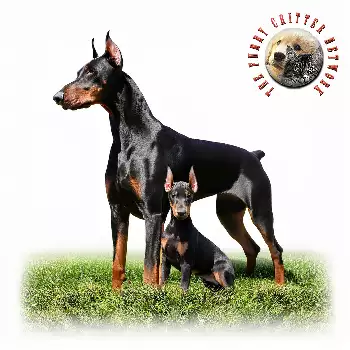
The Doberman Pinscher is a medium to large breed that embodies elegance, power, and nobility in a compact, muscular frame. Males stand between 26 and 28 inches at the shoulder, with 27.5 inches considered ideal, and typically weigh 75 to 100 pounds. Females measure 24 to 26 inches, ideally 25.5 inches, and weigh between 60 and 90 pounds. The breed presents a square body proportion, with the length from forechest to rear projection of the upper thigh equal to the height from withers to ground. The overall appearance conveys alertness, determination, and athletic capability combined with proud carriage. The head is long and resembles a blunt wedge when viewed from the front or side, with parallel planes of the skull and muzzle. The almond-shaped eyes are moderately deep-set and display a vigorous, energetic expression. The ears may be cropped and carried erect or left natural to fold against the head. The neck is well-arched, muscular, and dry, widening gradually toward the body without any loose skin or dewlap. The chest is broad and deep, reaching to the elbow, with well-sprung ribs. The back is short and firm with a slight slope from withers to croup, leading to a docked tail traditionally carried slightly above horizontal. The coat is smooth, short, hard, thick, and close-lying, requiring minimal grooming but providing little protection against cold weather. Permitted colors include black, red, blue, and fawn, each accompanied by sharply defined rust markings above the eyes, on the muzzle, throat, forechest, all legs and feet, and below the tail. The legs are perfectly straight and parallel when viewed from the front, with well-arched, compact feet resembling those of a cat. The hindquarters are well-angulated with muscular thighs that provide powerful drive. The Doberman moves with a balanced, vigorous gait that covers ground efficiently with each stride.
Key Characteristics
Temperament Temperament Temperament Temperament Temperament Temperament Despite their reputation as fierce guard dogs, properly bred and socialized Dobermans are stable, good-natured companions. They are generally tolerant of children within their own families and can coexist peacefully with other pets when raised together. The breed is not inherently aggressive but will protect their families if genuinely threatened. Dobermans do not tolerate being isolated from their families and may develop separation anxiety or destructive behaviors when left alone for extended periods. They thrive in homes where they can participate in family activities and receive regular training, exercise, and affection.
Health Considerations Health Considerations Health Considerations Health Considerations Health Considerations Health Considerations Cancer accounts for approximately 14 percent of deaths in Dobermans, with various types affecting the breed. Hip dysplasia, hypothyroidism, and progressive retinal atrophy are additional concerns that responsible breeders screen for. Gastric dilatation-volvulus poses a risk due to the breed's deep chest. Chronic hepatitis affects more than 20 percent of Dobermans subclinically, meaning they show no symptoms while their liver sustains ongoing damage. Color dilution alopecia causes hair loss in blue and fawn-colored dogs. The breed's severe genetic diversity depression contributes to its vulnerability to inherited diseases and underscores the importance of careful breeding practices.
Important to Remember
Each hybrid dog is unique and may inherit any combination of traits from either parent breed. The information above represents the characteristics of the purebred parent breeds. Your Irish Dobe Setter may favor one parent over the other or display a blend of both. We strongly encourage you to read the complete breed profiles for both the Irish Setter and Doberman Pinscher to fully understand the range of possible temperaments, health concerns, and care requirements.