Giant Border Schnollie
The Giant Border Schnollie is a cross between the Border Collie and the Giant Schnauzer. Because each hybrid inherits a unique combination of traits from both parents, we recommend thoroughly researching both breeds before choosing a Giant Border Schnollie. Pay special attention to temperament, health issues, and care requirements, as your dog may express characteristics from either parent breed.
Border Collie
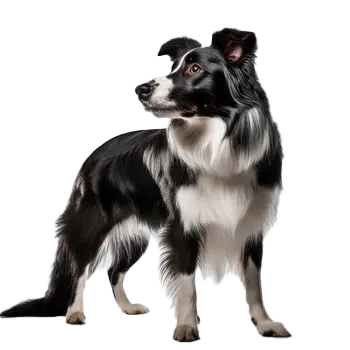
The Border Collie is a medium-sized herding breed built for agility, endurance, and quick directional changes necessary for working livestock. Males typically stand 19 to 22 inches at the shoulder and weigh 30 to 45 pounds, while females measure 18 to 21 inches and weigh 27 to 42 pounds. The body is athletic and slightly longer than tall, with a deep chest providing excellent lung capacity for sustained activity. The overall impression is of a lithe, muscular dog designed for efficient movement and remarkable stamina. The head resembles that of a collie, with a moderately broad skull that tapers slightly toward the muzzle. The build conveys grace combined with athletic capability. The breed displays two distinct coat varieties: rough and smooth. The rough coat is medium-length with feathering on the legs, chest, and underbelly, while the smooth coat is shorter and coarser throughout. Both varieties feature a weather-resistant double coat that provides protection during outdoor work in various conditions. Border Collies appear in an extraordinary range of colors and patterns, including black and white, red and white, tricolor, blue merle, red merle, sable, and solid colors. The black and white pattern remains most commonly recognized, though the breed standard accepts virtually any color combination without penalty. The Border Collie's expression conveys keen intelligence and intense focus, particularly evident in the breed's famous herding eye. The eyes are set well apart, oval-shaped, and typically brown, though blue eyes occur in merle-patterned dogs and heterochromia occasionally appears. The ears are medium-sized and set well apart, carried either fully erect, semi-erect with tips dropping forward, or occasionally fully dropped. The tail is moderately long with an upward swirl at the tip, carried low when the dog is concentrating or working and raised higher during excitement. The overall appearance suggests a dog built for purpose, combining grace with athletic capability.
Key Characteristics
Temperament Temperament Temperament Temperament Temperament Temperament Border Collies form strong bonds with their families and typically show great affection toward those they know well. However, they can be reserved or cautious around strangers until properly introduced, reflecting their protective instincts toward their flock and territory. Early socialization helps ensure these dogs develop appropriate responses to unfamiliar people and situations. The breed requires an active household that can provide at least two hours of vigorous exercise daily, along with mental challenges through training, puzzle toys, and interactive games. Border Collies thrive with experienced owners who understand working dog mentality and can provide consistent leadership while channeling the breed's tremendous energy and intelligence into positive outlets.
Health Considerations Health Considerations Health Considerations Health Considerations Health Considerations Health Considerations Epilepsy occurs at elevated rates in Border Collies compared to many other breeds, with idiopathic seizures typically first appearing between six months and five years of age. Management usually involves lifelong medication to control seizure frequency and severity. Trapped neutrophil syndrome is a genetic immune disorder specific to Border Collies that affects the release of white blood cells, making affected dogs highly susceptible to infections. DNA testing can identify carriers to prevent breeding affected puppies. The MDR1 gene mutation, common in herding breeds, affects how dogs metabolize certain medications and can cause serious adverse reactions. Testing for this mutation allows veterinarians to avoid potentially harmful drug choices. Border Collie collapse, a syndrome causing exercise-induced episodes of weakness and disorientation, requires careful management of activity levels in affected individuals.
Giant Schnauzer
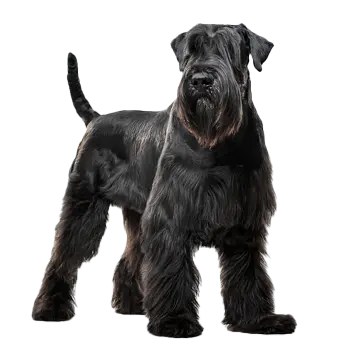
The Giant Schnauzer is an imposing working breed that combines substantial size with athletic elegance and a distinctive silhouette. Males typically stand between 25.5 and 27.5 inches at the shoulder and weigh 60 to 85 pounds, while females measure 23.5 to 25.5 inches and weigh 55 to 75 pounds. The breed presents a square, powerful build where the body length approximately equals the height at the withers, creating balanced proportions that convey both strength and agility. The overall appearance suggests a dog capable of sustained physical activity and demanding work tasks. The bone structure is substantial without appearing coarse or heavy. The breed's signature wiry double coat consists of a harsh, dense outer layer and a soft undercoat that provides protection against weather extremes. This distinctive coat comes in two accepted colors: solid black and salt-and-pepper. The salt-and-pepper coloration creates a banded appearance on individual hairs, ranging from darker to lighter shades of gray. Regular professional grooming maintains the coat's proper texture and appearance, with hand-stripping traditionally used to preserve coat quality for show dogs. Pet owners often opt for clipper cuts that maintain the breed's characteristic appearance with less intensive maintenance. The coat requires brushing several times weekly to prevent matting. The Giant Schnauzer's head presents the breed's most recognizable features, including the distinctive beard and prominent eyebrows that give the face its characteristic expression. The skull is moderately broad and flat, tapering slightly toward the eyes, with a strong, blunt muzzle. The eyebrows shade deep-set, oval eyes that convey alertness and intelligence. Ears are set high and may be cropped to stand erect or left natural, where they fold forward with the inner edge close to the cheek. The neck is strong and elegantly arched, blending smoothly into well-laid-back shoulders. The tail is traditionally docked in some regions but naturally carried high with a slight curve when left intact.
Key Characteristics
Temperament Temperament Temperament Temperament Temperament Temperament The Giant Schnauzer's intelligence and drive create both opportunities and challenges for owners. These dogs thrive when given a job to do and excel in various canine sports including obedience, tracking, herding, and protection sports. However, they can become dominant or willful with handlers who fail to establish clear, consistent leadership. The breed requires experienced dog owners who understand working dog psychology and can provide firm yet fair guidance. Extensive daily exercise, both physical and mental, remains essential for maintaining a well-balanced Giant Schnauzer. Without adequate stimulation, their considerable energy may manifest in destructive behaviors or excessive barking. Families considering this breed should prepare for an active, engaged relationship with a dog that demands significant time and attention.
Health Considerations Health Considerations Health Considerations Health Considerations Health Considerations Health Considerations Dilated cardiomyopathy, a condition where the heart muscle becomes weakened and enlarged, occurs at elevated rates in Giant Schnauzers compared to some other breeds. Regular cardiac screening can help detect this condition in its early stages when management options are most effective. The breed may also experience various skin conditions related to their distinctive coat type, requiring attention to grooming and skin health. Factor VII deficiency, a blood clotting disorder, and hyperuricosuria, affecting uric acid metabolism, represent genetic conditions for which DNA testing is available. Responsible breeders utilize these tests to make informed breeding decisions and reduce the incidence of affected puppies. Prospective owners should seek breeders who perform comprehensive health testing and can provide documentation of clear results for breeding stock.
Important to Remember
Each hybrid dog is unique and may inherit any combination of traits from either parent breed. The information above represents the characteristics of the purebred parent breeds. Your Giant Border Schnollie may favor one parent over the other or display a blend of both. We strongly encourage you to read the complete breed profiles for both the Border Collie and Giant Schnauzer to fully understand the range of possible temperaments, health concerns, and care requirements.