Free-Lance Bulldog
The Free-Lance Bulldog is a cross between the French Bulldog and the Bulldog. Because each hybrid inherits a unique combination of traits from both parents, we recommend thoroughly researching both breeds before choosing a Free-Lance Bulldog. Pay special attention to temperament, health issues, and care requirements, as your dog may express characteristics from either parent breed.
French Bulldog
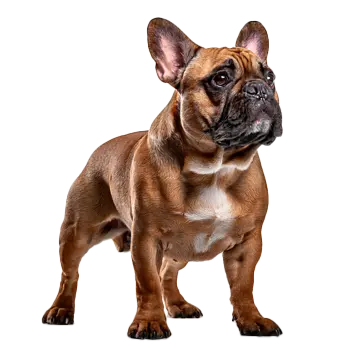
The French Bulldog is a compact, muscular dog with a distinctive appearance that combines strength with an endearing charm. Standing 11 to 12 inches at the shoulder and weighing under 28 pounds according to American Kennel Club standards, this breed presents a well-balanced, heavy-boned structure despite its relatively small size. The body is short and well-rounded, with a broad chest and a characteristic roach back that rises slightly toward the loin. The overall impression is one of an active, intelligent dog with smooth, compact build and medium or small structure. The head is large and square, with a flat skull between the ears and a rounded forehead that transitions to a well-defined stop. The most recognizable feature is the breed's signature bat ears, which are broad at the base, elongated, set high on the head, and carried erect with the opening facing forward. The muzzle is extremely short and broad, with a well-laid-back nose and heavy wrinkles that form a soft roll over the extremely short nose. The underjaw is deep, square, broad, and slightly undershot. The round, dark eyes are set wide apart and low in the skull, conveying an alert and curious expression. The skin is soft and loose, particularly around the head and shoulders, forming characteristic wrinkles. The French Bulldog's coat is short, smooth, and fine-textured, lying flat against the body and giving it a sleek appearance. Acceptable colors include brindle, fawn, white, cream, and various combinations of brindle and white or fawn and white. Some French Bulldogs display a black mask on their face. The skin is soft and forms wrinkles especially at the head and shoulders. The tail is naturally short, either straight or screwed but not curly, set low on the body, thick at the root, and tapering quickly to a fine tip. The hindquarters are strong and muscular, longer than the forequarters, causing the loins to be elevated above the shoulders.
Key Characteristics
Temperament Temperament Temperament Temperament Temperament Temperament One important consideration with French Bulldogs is their sensitivity to temperature extremes. Their brachycephalic structure makes them prone to overheating, so they require air-conditioned environments during warm weather and should never be left in hot cars or exercised vigorously in heat. They are not strong swimmers due to their front-heavy build and should always be supervised around water. French Bulldogs crave attention and companionship, making them prone to separation anxiety if left alone for extended periods. They do best in homes where someone is present most of the time or where they can accompany their owners on outings. Their affectionate nature and manageable size make them wonderful companions for seniors, singles, and families alike.
Health Considerations Health Considerations Health Considerations Health Considerations Health Considerations Health Considerations French Bulldogs are prone to allergies affecting both the skin and digestive system, often requiring specialized diets and medications for management. Heat intolerance is a serious concern, and owners must take precautions to keep their dogs cool. The breed frequently experiences difficulty whelping naturally due to their narrow hips and the puppies' large heads, meaning cesarean sections are commonly necessary. Dental crowding occurs because of the shortened jaw, leading to dental disease without proper care. The typical lifespan ranges from 10 to 14 years, though respiratory and spinal conditions can significantly impact quality of life. Prospective owners should choose breeders who prioritize health testing and select for moderate features rather than extreme flatness of face.
Bulldog

The Bulldog, also known as the English Bulldog, is a medium-sized breed characterized by its thick-set, low-slung body and distinctive facial features. Males typically stand 14 to 15 inches at the shoulder and weigh approximately 50 to 54 pounds, while females measure slightly smaller at 14 inches and weigh around 40 to 50 pounds. The breed's silhouette is unmistakable, with a heavy, wide-set body that appears almost as wide as it is tall when viewed from the front. The overall appearance conveys strength and stability, with substantial bone structure throughout. The head is the Bulldog's most remarkable feature, being large in proportion to the body with heavy wrinkles covering the forehead and cheeks. The skull is broad and square with flat cheeks that extend beyond the eyes. The face is extremely short from the front of the cheek to the tip of the nose, with the skin falling in heavy folds. The muzzle is extremely short, broad, and turned upward, with the nose set deeply between the eyes. The lower jaw projects considerably beyond the upper jaw and turns upward, creating the characteristic undershot bite. The eyes are round, moderate in size, set low and wide apart in the skull, and appear dark when viewed from the front. The ears are small and thin, set high on the head and folded back in what is called a rose ear. The Bulldog's coat is straight, short, flat, close-lying, and fine-textured with a smooth and glossy appearance. Acceptable colors include red brindle, other brindles, solid white, solid red, fawn, fallow, piebald, and combinations of these colors. The skin is soft and loose, particularly around the head, neck, and shoulders, where it forms prominent wrinkles. The chest is very broad and deep, with full sides and well-rounded ribs. The back is short and strong, with a slight fall close behind the shoulders followed by a rise to the loins, which are higher than the shoulders, creating a characteristic wheel back or roach back. The tail is either straight or screwed, short, hung low, and carried downward.
Key Characteristics
Temperament Temperament Temperament Temperament Temperament Temperament The breed's exercise needs are relatively modest compared to many other dogs. Bulldogs enjoy short walks and play sessions but tire quickly and should not be overexerted, particularly in warm weather. They are prone to overheating due to their compromised respiratory systems and should always have access to cool environments. Bulldogs are generally sociable with other dogs and pets, though some males may display dominance behaviors with other male dogs. They thrive on companionship and do not do well when left alone for extended periods. Their food motivation can be used advantageously during training but also makes them prone to begging and obesity. Overall, the Bulldog's sweet, predictable nature makes it an ideal choice for families seeking a loving, low-maintenance companion.
Health Considerations Health Considerations Health Considerations Health Considerations Health Considerations Health Considerations Bulldogs frequently suffer from cardiac conditions, particularly pulmonic stenosis, a narrowing of the heart valve that restricts blood flow. The breed has a significantly elevated cancer rate compared to other dogs. Reproductive difficulties are severe, with the vast majority of Bulldogs requiring cesarean sections to deliver puppies due to the width of puppies' heads and the narrow maternal pelvis. Obesity is a constant concern that exacerbates nearly every other health issue. The average lifespan is only 8 to 10 years, shorter than most breeds of similar size. Prospective owners should seek breeders who prioritize health testing and be prepared for potentially significant veterinary expenses throughout the dog's life.
Important to Remember
Each hybrid dog is unique and may inherit any combination of traits from either parent breed. The information above represents the characteristics of the purebred parent breeds. Your Free-Lance Bulldog may favor one parent over the other or display a blend of both. We strongly encourage you to read the complete breed profiles for both the French Bulldog and Bulldog to fully understand the range of possible temperaments, health concerns, and care requirements.