English Lhasa Bull
The English Lhasa Bull is a cross between the English Bulldog and the Lhasa Apso. Because each hybrid inherits a unique combination of traits from both parents, we recommend thoroughly researching both breeds before choosing a English Lhasa Bull. Pay special attention to temperament, health issues, and care requirements, as your dog may express characteristics from either parent breed.
English Bulldog
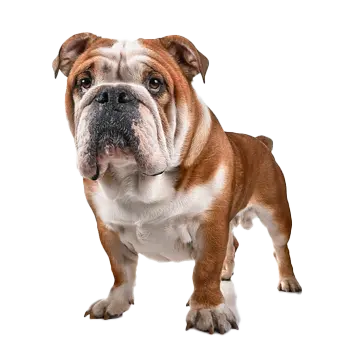
The English Bulldog is a medium-sized, compact breed characterized by its distinctive thick-set, low-slung body that exudes strength and stability. Males typically weigh around 50 to 54 pounds while females are slightly lighter at approximately 40 to 50 pounds, with both standing about 14 to 15 inches at the shoulder. The breed features a massive, short-faced head with a broad skull and pronounced cheeks that extend sideways beyond the eyes. When viewed from above, the body displays a characteristic pear shape, being wider and heavier in the shoulders while tapering toward the hindquarters. The chest is deep and full, with well-sprung ribs and a distinctive roach back that rises from behind the shoulders to the loin before curving downward to the tail. The face of the English Bulldog is perhaps its most recognizable feature, covered in heavy wrinkles and thick folds with a voluminous dewlap hanging from the throat. The muzzle is extremely short, broad, and turned upward, giving the face a flattened appearance. Dark eyes are set low and wide on the forehead, while small thin ears are positioned high on the head and fold forward. The massive jaws are broad and undershot, with the lower jaw projecting beyond the upper to create the breed's characteristic expression. The nose is large with wide nostrils and is black in color. The coat is short, smooth, flat, and fine-textured, lying close to the body without any fringe. Acceptable colors include various shades of brindle, solid white, red, fawn, fallow, and piebald patterns. The skin is notably loose and pendant throughout the body. The short, stocky legs are well-muscled and set wide apart, creating a sturdy base-wide stance with elbows and hocks slightly bowed outward. The tail is short and can be either straight or screwed, set low and carried close to the body.
Key Characteristics
Temperament Temperament Temperament Temperament Temperament Temperament Despite their history as bull-baiting dogs, modern English Bulldogs make excellent watchdogs who will alert their owners to visitors while rarely showing aggression. They are generally friendly with strangers once properly introduced and can coexist peacefully with other pets when socialized from a young age. Their low to moderate energy level makes them well-suited for apartment living and homes without large yards. Bulldogs are content with short walks and plenty of rest time, making them ideal companions for less active owners or families seeking a calm, affectionate pet.
Health Considerations Health Considerations Health Considerations Health Considerations Health Considerations Health Considerations Additional health concerns include heart disease, obesity, allergies, and various skin conditions. The breed's unusual anatomy also creates reproductive challenges, with most females requiring cesarean sections to deliver puppies safely. English Bulldogs have a relatively short lifespan of approximately 8 to 10 years compared to other breeds of similar size. Prospective owners should work with reputable breeders who perform health testing and select for moderate features. Regular veterinary care, weight management, and careful attention to environmental conditions are essential for maintaining Bulldog health and quality of life.
Lhasa Apso

The Lhasa Apso is a small but sturdy breed with a distinctive rectangular body shape, standing approximately 9 to 11 inches at the shoulder and weighing between 13 to 18 pounds. Males are typically slightly larger than females, though both sexes possess the same general proportions. The body is longer than it is tall, well-ribbed with strong hindquarters and a well-developed loin. The topline is level from the withers to the root of the tail, and the legs are straight with round, catlike feet covered in abundant hair. Despite their small size, Lhasa Apsos are well-balanced and athletic, capable of surprisingly agile movement when needed. The breed's most striking feature is its luxurious double coat, which is heavy, dense, and straight, falling from a center part along the spine. The outer coat is neither woolly nor silky but has a distinct hard texture, while the undercoat provides excellent insulation. The coat grows long enough to reach the ground in fully mature adults and requires significant grooming to maintain properly. Hair covers the entire face, including a distinctive fall over the eyes and a well-developed beard and whiskers. All coat colors are equally acceptable, including black, white, gold, cream, red, grizzle, and various parti-colors or combinations. The head is well-furnished with a heavy fall of hair covering the dark brown, medium-sized eyes that are almond-shaped and frontally placed. The skull is moderately narrow and slightly domed, with a moderate stop. The muzzle is approximately one-third the total head length with a straight bridge leading to a black nose. Pendant ears are heavily feathered and hang alongside the head. The tail is set high and carried well over the back in a distinctive screw configuration, covered with abundant long hair. The overall expression is one of keen alertness combined with a somewhat dignified, even regal bearing that reflects the breed's aristocratic heritage.
Key Characteristics
Temperament Temperament Temperament Temperament Temperament Temperament Training a Lhasa Apso requires patience and understanding of their independent nature. These are intelligent dogs who learn quickly but may choose whether or not to comply with commands based on their own assessment of the situation. They respond best to firm but gentle, consistent training using positive reinforcement methods. Harsh corrections will only make them more stubborn and resistant. Early socialization is crucial to help temper their natural wariness of unfamiliar people and situations. Without proper socialization, some Lhasa Apsos may become overly suspicious or snippy. With the right approach, they make excellent companions for owners who appreciate their unique personality and can provide appropriate boundaries while respecting their dignified nature.
Health Considerations Health Considerations Health Considerations Health Considerations Health Considerations Health Considerations Orthopedic issues including patellar luxation, where the kneecap slips out of position, and hip dysplasia can affect Lhasa Apsos despite their small size. Renal dysplasia, a hereditary kidney condition causing abnormal kidney development, has been documented in the breed and can lead to kidney failure. Intervertebral disc disease may occur due to their somewhat elongated spine. Skin allergies and sensitivities are relatively common, requiring attention to diet and environmental factors. Regular veterinary checkups, maintaining appropriate weight, and keeping up with recommended health screenings will help ensure your Lhasa Apso enjoys a long and healthy life. Their heavy coat also requires regular grooming to prevent matting and skin problems beneath the dense hair.
Important to Remember
Each hybrid dog is unique and may inherit any combination of traits from either parent breed. The information above represents the characteristics of the purebred parent breeds. Your English Lhasa Bull may favor one parent over the other or display a blend of both. We strongly encourage you to read the complete breed profiles for both the English Bulldog and Lhasa Apso to fully understand the range of possible temperaments, health concerns, and care requirements.