English Boodle
The English Boodle is a cross between the English Bulldog and the Poodle. Because each hybrid inherits a unique combination of traits from both parents, we recommend thoroughly researching both breeds before choosing a English Boodle. Pay special attention to temperament, health issues, and care requirements, as your dog may express characteristics from either parent breed.
English Bulldog
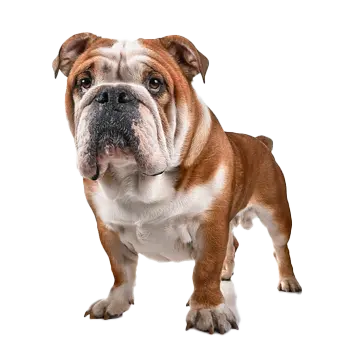
The English Bulldog is a medium-sized, thick-set, low-slung dog that presents a distinctive, immediately recognizable appearance characterized by its compact, muscular build and characteristic facial features. Males typically weigh about 50 to 54 pounds, while females weigh approximately 40 to 50 pounds, with both sexes standing around 14 to 16 inches at the shoulder. The body is short, compact, and very muscular, with a wide stance created by short, sturdy legs that are set wide apart giving the breed its characteristic stable appearance. The distinctive rolling gait is characteristic of the breed and results from its unique skeletal structure and muscular development. The head of the English Bulldog is its most striking feature, appearing massive and square when viewed from any angle. The face is extremely short and flat, with the nose set deeply between the eyes creating the breed's characteristic expression. The skull is very large in circumference, and the cheeks extend beyond the eyes. The forehead is flat with heavy wrinkles, and the skin on the skull and forehead falls in dense folds requiring regular cleaning. The eyes are set low and wide apart, round in shape, and dark in color. The ears are small and thin, set high on the head, and may be rose-shaped or button-shaped. The characteristic undershot jaw is pronounced, with the lower jaw projecting considerably beyond the upper jaw. The coat is straight, short, flat, close-lying, and fine in texture with a smooth, glossy appearance that requires minimal grooming. Acceptable colors include red, white, fawn, fallow, or any combination of these colors with or without brindle, piebald, or other markings. The tail, known as a screw tail, is either straight or screwed but never curved or curly, set low, and carried close to the body. The unique body structure, featuring the characteristic roach back (a rise over the loin), wide-set front legs, and tapering hindquarters, contributes to the breed's distinctive silhouette and movement pattern that is instantly recognizable.
Key Characteristics
Temperament Temperament Temperament Temperament Temperament Temperament These dogs have relatively low exercise requirements compared to many breeds and are quite content to spend time lounging with their families. Their calm, often phlegmatic nature makes them well-suited for apartment living. However, they can be playful and enjoy interactive games in moderate amounts. English Bulldogs may show aggression toward unfamiliar dogs but generally get along well with family pets they are raised with. Heat intolerance is a significant consideration, as their brachycephalic features make them highly susceptible to overheating, requiring careful management in warm weather.
Health Considerations Health Considerations Health Considerations Health Considerations Health Considerations Health Considerations Skin problems are significantly more common in English Bulldogs than in other breeds, with skin fold dermatitis being particularly prevalent due to the facial wrinkles and body folds that trap moisture and bacteria. Eye problems including cherry eye, entropion, and corneal ulcers occur at elevated rates. Heart disease, particularly pulmonic stenosis, is more common in Bulldogs. The breed has one of the shortest lifespans among dog breeds, averaging approximately 7 to 8 years. The severity of health issues in this breed has led to increasing concern from veterinary and welfare organizations about the breed's future and calls for breeding reforms to improve their health and quality of life.
Poodle

The Poodle is an elegant, squarely built dog that comes in three distinct size varieties while maintaining consistent breed characteristics across all sizes. Standard Poodles stand over 15 inches at the shoulder and typically weigh between 40 and 70 pounds, presenting as athletic, medium-sized dogs. Miniature Poodles range from 10 to 15 inches at the shoulder and weigh 10 to 20 pounds, while Toy Poodles stand 10 inches or less and weigh 4 to 6 pounds. Regardless of size, the Poodle should present a picture of graceful balance and proportion with an air of distinction and dignity. The head is refined and moderately rounded, with a slight but definite stop. The skull and muzzle are approximately equal in length, with the muzzle being long, straight, and fine without appearing snippy. The eyes are oval, very dark, and set far enough apart to create an alert, intelligent expression. The ears are set at or slightly below eye level, long, wide, and heavily feathered, hanging close to the head. The neck is well-proportioned, strong, and long enough to permit the head to be carried high and with dignity. The body is squarely built, with the length from breastbone to point of rump approximating the height at the shoulder. The Poodle's coat is one of its most distinctive features, consisting of naturally curly, dense, harsh-textured hair that grows continuously and sheds minimally. This coat may be presented in various traditional clips for show purposes or maintained in a more practical shorter trim for companion dogs. Coat colors include black, white, brown, gray, silver, blue, cream, apricot, red, cafe-au-lait, and silver beige, with solid colors preferred though natural shading variations are acceptable. The coat texture allows for various styling while providing excellent protection. The tail is set high and carried erect, traditionally docked though this practice varies by region.
Key Characteristics
Temperament Temperament Temperament Temperament Temperament Temperament Poodles are generally friendly and sociable but may be somewhat reserved with strangers initially. Early socialization helps develop their natural confidence and prevents excessive shyness. They can be excellent watchdogs, alerting their families to visitors, though the smaller varieties may be prone to excessive barking if not properly trained. Poodles are sensitive dogs that respond best to positive reinforcement training methods and do not tolerate harsh treatment. Their sensitivity extends to their environment, and they tend to pick up on their owner's moods and emotional states.
Health Considerations Health Considerations Health Considerations Health Considerations Health Considerations Health Considerations Eye conditions affecting Poodles include progressive retinal atrophy (PRA), cataracts, and optic nerve hypoplasia, making regular ophthalmologic examinations important. Epilepsy occurs at elevated rates in the breed, typically appearing between 2 and 5 years of age and usually manageable with medication. Sebaceous adenitis, a skin condition causing hair loss and skin problems, is more common in Standard Poodles. Thyroid disorders, particularly hypothyroidism, can affect Poodles of all sizes. The smaller Poodle varieties may experience hypoglycemia, especially as puppies, and collapsed trachea. Regular veterinary care, genetic testing of breeding stock, and attention to breed-specific screening recommendations help maintain Poodle health.
Important to Remember
Each hybrid dog is unique and may inherit any combination of traits from either parent breed. The information above represents the characteristics of the purebred parent breeds. Your English Boodle may favor one parent over the other or display a blend of both. We strongly encourage you to read the complete breed profiles for both the English Bulldog and Poodle to fully understand the range of possible temperaments, health concerns, and care requirements.