Engachon
The Engachon is a cross between the Bichon Frise and the English Toy Spaniel. Because each hybrid inherits a unique combination of traits from both parents, we recommend thoroughly researching both breeds before choosing a Engachon. Pay special attention to temperament, health issues, and care requirements, as your dog may express characteristics from either parent breed.
Bichon Frise
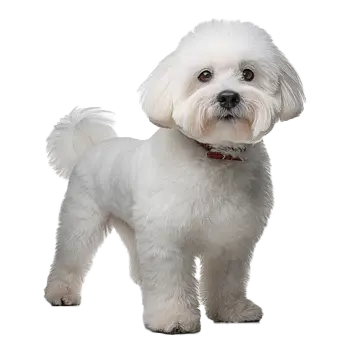
The Bichon Frise is a small, sturdy dog that presents a charming powder-puff appearance that has made the breed beloved worldwide. Standing 9.5 to 11.5 inches at the shoulder and weighing between 12 and 18 pounds, this breed combines a compact, balanced body with an elegant bearing. The overall impression is of a rounded, cotton-ball-like dog with a cheerful, alert expression. The body is slightly longer than tall with a level topline and a well-developed chest. The tail is well-plumed and set on level with the topline, carried gracefully curved over the back so the hair lies on the back. The head of the Bichon Frise is proportionate to the body with a slightly rounded skull and a well-defined stop. The muzzle is not pointed or snipy, and the nose is prominently black and rounded. The eyes are one of the breed's most appealing features, being round, dark brown or black, and surrounded by dark halos that enhance their expressive quality. The ears are drop-shaped, well-covered with long flowing hair, and set slightly above eye level. When the dog is alert, the ears frame the face beautifully. The overall expression is soft, gentle, and inquisitive, reflecting the breed's friendly personality. The coat is the Bichon Frise's most distinctive characteristic, consisting of a soft, dense undercoat and a coarser, curly outer coat that stands away from the body. This double coat creates the breed's signature puffy appearance. The coat is always white, though shadings of buff, cream, or apricot may appear around the ears or on the body of puppies and occasionally adults. When properly groomed, the coat is trimmed to reveal the natural outline of the body, with the head rounded to complete the powder-puff look. The coat is considered hypoallergenic because it sheds minimally and produces less dander than many breeds. However, the coat requires significant maintenance including daily brushing to prevent matting and professional grooming every four to six weeks to maintain its characteristic appearance.
Key Characteristics
Temperament Temperament Temperament Temperament Temperament Temperament Intelligent and eager to please, Bichon Frises respond well to positive reinforcement training and can learn a variety of tricks and commands. They have a natural talent for performance and historically entertained crowds as circus dogs. However, housetraining can sometimes be challenging with this breed and requires patience and consistency. The Bichon Frise has moderate energy levels and adapts well to various living situations, from apartments to houses with yards. They need regular exercise and mental stimulation but are content with daily walks and play sessions. Their adaptable nature and love of being with their people make them wonderful companions for singles, couples, families, and seniors alike.
Health Considerations Health Considerations Health Considerations Health Considerations Health Considerations Health Considerations Patellar luxation, a condition where the kneecap slips out of its normal position, is relatively common in Bichon Frises and other small breeds. This can range from mild, causing occasional skipping, to severe cases requiring surgical correction. Hip and elbow dysplasia, though more commonly associated with larger breeds, can also affect Bichons. Eye conditions including cataracts and corneal dystrophy may develop, particularly as dogs age. The breed is also prone to bladder stones, which can cause urinary discomfort and may require dietary management or surgical removal. Diabetes mellitus occurs at higher rates in Bichon Frises than in many other breeds, and Cushing's disease, a hormonal disorder affecting the adrenal glands, is another condition to monitor for. Responsible breeders screen for hereditary conditions to reduce the incidence of these health issues in their puppies.
English Toy Spaniel

The English Toy Spaniel is a compact and cobby toy breed that presents an essentially square silhouette with a sturdy frame and solid construction. Standing between 9 and 10 inches at the shoulder and weighing 8 to 14 pounds, this breed is small enough to fit comfortably in your lap while maintaining a robust build. The body is well-proportioned with a broad back, and the legs are short but well-muscled with small, furry feet that often have fused toes. The breed carries itself with an air of aristocratic dignity that reflects its royal heritage. The head is one of the most distinctive features of the English Toy Spaniel, appearing large in proportion to the body with a characteristic domed skull and a short, pushed-in face. The muzzle is extremely short with an upturned nose that sits at the same level as the large, lustrous dark eyes, giving the breed its signature sweet and appealing expression. The ears are set low on the head and hang in graceful folds, covered with long, silky hair that frames the face beautifully. The jaw is slightly undershot, which is typical of brachycephalic breeds. The coat is one of the breed's crowning glories, consisting of a medium-length silky double coat that flows elegantly over the body. The hair is generally straight but may have a slight wave in some individuals. Abundant feathering adorns the ears, chest, legs, and tail, creating a flowing appearance. The breed comes in four recognized color varieties, each with its own traditional name: Blenheim features rich chestnut markings on a pearly white background; Prince Charles displays black and tan markings on white; King Charles is a striking black and tan; and Ruby is a solid rich mahogany red. Regular brushing two to three times per week is essential to maintain the coat's beautiful condition and prevent matting.
Key Characteristics
Temperament Temperament Temperament Temperament Temperament Temperament Intelligent but with an independent streak, English Toy Spaniels can sometimes display stubbornness during training. They respond best to gentle, patient guidance with positive reinforcement methods, as harsh corrections will only cause them to become withdrawn. Early training and socialization are essential for developing a well-rounded companion. The breed generally gets along well with other pets and can be good with respectful children, though their small size means supervision is important to prevent accidental injury. They thrive in calm, predictable environments and may become overwhelmed by too much excitement or chaos.
Health Considerations Health Considerations Health Considerations Health Considerations Health Considerations Health Considerations Eye problems are relatively common in the breed, including cataracts that can develop as early as six months of age and progress to blindness, progressive retinal atrophy, glaucoma, corneal ulcers, dry eye, and retinal dysplasia. Regular eye examinations are recommended to catch problems early. Other health issues include patellar luxation, which affects approximately 10% of the breed, intervertebral disc disease, hip dysplasia, allergies that cause itchy skin and secondary infections, ear infections due to profuse hair in the ear canal, epilepsy, diabetes, and dental problems common in toy breeds. Working with a reputable breeder who health tests their breeding dogs can help reduce the risk of inherited conditions.
Important to Remember
Each hybrid dog is unique and may inherit any combination of traits from either parent breed. The information above represents the characteristics of the purebred parent breeds. Your Engachon may favor one parent over the other or display a blend of both. We strongly encourage you to read the complete breed profiles for both the Bichon Frise and English Toy Spaniel to fully understand the range of possible temperaments, health concerns, and care requirements.