Doxie Scot
The Doxie Scot is a cross between the Dachshund and the Scottish Terrier. Because each hybrid inherits a unique combination of traits from both parents, we recommend thoroughly researching both breeds before choosing a Doxie Scot. Pay special attention to temperament, health issues, and care requirements, as your dog may express characteristics from either parent breed.
Dachshund

The Dachshund possesses one of the most distinctive and recognizable silhouettes in the dog world, characterized by an elongated body and remarkably short legs. This unique conformation developed specifically for the breed's original purpose of pursuing badgers and other burrowing animals into their underground dens. Standard Dachshunds typically weigh between 16 and 32 pounds and stand approximately 8 to 9 inches at the shoulder, while Miniature Dachshunds weigh 11 pounds or less and stand about 5 to 6 inches tall. Despite their low stature, Dachshunds present a muscular, well-balanced appearance with neither a clumsy nor weaselly impression. The chest is prominent and well-developed, providing adequate room for heart and lung capacity. The breed comes in three distinct coat varieties, each with its own characteristics and grooming requirements. Smooth Dachshunds have short, shiny coats that lie close to the body and require minimal grooming. Longhaired Dachshunds display sleek, glistening, slightly wavy hair that is longest on the ears, chest, underside, and behind the legs. Wirehaired Dachshunds possess a short, rough, thick outer coat with a finer, softer undercoat, along with distinctive bushy eyebrows and a beard. All three varieties occur in both Standard and Miniature sizes and share the same breed standard for structure and proportion. Dachshund coat colors present remarkable variety, including solid red and cream, as well as two-colored patterns like black and tan, chocolate and tan, wild boar, and gray and tan. Additional patterns include dapple, which shows lighter areas against a darker base color, brindle with striped markings, and piebald with white patches. The head is elongated and tapered uniformly to the nose when viewed from above or in profile, with slightly arched skull and gradually sloped stop. The eyes are medium-sized, almond-shaped, and dark in color except in chocolate dogs where lighter shades are acceptable. Ears are set near the top of the head, moderately long, and rounded at the tips. The tail extends the line of the spine without excessive curvature.
Key Characteristics
Temperament Temperament Temperament Temperament Temperament Temperament The breed's independent nature can make training challenging, as Dachshunds tend to have their own opinions about what they should do and when. They are intelligent and capable learners but may choose not to comply with commands if they see no compelling reason to do so. Patient, consistent training with positive reinforcement yields the best results. Dachshunds retain strong prey drive and may chase small animals with determined focus. They can be possessive of toys and food, and some individuals display jealous behavior if they feel their position with their favorite person is threatened. Early socialization helps develop a well-rounded dog that can navigate various social situations appropriately.
Health Considerations Health Considerations Health Considerations Health Considerations Health Considerations Health Considerations Additional health considerations include epilepsy, which causes seizures, and Cushing's disease, a hormonal disorder that affects older dogs. Dental disease affects many small breeds including Dachshunds, making regular dental care important. Double dapple Dachshunds, bred from two dapple parents, face elevated risks of deafness and eye abnormalities including missing eyes. Responsible breeding practices avoid this combination. Owners should select breeders who screen for hereditary conditions and provide health guarantees. Regular veterinary care, weight management, and appropriate exercise help Dachshunds live long, healthy lives despite their breed-specific vulnerabilities.
Scottish Terrier
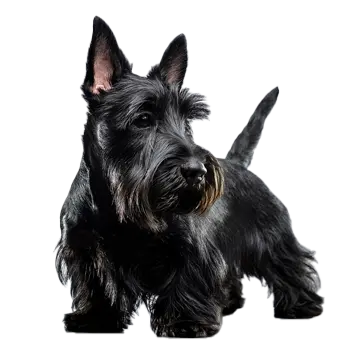
The Scottish Terrier presents a compact, sturdy silhouette that exemplifies power packed into a small frame. Standing approximately 10 inches at the withers for both sexes, males typically weigh 19 to 22 pounds while females weigh 18 to 21 pounds. The length of back from withers to tail set is approximately 11 inches, creating a slightly longer than tall proportion. The breed's cobby, thick-set body is hung between short, heavy legs that give the Scottish Terrier its characteristic low-to-ground profile. Good bone and substance throughout convey an impression of immense power despite the dog's modest size. The Scottish Terrier's head is one of its most distinguishing features, appearing long in proportion to the overall size of the dog. The skull is long, slightly domed, and of medium width, while the muzzle equals the skull in length with only a slight taper toward the nose. A slight but definite stop between the skull and muzzle allows the eyes to be set in under the brow, contributing to the breed's characteristic expression. The nose is black and of good size, projecting somewhat over the mouth. Small, bright, piercing eyes are almond-shaped and dark brown to nearly black in color. Small, prick ears are set well up on the skull, pointed, and covered with short velvety hair. The Scottish Terrier's weather-resistant double coat consists of a hard, wiry outer coat and a short, dense, soft undercoat. The coat should be trimmed and blended to give the distinctive Scottish Terrier outline, with longer furnishings on the beard, legs, and lower body. These furnishings may be slightly softer than the body coat but should never appear fluffy. Acceptable coat colors include black, wheaten, and brindle of any shade. Many black and brindle dogs have sprinklings of white or silver hairs throughout the coat, which is normal and acceptable. White markings are permitted only on the chest and chin in limited amounts.
Key Characteristics
Temperament Temperament Temperament Temperament Temperament Temperament Training Scottish Terriers requires patience and understanding of their independent nature. These dogs are highly intelligent and learn quickly but may choose not to comply with commands if they see no compelling reason to do so. Harsh correction tends to backfire with this sensitive yet stubborn breed, while positive reinforcement and consistent boundaries yield better results. Scotties can be aggressive toward other dogs and retain strong prey drive that may endanger smaller pets. Early and extensive socialization helps temper their natural suspiciousness, though owners should recognize that reserve toward strangers is an inherent breed trait. The Scottish Terrier is not recommended for families with young children, as the breed lacks patience for rough handling and may snap if provoked.
Health Considerations Health Considerations Health Considerations Health Considerations Health Considerations Health Considerations Additional health concerns include craniomandibular osteopathy, a painful bone disease affecting the jaw in young puppies, and cerebellar abiotrophy, a progressive neurological disorder causing coordination problems. Patellar luxation, where the kneecap slips out of position, occurs in some individuals. Hypothyroidism affects the thyroid gland and requires lifelong medication to manage. Scottish Terriers may show elevated liver enzymes on blood tests without underlying liver disease, a benign condition called hyperphosphatemia. Cushing's disease, an endocrine disorder, also affects the breed with some frequency. Reputable breeders conduct appropriate health testing and can provide documentation of their dogs' health status.
Important to Remember
Each hybrid dog is unique and may inherit any combination of traits from either parent breed. The information above represents the characteristics of the purebred parent breeds. Your Doxie Scot may favor one parent over the other or display a blend of both. We strongly encourage you to read the complete breed profiles for both the Dachshund and Scottish Terrier to fully understand the range of possible temperaments, health concerns, and care requirements.